.webp)


Explore how modern kitchen design uses emotional zoning, color, and layout to create spaces that support focus, comfort, and connection.



A kitchen is not a single emotional space. It’s a collection of moments-quiet mornings, rushed afternoons, shared meals, late-night pauses. Yet many kitchens are designed as if they should feel the same at all times.
In reality, the most successful modern kitchens acknowledge that emotions shift throughout the day, and the space must shift with them. Emotional geography is the idea that different areas of a kitchen serve different emotional needs: focus, connection, calm, energy. When a kitchen is designed with this in mind, it doesn’t just look good, It feels right, no matter how or when it’s used.
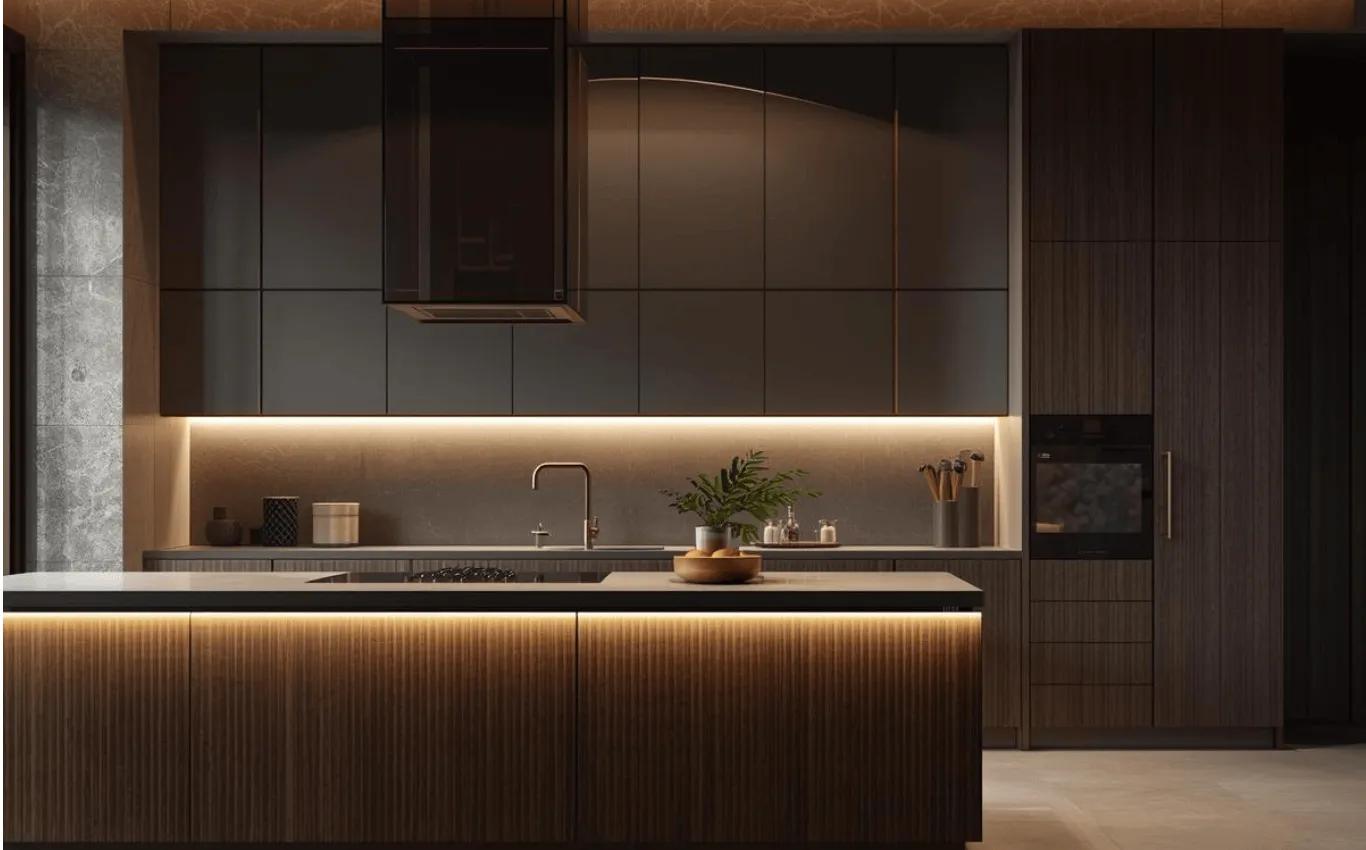
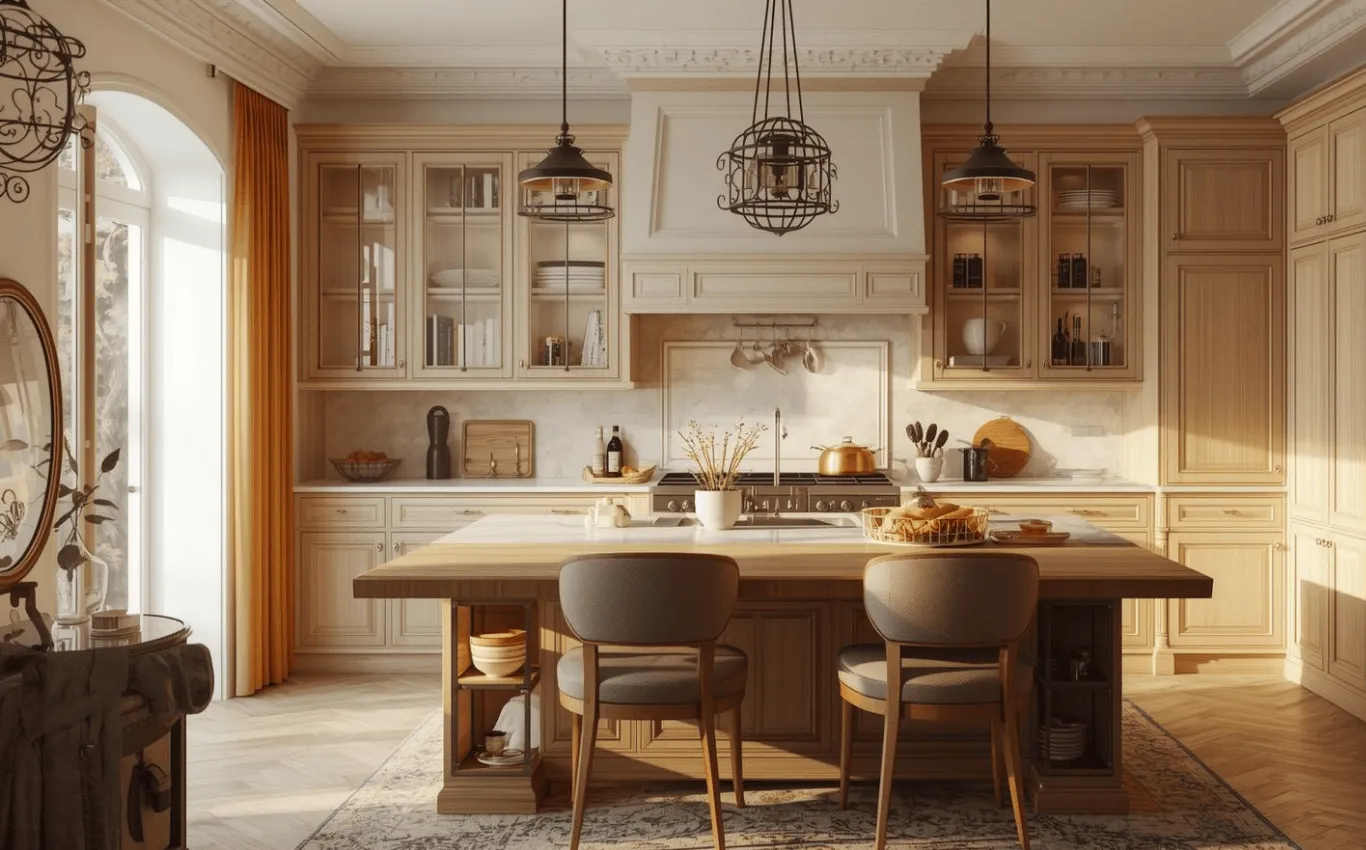
Before appliances turn on or cabinets open, the kitchen sets a tone. The way it feels determines how people move, linger, or retreat.
This human-centered thinking is fundamental to Jeff Boico’s approach to Kitchen Design, where spaces are planned around lived experience, not just layout diagrams.
In the morning, kitchens need clarity and momentum. Clean sightlines, balanced light, and organized zones help people start the day without friction. In the evening, that same space should soften - inviting slower movement and conversation.
Modern kitchens achieve this through layered lighting, tonal balance, and subtle transitions that allow the room to shift emotionally without physical changes.
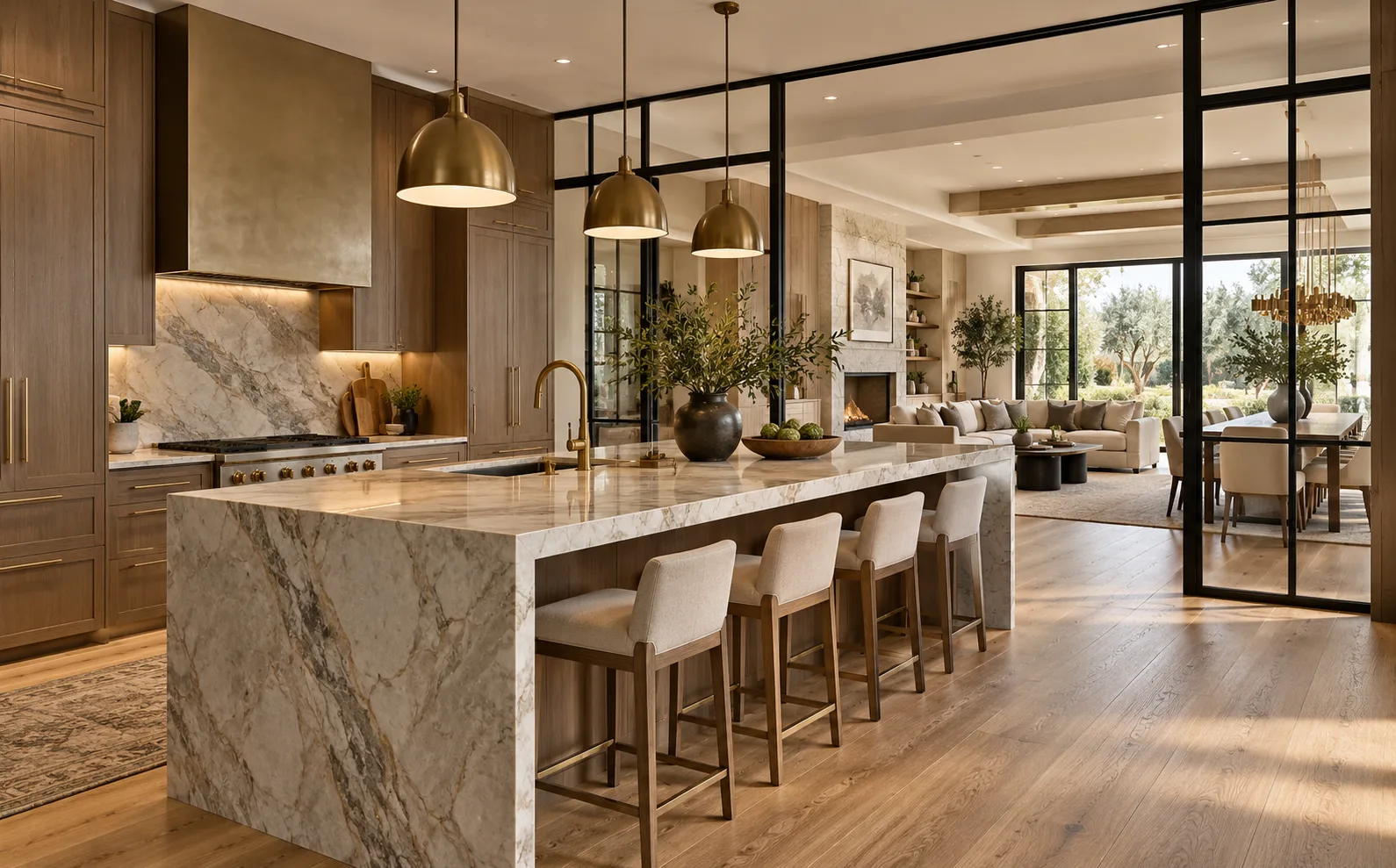
Emotional geography reveals itself in where people instinctively stand or sit. Islands often become social anchors, while perimeter zones support quieter, task-oriented moments.
In the Upper Brookville, NY | Contemporary Blue & White Kitchen, the central island functions as a natural meeting point, while surrounding zones remain visually calm—allowing connection without congestion.
Overstimulating kitchens demand constant attention. Too many finishes, colors, or focal points compete emotionally.
Visual restraint allows the kitchen to feel grounded, giving people permission to relax within the space rather than manage it.
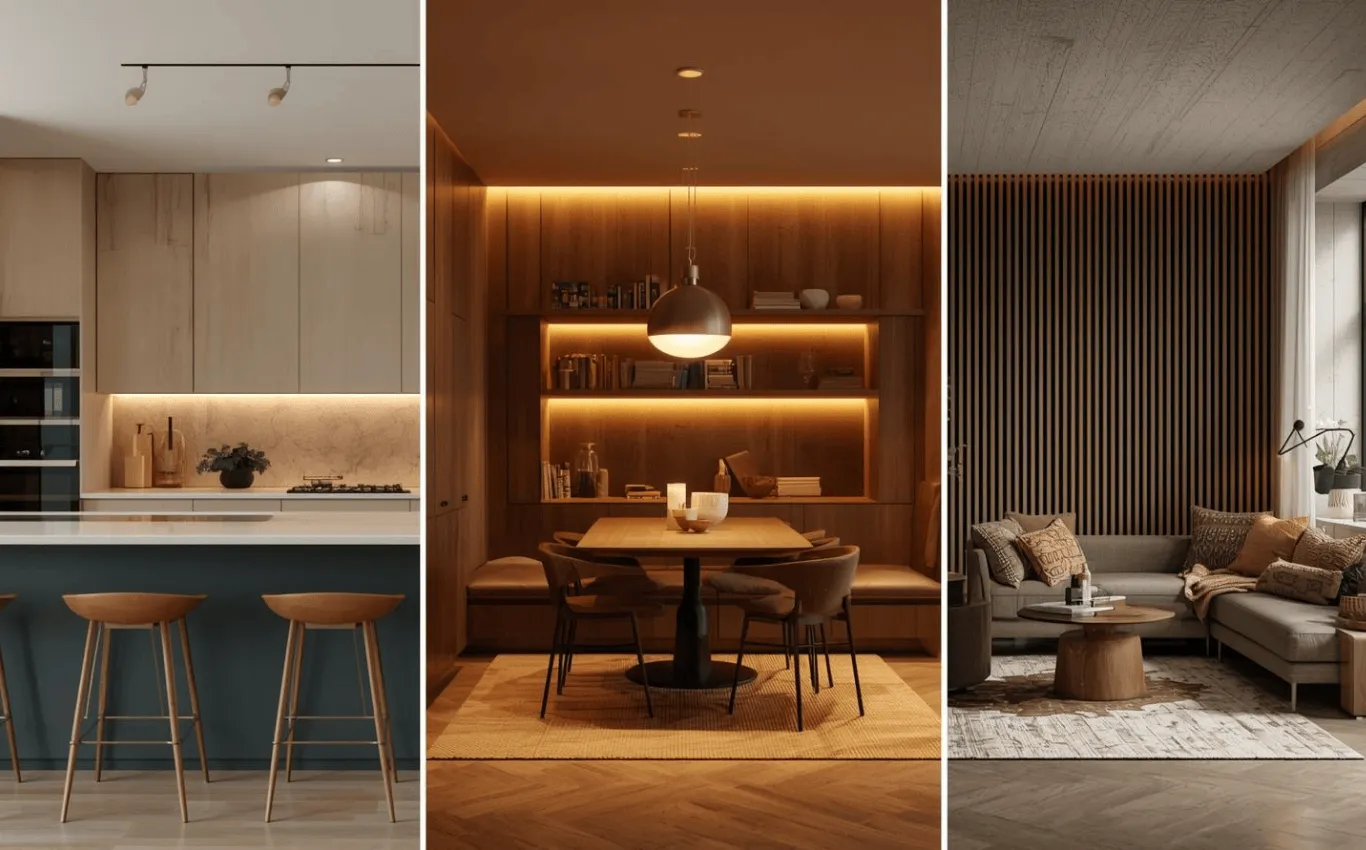
Traditional kitchen planning focuses on function alone. Emotional geography adds a second layer-how each zone feels while it’s being used.
Prep areas benefit from visual clarity and neutral tones. These zones support concentration and reduce errors by limiting distractions.
This approach aligns with ideas explored in The Kitchen as a Control Room: How Design Reduces Daily Decision Fatigue, where design absorbs mental load instead of adding to it.
Gathering areas should feel warmer and more relaxed. Slightly deeper tones, softer materials, and intentional seating encourage people to linger.
The emotional difference between standing briefly and staying comfortably is often subtle, but powerful.
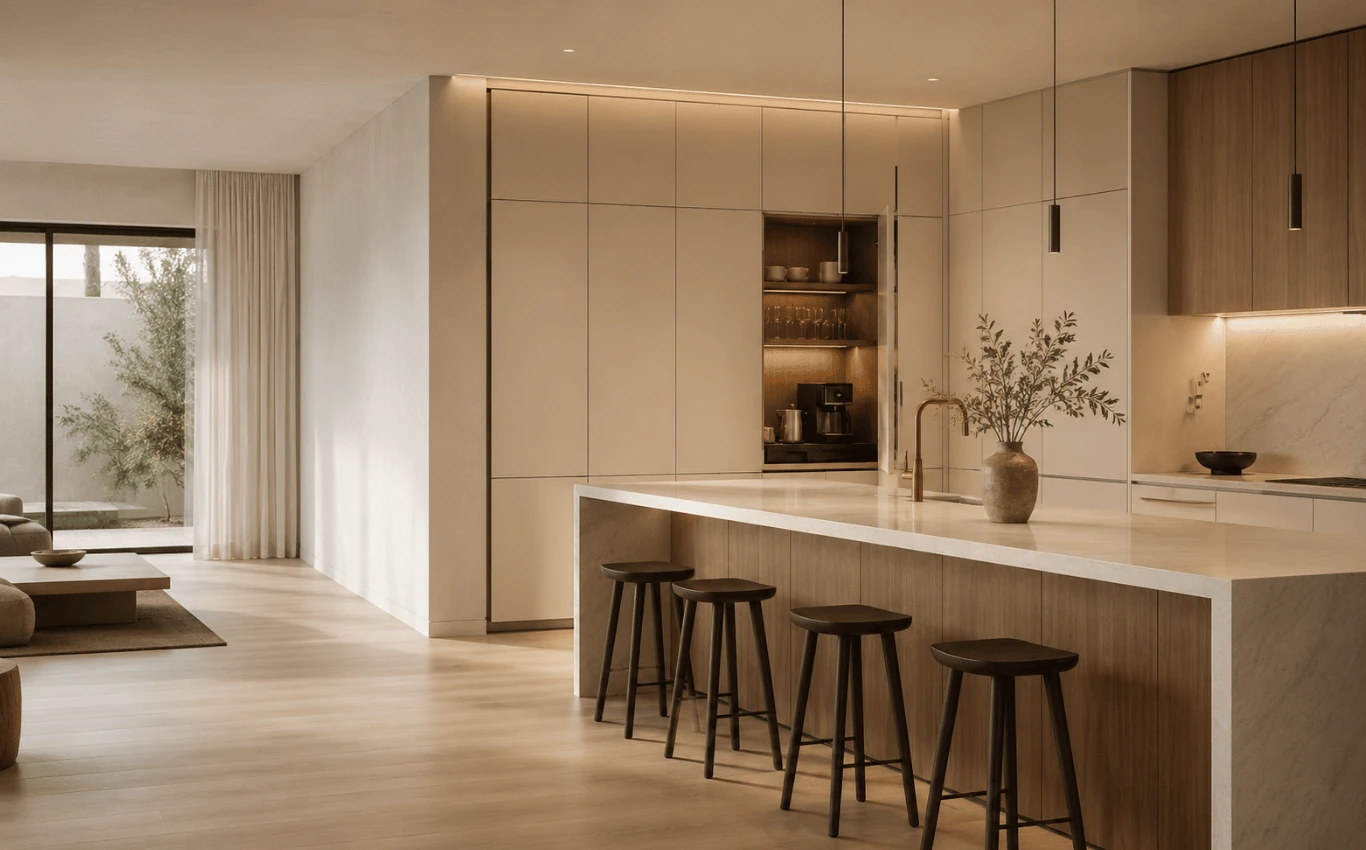
Not every kitchen moment is social. Coffee breaks, late-night snacks, or moments of pause require a sense of privacy within an open space.
Modern kitchens create these quieter emotional zones through thoughtful spacing and lighting rather than walls.
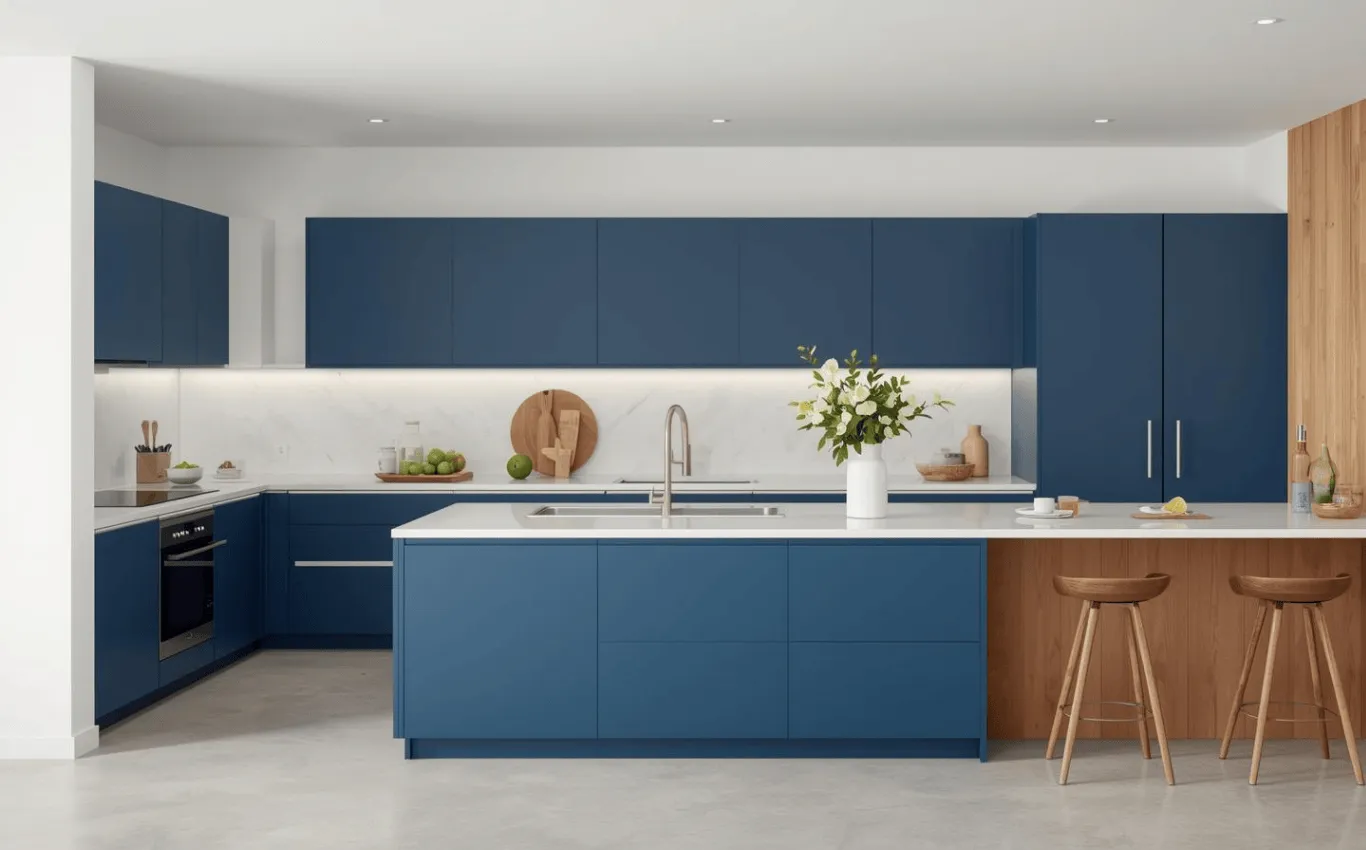
Color and material choices act as emotional cues. They guide how the kitchen is perceived and how people behave inside it.
Cooler palettes, such as soft blues and clean whites-create a sense of order and calm. They help the kitchen feel composed, especially during busy hours.
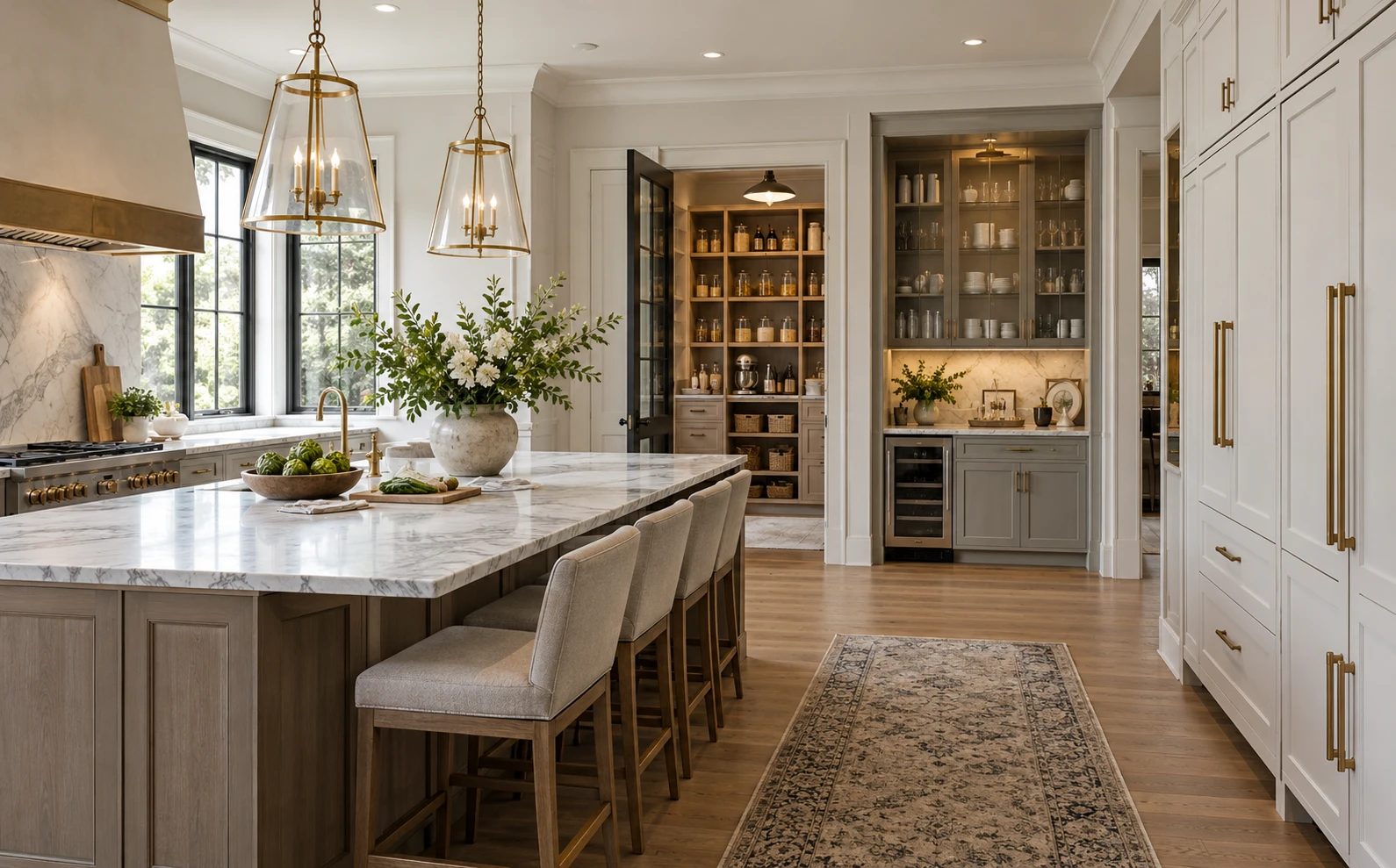
In the Remsenburg, NY | Coastal Elegance Kitchen , blue cabinetry paired with crisp whites establishes visual structure while remaining welcoming, reinforcing both focus and balance.
Warm woods, soft neutrals, and organic textures introduce emotional softness. These materials absorb sound, reflect light gently, and make the kitchen feel lived-in rather than staged.
This balance echoes themes from How Color Theory Shapes Modern Kitchen Mood & Functionality, where color is used to support emotion as much as aesthetics.
Glossy surfaces energize; matte finishes calm. Natural variation prevents visual fatigue.
When materials are chosen with intention, they create a rhythm that feels emotionally steady throughout the day.
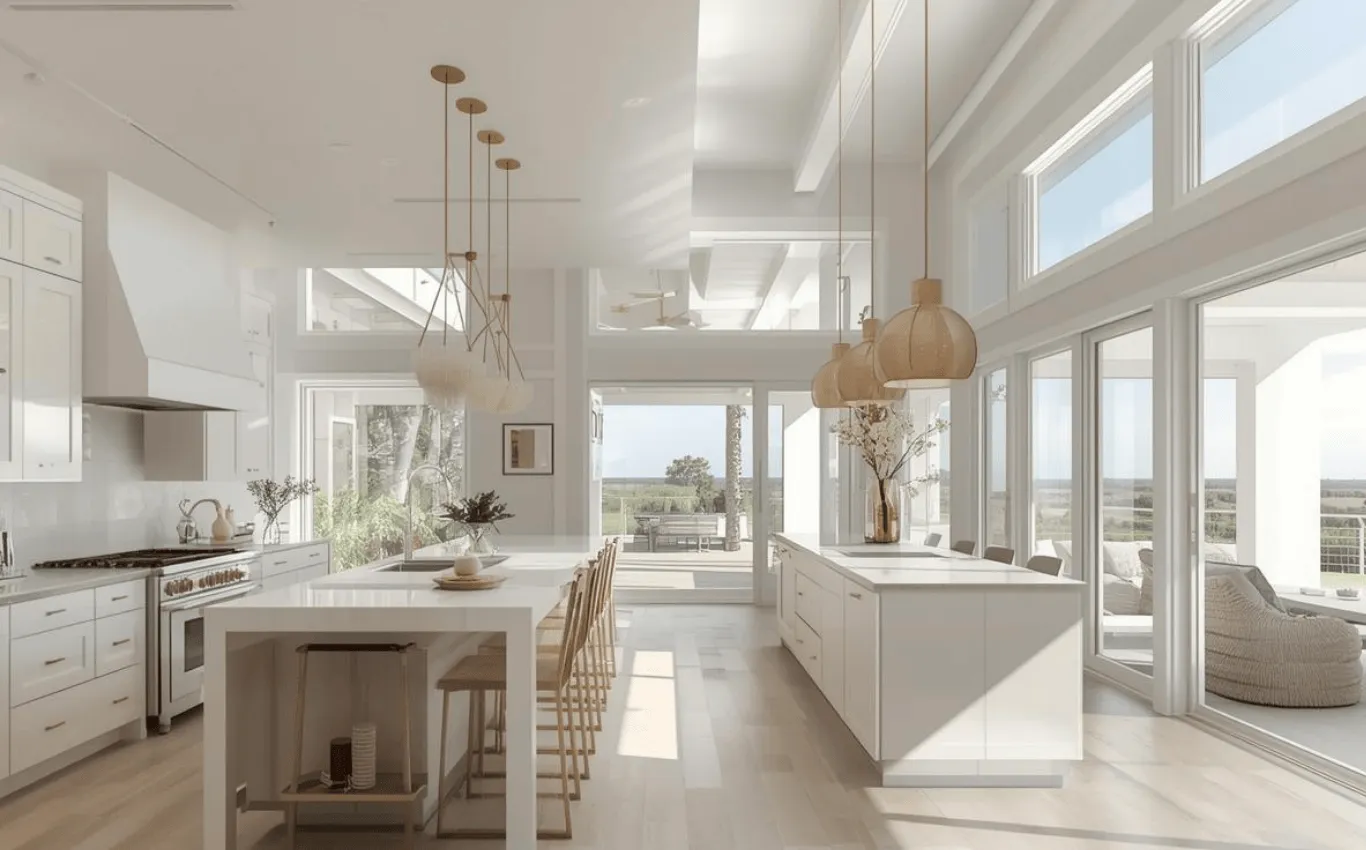
Some kitchens are designed to feel expansive and fluid-nviting movement and interaction without pressure.
Good emotional geography allows people to move naturally without hesitation. Clear pathways and intuitive circulation prevent stress, even during busy moments.
In the Great Neck, NY | Elegant Gray & White Kitchen, the layout encourages openness and flow, mirroring the relaxed coastal lifestyle it supports.
Natural light connects different zones emotionally, making the kitchen feel unified even when serving multiple purposes.
Thoughtful artificial lighting-explored further in Elevating Your Kitchen with Lighting: A Guide to Ambient, Task, and Accent Options—ensures this connection continues after sunset.
Modern kitchens rarely exist in isolation. Emotional geography extends into dining and living areas, ensuring transitions feel natural rather than abrupt.
This continuity helps the kitchen act as the emotional heart of the home instead of a purely functional zone.
The emotional geography of a kitchen determines how it’s experienced long before its features are noticed. When modern kitchens are designed with emotional intent—balancing focus and calm, energy and retreat-they become spaces that truly support daily life. Instead of forcing one mood onto every moment, these kitchens adapt quietly, meeting people where they are. In doing so, they become more than rooms for cooking-they become environments for living.

Explore how modern kitchen design uses emotional zoning, color, and layout to create spaces that support focus, comfort, and connection.