.webp)


Thinking about an open kitchen? Discover what homeowners don’t expect after move-in, from noise and privacy to daily living and design solutions.



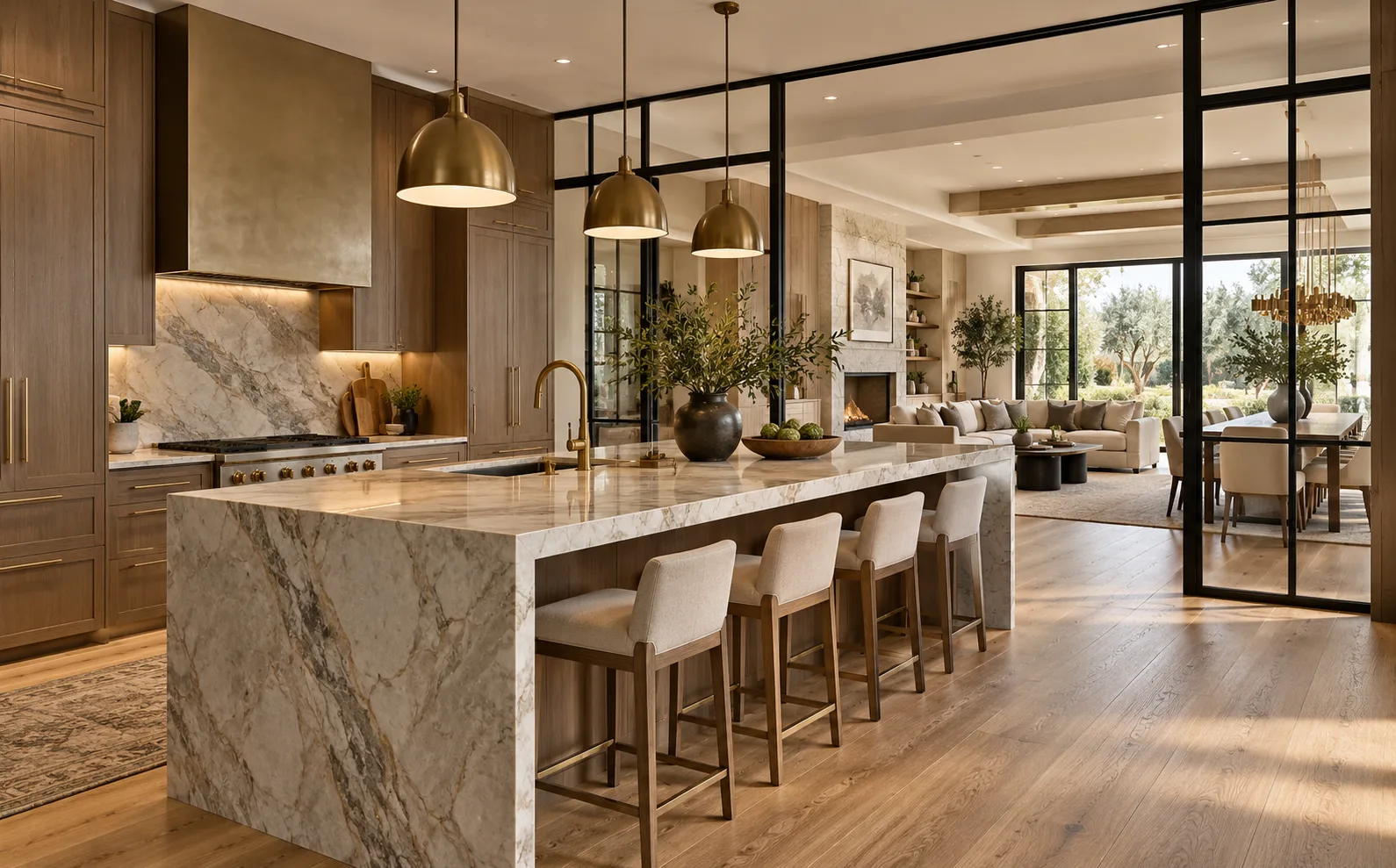
Open kitchens are everywhere in magazines, new builds, and renovation inspiration boards. They promise connection, light, and effortless entertaining. But living with an open kitchen is very different from admiring one in photos.
Once the excitement fades and daily routines take over, homeowners often realize that an open kitchen changes far more than just the look of their home. It affects sound, privacy, organization, habits, and even how people feel in their space.
Understanding these realities before committing to an open layout is what separates kitchens that truly work from ones that quietly frustrate their owners over time.
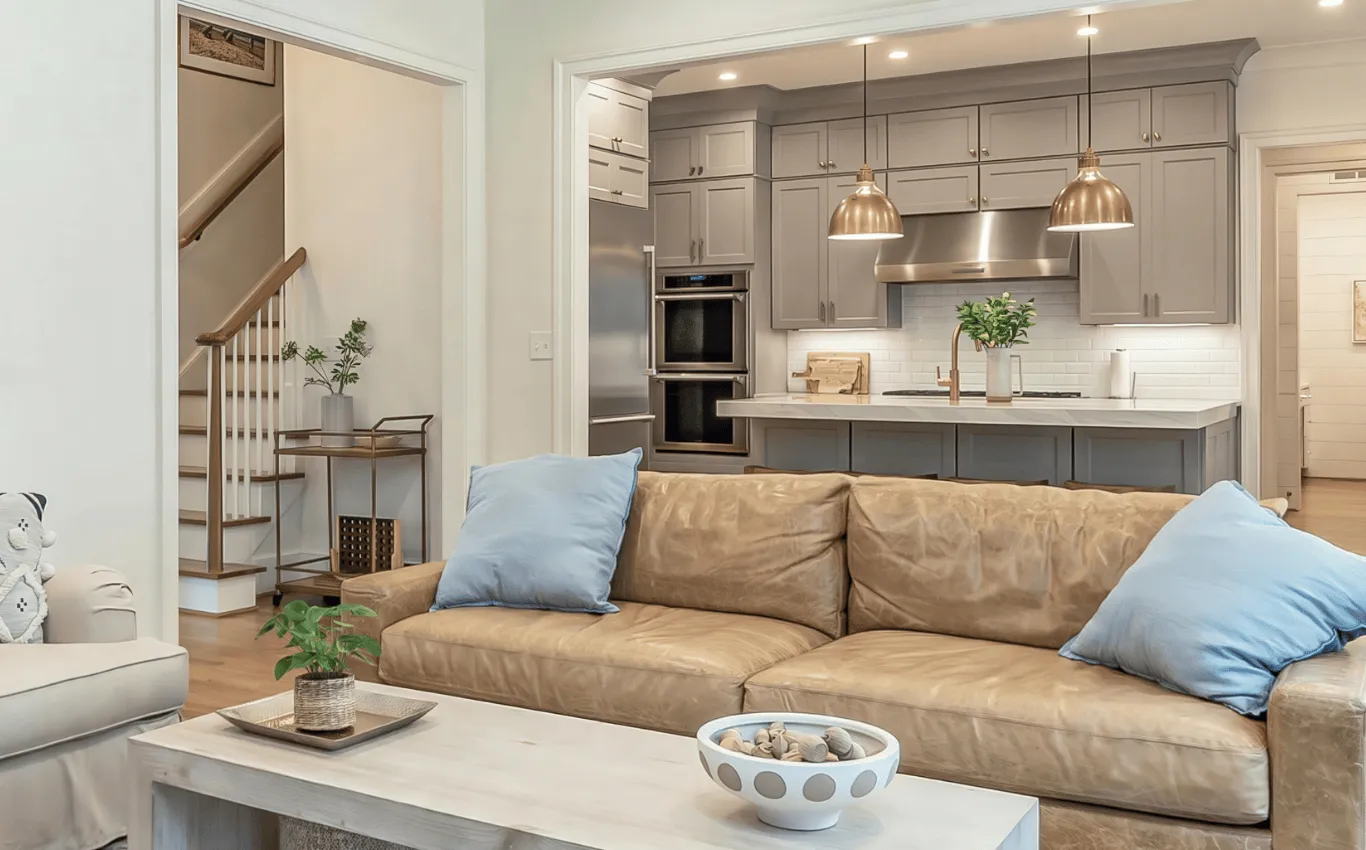
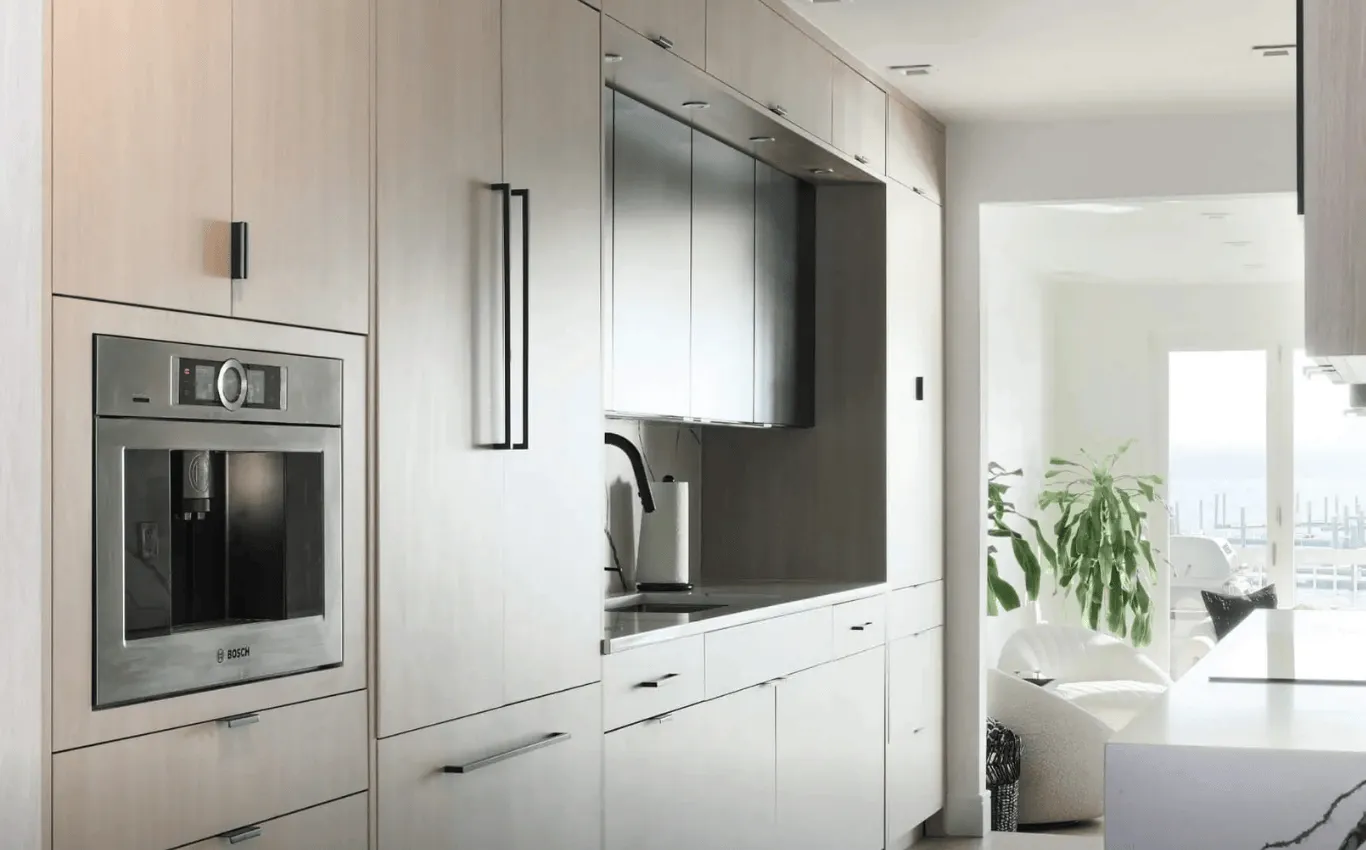
An open kitchen doesn’t just remove walls, it changes how your home functions minute by minute. Many homeowners don’t anticipate how deeply this layout affects everyday living.
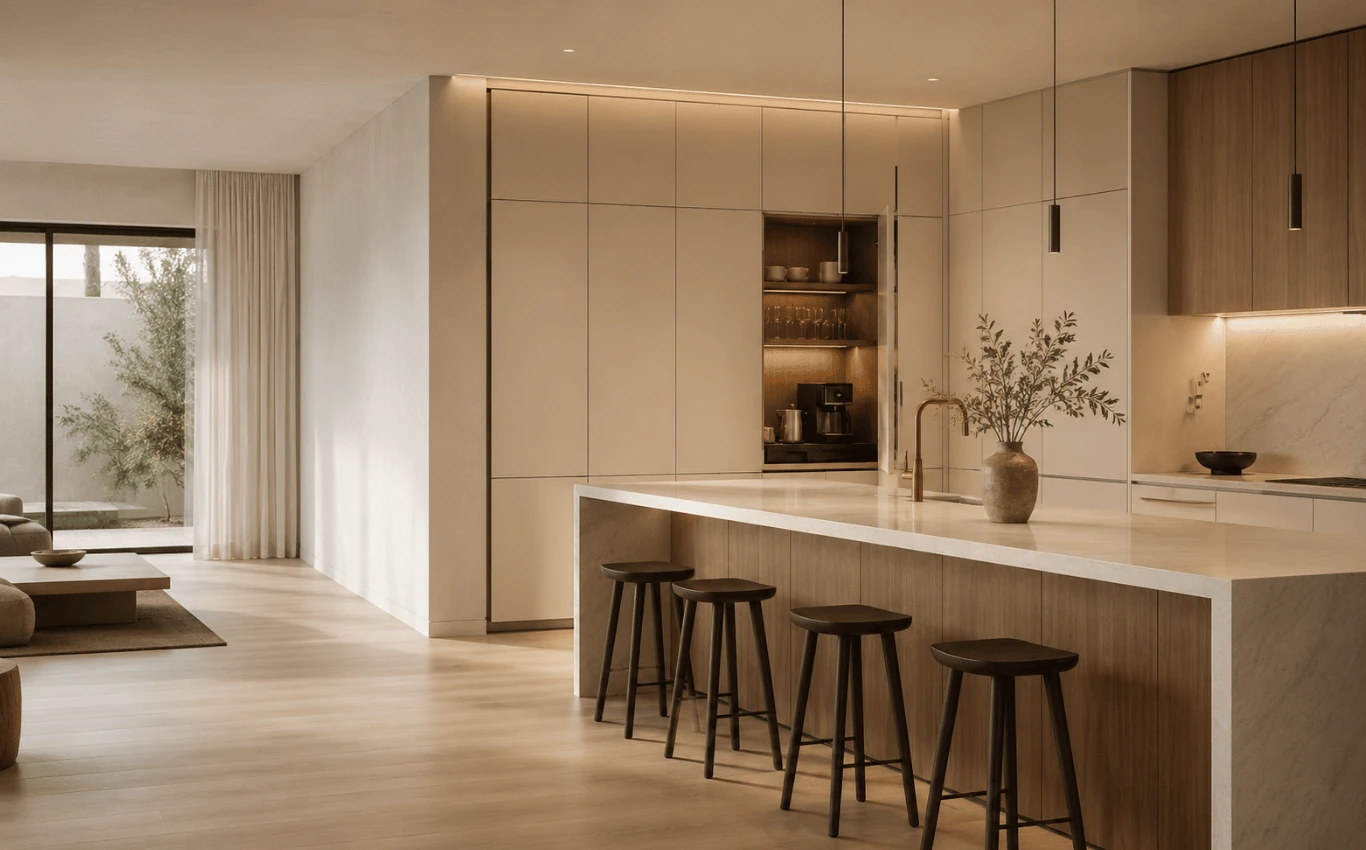
In an open layout, the kitchen becomes part of every moment in the main living space. Dishes, appliances, and even minor clutter are always visible. This constant exposure can feel motivating for some homeowners, but stressful for others. Kitchens that aren’t designed with visual restraint can quickly feel overwhelming when there’s no wall to hide behind. Projects like the Port Washington, NY | Modern Two-Tone Minimalist Kitchen show how controlled materials and clean composition help open kitchens remain visually calm throughout the day.
One of the biggest surprises homeowners experience after move-in is how far sound travels in an open kitchen. Dishwashers, ventilation systems, and everyday cooking noise easily spill into living spaces. This is where thoughtful planning, from appliance selection to layout, becomes essential. These considerations go far beyond surface-level layout debates often discussed in articles like Open Concept vs Closed Kitchens, Which Design Is Right for You?.
Without walls to contain activity, circulation paths matter more than ever. Poor movement planning can interrupt conversations or make the kitchen feel crowded. Well-designed open kitchens anticipate traffic patterns so daily life flows naturally rather than feeling chaotic.
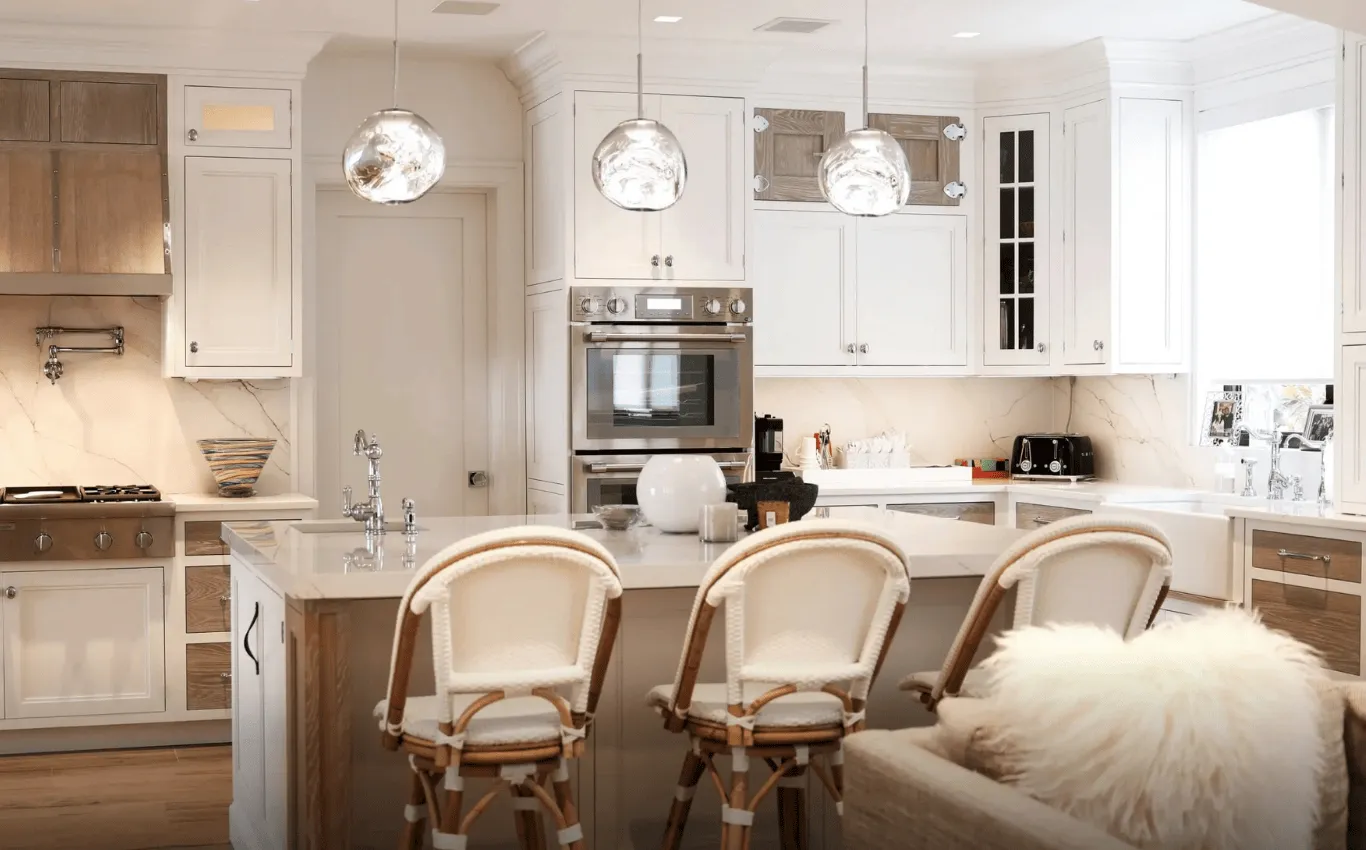
Open kitchens are often chosen for how they look during gatherings, but everyday life tells a more complex story.
There’s no denying the social appeal of an open kitchen. Hosts can cook, serve, and engage with guests at the same time. The Remsenburg, NY | Coastal Elegance Kitchen is a great example of how openness enhances entertaining while maintaining a relaxed, welcoming atmosphere.
Between meals, the kitchen is a working environment. Messes happen quickly, and not every moment is camera-ready. Without thoughtful design, the openness that feels exciting during parties can feel demanding during everyday use, especially when the kitchen visually dominates adjacent spaces.
The most successful open kitchens are designed for real life, not just guests. Strategic storage, intentional zoning, and durable materials allow the space to transition seamlessly between hosting and daily routines, a core principle behind professional kitchen Design services.
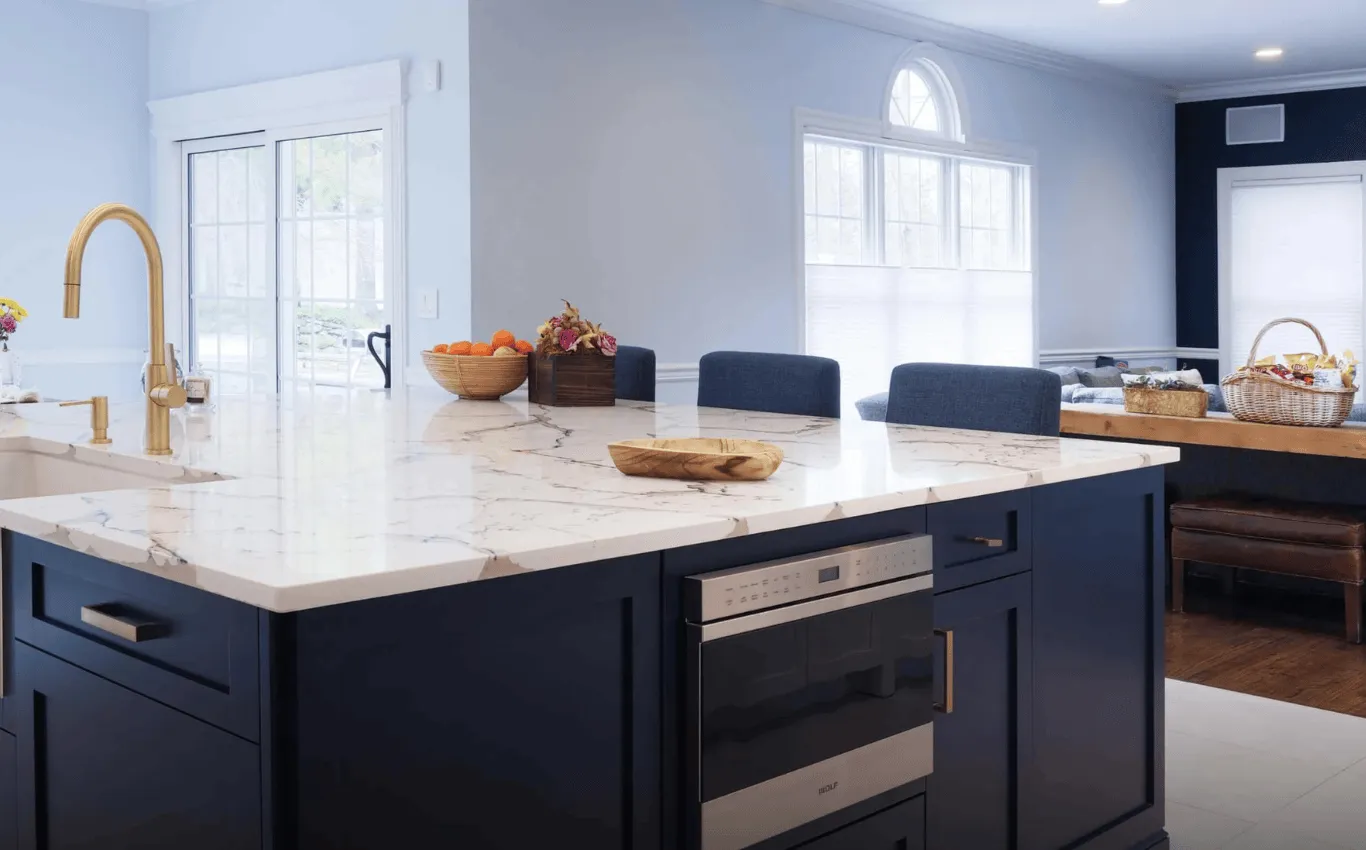
One of the most overlooked aspects of open kitchens is how they affect focus and mental separation.
Walls naturally create mental breaks. In open kitchens, cooking, cleaning, and living overlap visually. For homeowners who value calm and separation, this can feel draining over time, especially in homes where the kitchen is in constant view.
In an open kitchen, finishes don’t stay confined. Dark colors, metallic accents, and statement lighting become part of the entire living environment. The Nesconset, NY | Navy & Gold Luxe Kitchen demonstrates how bold design can succeed when balanced carefully, but also highlights why restraint matters in open layouts.
Open kitchens reward simplicity and repetition. Clean sightlines, consistent materials, and thoughtful proportions help prevent visual fatigue, especially in homes where the kitchen is always visible.
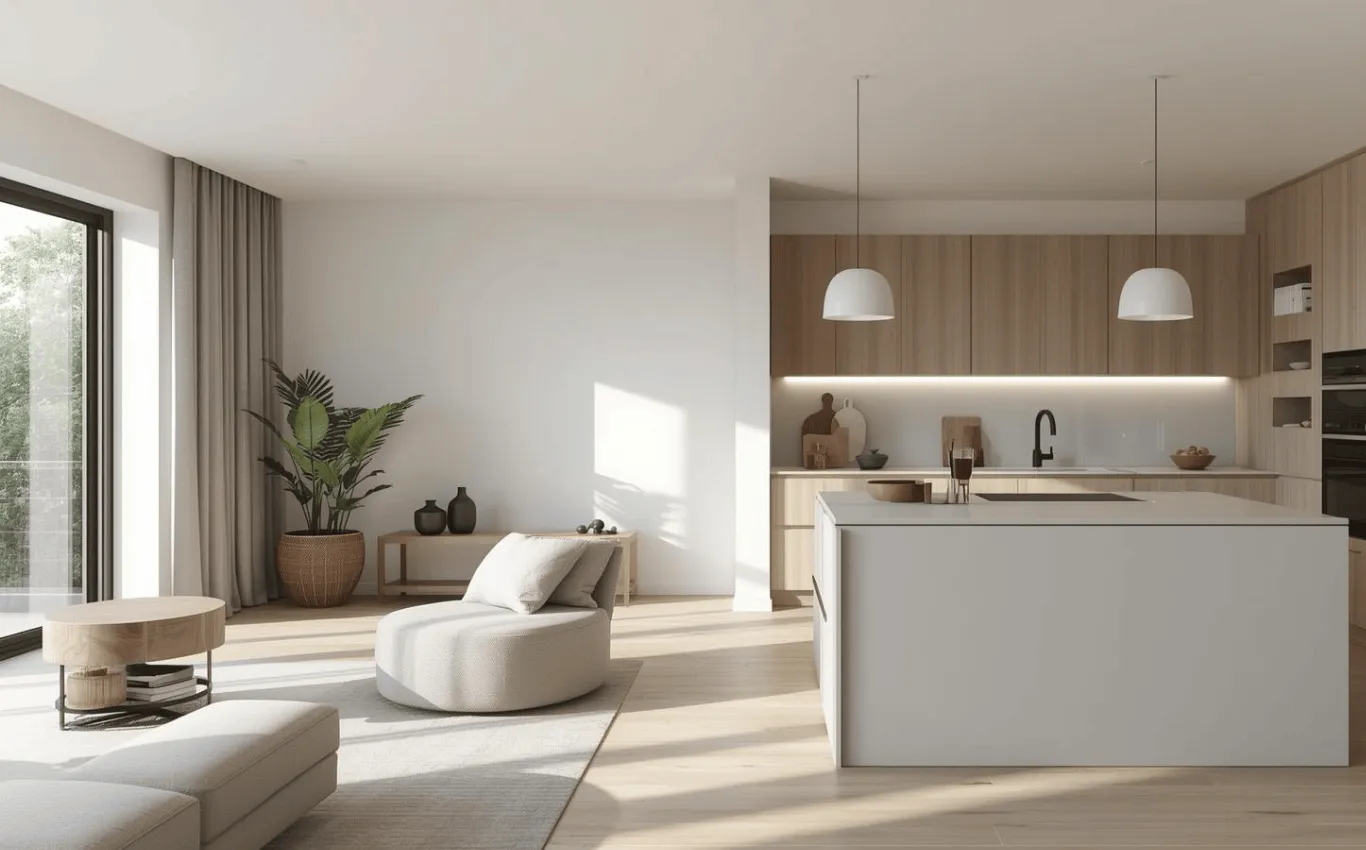
Open kitchens aren’t universally right or wrong, they’re highly personal.
Many homeowners choose open kitchens because they feel expected. But as discussed in Why Spacious Kitchens Are the Heart of Modern Luxury Homes, true luxury comes from spaces that support how you live, not from following trends blindly.
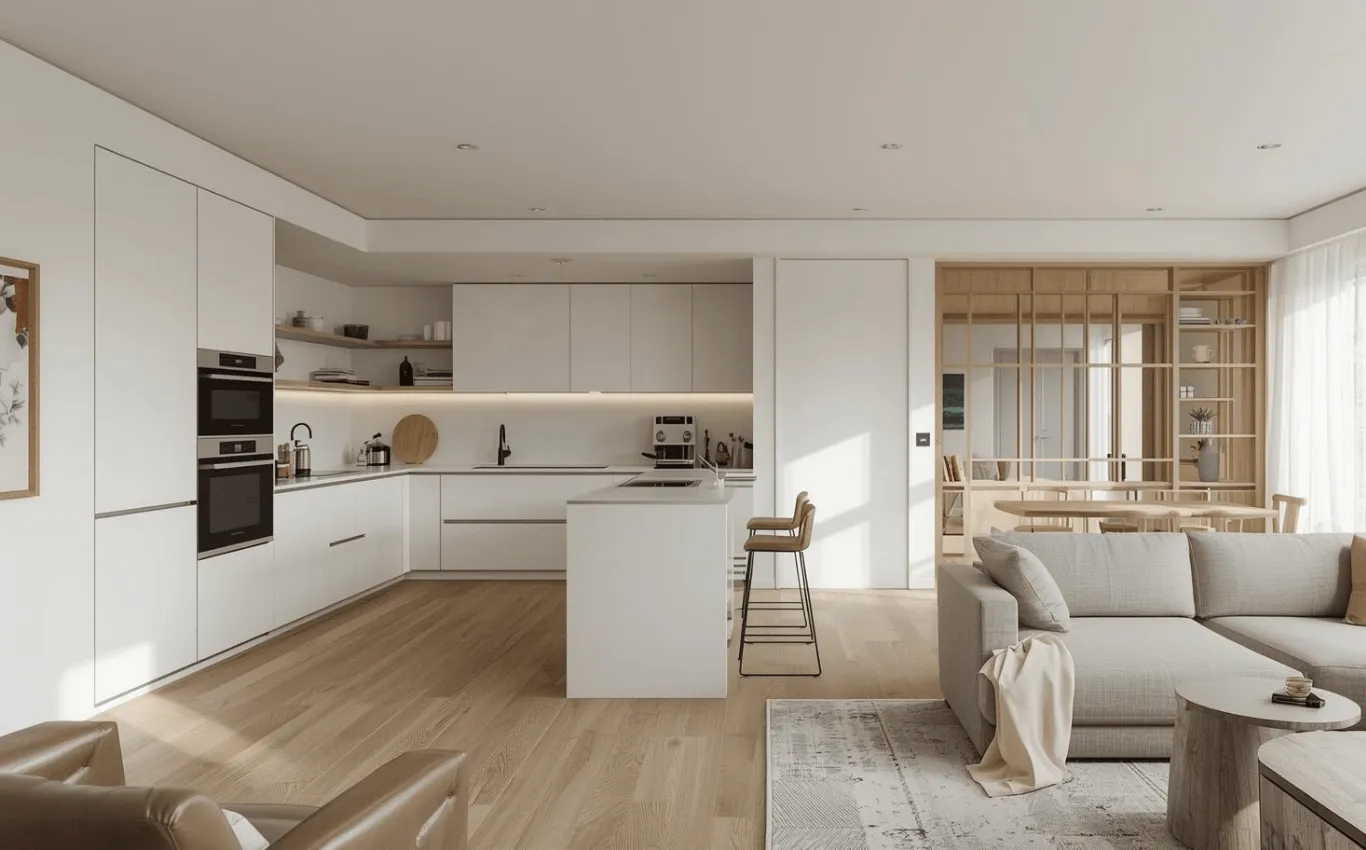
When homeowners love the idea of an open kitchen but worry about its downsides, thoughtful design can bridge the gap.
Islands, ceiling treatments, and lighting changes can define the kitchen zone without sacrificing openness. These subtle boundaries restore order while preserving connection.
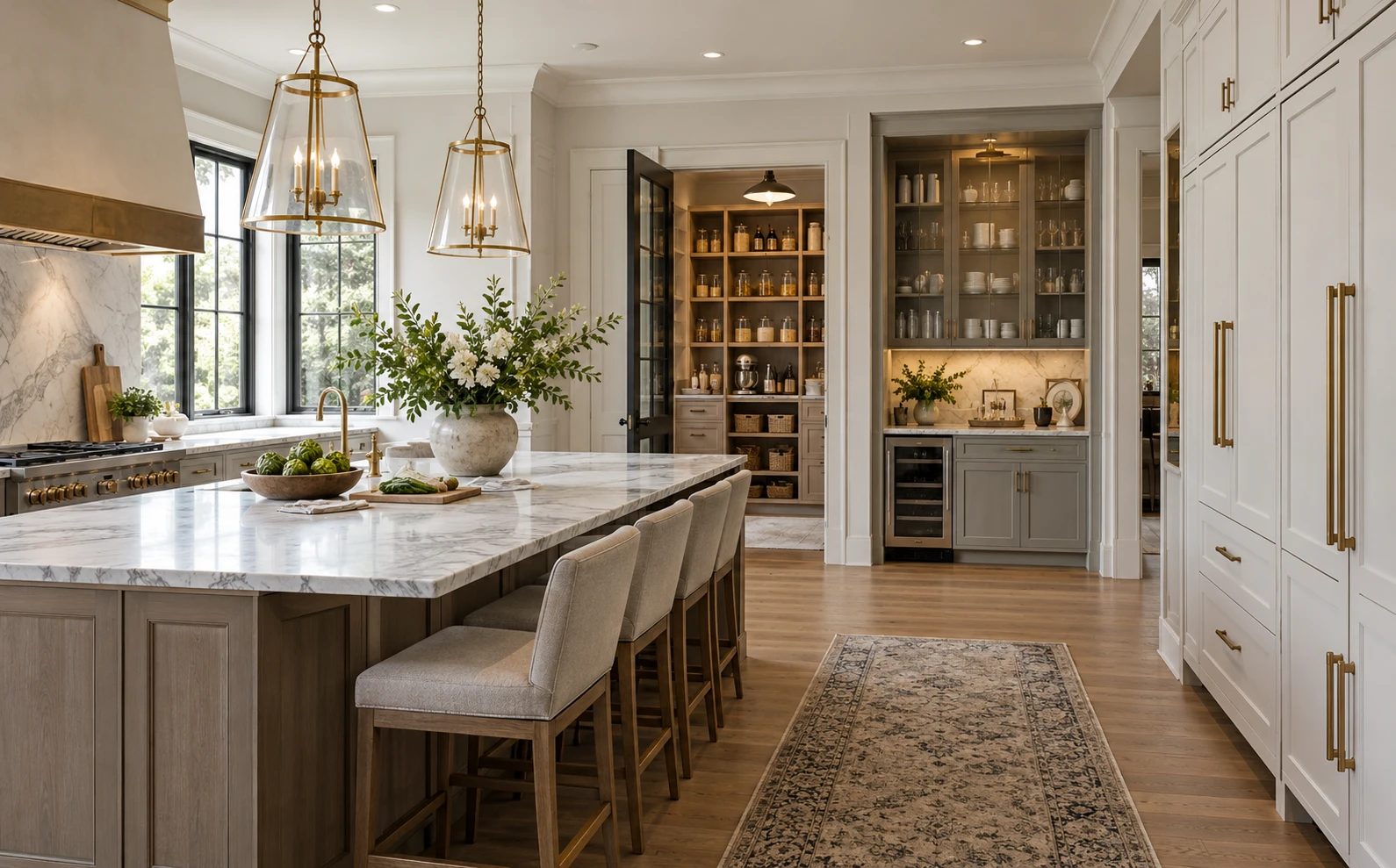
Open kitchens demand smarter storage. Appliance garages, hidden pantries, and integrated cabinetry reduce visual noise and make everyday living easier. Exploring solutions across Jeff Boico’s kitchen portfolio shows how storage design plays a major role in long-term satisfaction.
Trends fade quickly. Kitchens designed around lifestyle and behavior remain comfortable and functional for years, regardless of shifting aesthetics.
Living with an open kitchen reveals realities that inspiration photos rarely show. While openness can enhance light, connection, and entertaining, it also amplifies noise, visibility, and daily activity. The key isn’t deciding whether open kitchens are good or bad, it’s understanding whether they align with the way you actually live. With thoughtful planning and custom design, open kitchens can feel balanced, calm, and deeply livable rather than overwhelming.

Open kitchens change more than just how a home looks. This article explores the everyday realities homeowners don’t expect and how design can make open layouts work better.