Compare quartz and quartzite countertops for durability, heat resistance, maintenance, cost, and luxury kitchen design to find the best fit for your home.



Choosing the right kitchen countertop is one of the most important decisions in a renovation. Quartz and quartzite are both popular choices for their elegant appearance and durability, but they offer different benefits when it comes to maintenance, heat resistance, and everyday performance. For Long Island homeowners planning a kitchen renovation in 2027, understanding these differences can help create a space that balances luxury, functionality, and long-term value.

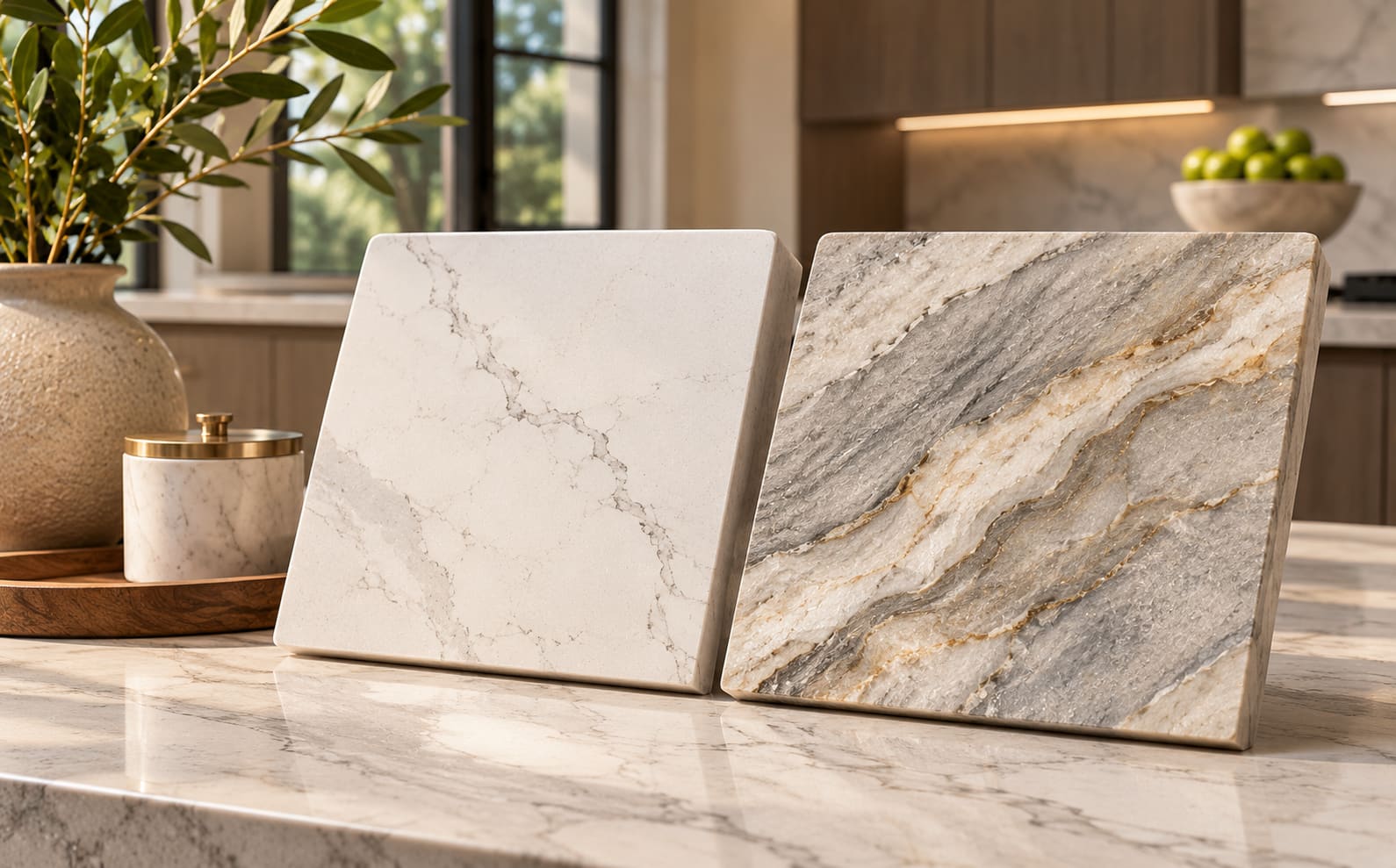
Explore the differences between quartz and quartzite, including durability, maintenance, design options, and cost, to discover which material best suits your kitchen and lifestyle.

Although quartz and quartzite sound similar, they are two different countertop materials. Quartz is an engineered surface designed for consistency and easy maintenance, while quartzite is a natural stone valued for its distinctive patterns and character.
Understanding how each material is produced helps explain its appearance, performance, and maintenance requirements.
Quartz countertops are engineered using quartz minerals, binding resins, and pigments. This manufacturing process creates a dense, nonporous surface available in a wide range of colors and finishes.
Because quartz is manufactured, homeowners can achieve a consistent appearance across countertops, kitchen islands, and backsplashes. It is particularly appealing for kitchens that prioritize clean lines, coordinated finishes, and everyday convenience.
Quartzite forms when quartz-rich sandstone undergoes intense heat and pressure beneath the Earth's surface. This natural transformation creates a hard stone with unique veining, colors, and mineral patterns.
Unlike engineered quartz, every quartzite slab has its own characteristics. This makes it attractive for homeowners seeking distinctive countertops that bring natural texture and visual depth into their kitchens.
Both materials offer sophisticated alternatives to traditional countertop finishes, but they serve different priorities.
Quartz appeals to homeowners who want predictable colors and minimal maintenance, while quartzite attracts those who appreciate natural stone and individual character.
As kitchen design continues moving toward personalized materials and refined finishes, understanding these differences becomes especially valuable when planning a renovation.

Both quartz and quartzite can perform well in busy kitchens, but their strengths differ. Quartz generally offers excellent stain resistance and easy maintenance, while genuine quartzite is particularly hard and naturally resistant to heat.
The better option depends on how frequently the kitchen is used and how much maintenance the homeowner is comfortable managing.
Quartz is highly resistant to everyday stains because its engineered surface is nonporous. Spills from coffee, cooking oils, and common ingredients are generally easier to clean when addressed promptly.
It also offers good scratch resistance, although cutting boards remain important for protecting the finish. Quartz is durable, but it is not completely resistant to scratches, chips, or damage.
For homeowners who cook frequently and prefer straightforward cleaning, quartz can be a practical choice.
Quartzite generally provides better resistance to high temperatures because it is natural stone without the resin binders used in engineered quartz.
Quartz can be damaged by direct contact with very hot cookware, potentially causing discoloration or thermal damage.
Although quartzite handles heat well, using trivets and protective pads is still recommended for both materials. This helps protect the countertop and reduces the risk of damage from sudden temperature changes.
Quartzite may require sealing to reduce moisture absorption and staining, depending on the stone's porosity and finish. Quartz typically does not require sealing, making routine care simpler.
Both surfaces should be cleaned with suitable products, and spills should be removed promptly.
For homeowners comparing materials, maintenance expectations are just as important as appearance. Our previous guide, How to Choose a Kitchen Design That Matches Your Home's Architecture, also explores how thoughtful material choices contribute to a cohesive, long-lasting interior.
Countertops play a major role in defining the visual character of a kitchen. Quartz offers controlled patterns and consistent finishes, while quartzite introduces natural variation and distinctive stone movement.
Neither material is automatically more luxurious. The final appearance depends on how the countertop complements the cabinetry, lighting, backsplash, and architectural style.
Quartz is available in a broad selection of colors, patterns, and finishes, including marble-inspired designs, subtle veining, and contemporary neutral tones.
Its consistent appearance makes it particularly useful for kitchens with multiple countertop surfaces that need to feel coordinated.
For inspiration, explore Great Neck, NY | Warm Contemporary Textured Kitchen, which demonstrates how carefully selected materials and warm textures can create a sophisticated kitchen atmosphere.
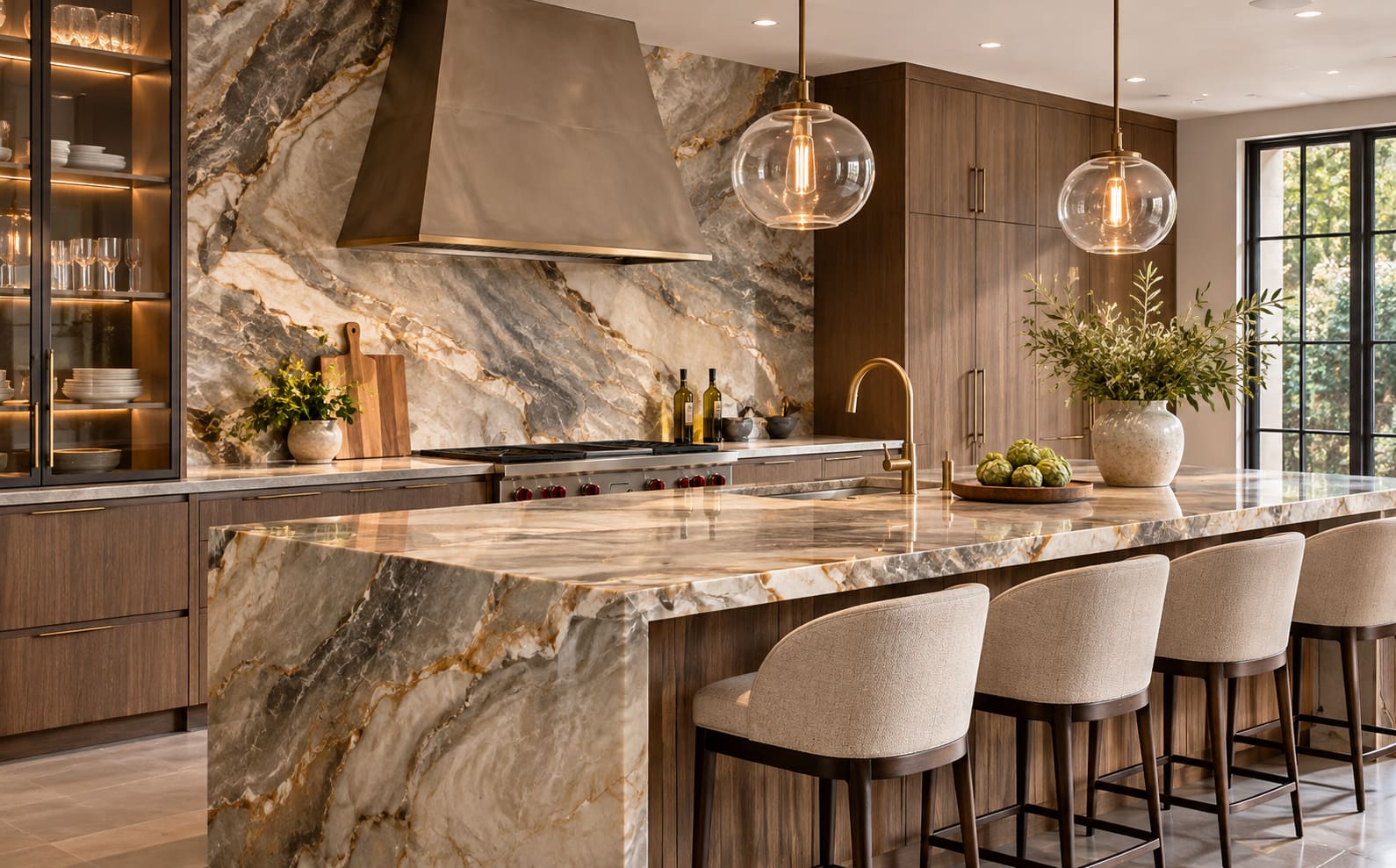
Quartzite offers naturally occurring patterns that cannot be reproduced exactly. Some slabs feature delicate veining, while others display dramatic movement and striking mineral colors.
This makes quartzite particularly attractive for statement kitchen islands and full-height backsplashes where the stone becomes an architectural focal point.
Homeowners should view and approve the actual slabs before installation because photographs and small samples may not represent the complete pattern.
Absolutely. Both materials can complement contemporary, transitional, and traditional kitchens when selected thoughtfully.
Quartz often works beautifully with streamlined cabinetry and minimalist interiors, while quartzite can introduce warmth, texture, and natural character.
Our previous article, The Temperature of a Kitchen: Why Some Spaces Feel Warm and Inviting, explores how materials, lighting, and finishes influence the atmosphere of a kitchen.
For additional inspiration, explore the Jeff Boico Kitchen Portfolio, including Great Neck, NY | Elegant Gray & White Kitchen, to see how coordinated cabinetry and countertop finishes can create an elegant, balanced interior.

The cost of kitchen countertops depends on the selected material, slab quality, fabrication requirements, installation complexity, and overall kitchen layout.
While quartz often offers more predictable pricing and lower maintenance, quartzite can justify a higher investment for homeowners who value unique natural stone.
Quartz is often more budget-friendly than premium quartzite, although high-end engineered quartz can cost as much as some natural stone options.
Quartzite pricing varies considerably based on rarity, slab size, pattern, availability, and fabrication difficulty.
Rather than comparing material prices alone, homeowners should request complete estimates covering fabrication, installation, edge profiles, sink cutouts, and backsplash details.
Both materials can provide long-term value when properly selected, installed, and maintained.
Quartz may be more practical for homeowners seeking easy cleaning and predictable maintenance, while quartzite offers the appeal of natural stone and distinctive visual character.
However, neither material guarantees a higher resale value. The countertop should complement the kitchen's overall quality, functionality, and architectural style.
Start by considering how your kitchen is used every day. Frequent cooking, entertaining, cleaning preferences, natural lighting, and cabinet finishes should all influence your decision.
Before choosing, consider three important questions:
Working with professional Kitchen Design Services can help ensure your countertop selection complements the cabinetry, layout, lighting, and overall vision for your home.
Quartz and quartzite are both excellent countertop options, but the right choice depends on your priorities. Quartz offers easy maintenance, consistent finishes, and everyday practicality, while quartzite provides natural beauty, impressive hardness, and distinctive stone patterns.
For Long Island homeowners, the best countertop is not necessarily the most expensive or visually dramatic. It is the material that complements the home's architecture, supports daily routines, and remains appealing over time.
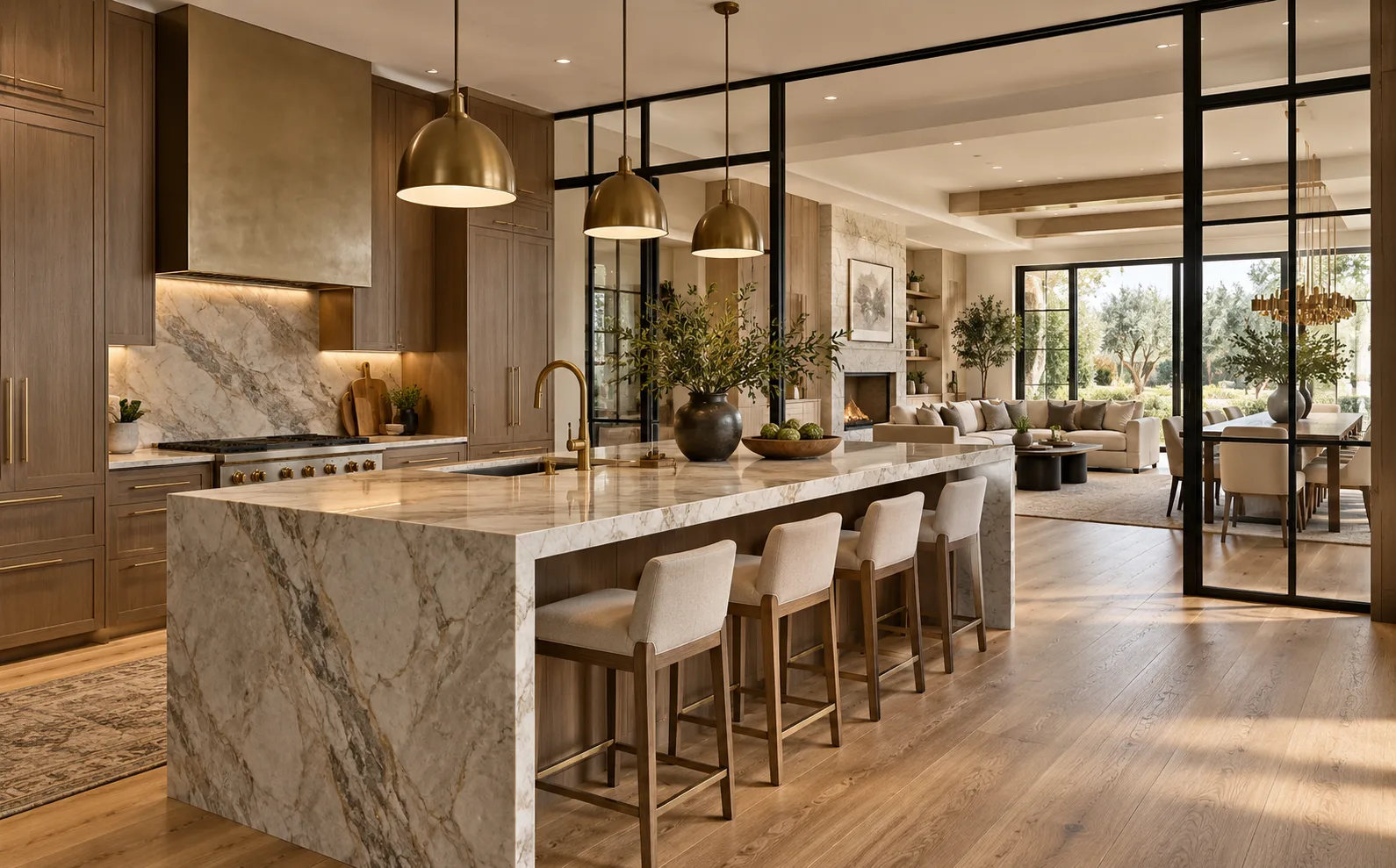
Luxury contemporary kitchen featuring a dramatic quartzite-style waterfall island, natural wood cabinetry, brass pendant lighting, and elegant stone countertops.


Design insights, inspiration, and expert advice for extraordinary kitchens and baths.