.webp)


A well-designed pantry can make the entire kitchen feel more organized and easier to use. The best option depends on your available space, storage needs, cooking habits, and how often you entertain.
For Long Island homes, that may mean a walk-in pantry, a butler’s pantry, or built-in storage. Understanding the differences helps homeowners choose the solution that fits their kitchen and lifestyle best.
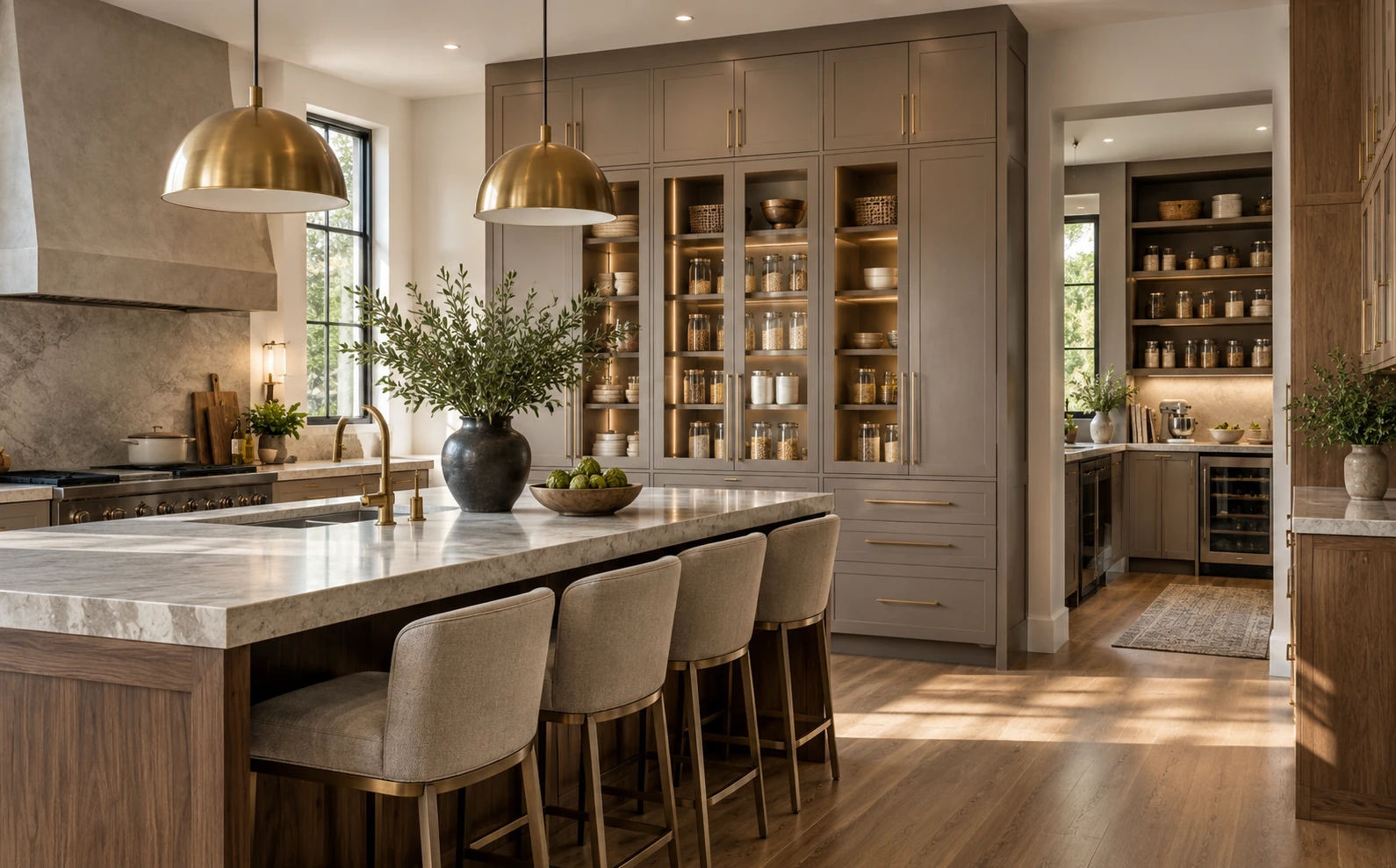
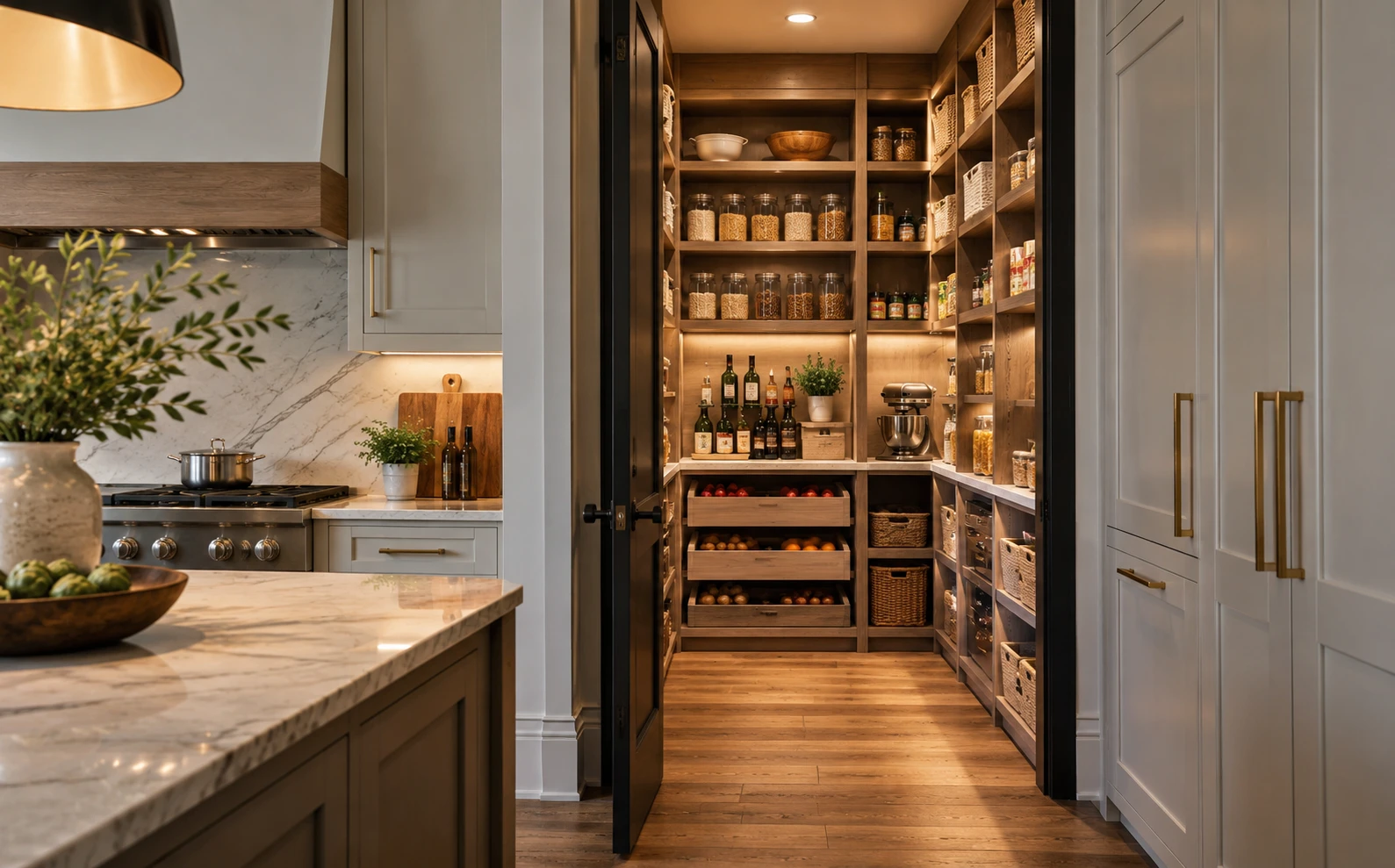
The walk-in pantry remains one of the most desirable kitchen features, particularly in homes where grocery storage, small appliances, and household supplies can quickly overwhelm conventional cabinetry.
Its biggest advantage is separation. Instead of asking the main kitchen to store everything, a walk-in pantry creates a dedicated area where practical items can remain accessible without becoming part of the kitchen's visual composition.
A large pantry does not automatically create better storage. Without thoughtful planning, deep shelves can become crowded, items can disappear behind one another, and valuable floor area can be wasted.
The most successful walk-in pantries are designed around what the homeowners actually keep there. Frequently used foods should remain easy to reach, while bulk purchases, entertaining pieces, and less frequently used appliances can occupy secondary areas.
Shelf depth also matters. Making every shelf extremely deep may technically increase capacity, but it can make everyday items harder to see and access.
This is why the principles discussed in Maximizing Your Kitchen Storage Potential apply just as strongly to the pantry. Effective storage is not simply about fitting more into the room. It is about making everything easier to find, reach, and return to its place.
One of the greatest benefits of a separate pantry is what it allows homeowners to remove from the main kitchen.
Cereal boxes, snacks, bottled drinks, paper products, bulk ingredients, serving pieces, and countertop appliances can all compete for cabinet and counter space. Moving many of these items into a pantry can give the kitchen itself a calmer appearance.
This can be particularly valuable in open-concept homes where the kitchen is visible from dining and living areas.
Instead of using every available wall for cabinetry, designers may have more freedom to introduce windows, artwork, statement materials, or cleaner architectural details because a portion of the storage has moved elsewhere.
Location matters almost as much as size.
A pantry positioned too far from the primary cooking and preparation areas can make everyday routines unnecessarily complicated. Homeowners may find themselves repeatedly walking across the kitchen simply to retrieve basic ingredients.
Ideally, the pantry should feel connected to the workflow of the kitchen while remaining visually separate.
Door placement, circulation, lighting, shelving, and the relationship between pantry storage and nearby countertops should all be considered. When these details work together, the pantry becomes a natural extension of the kitchen rather than simply an additional closet.
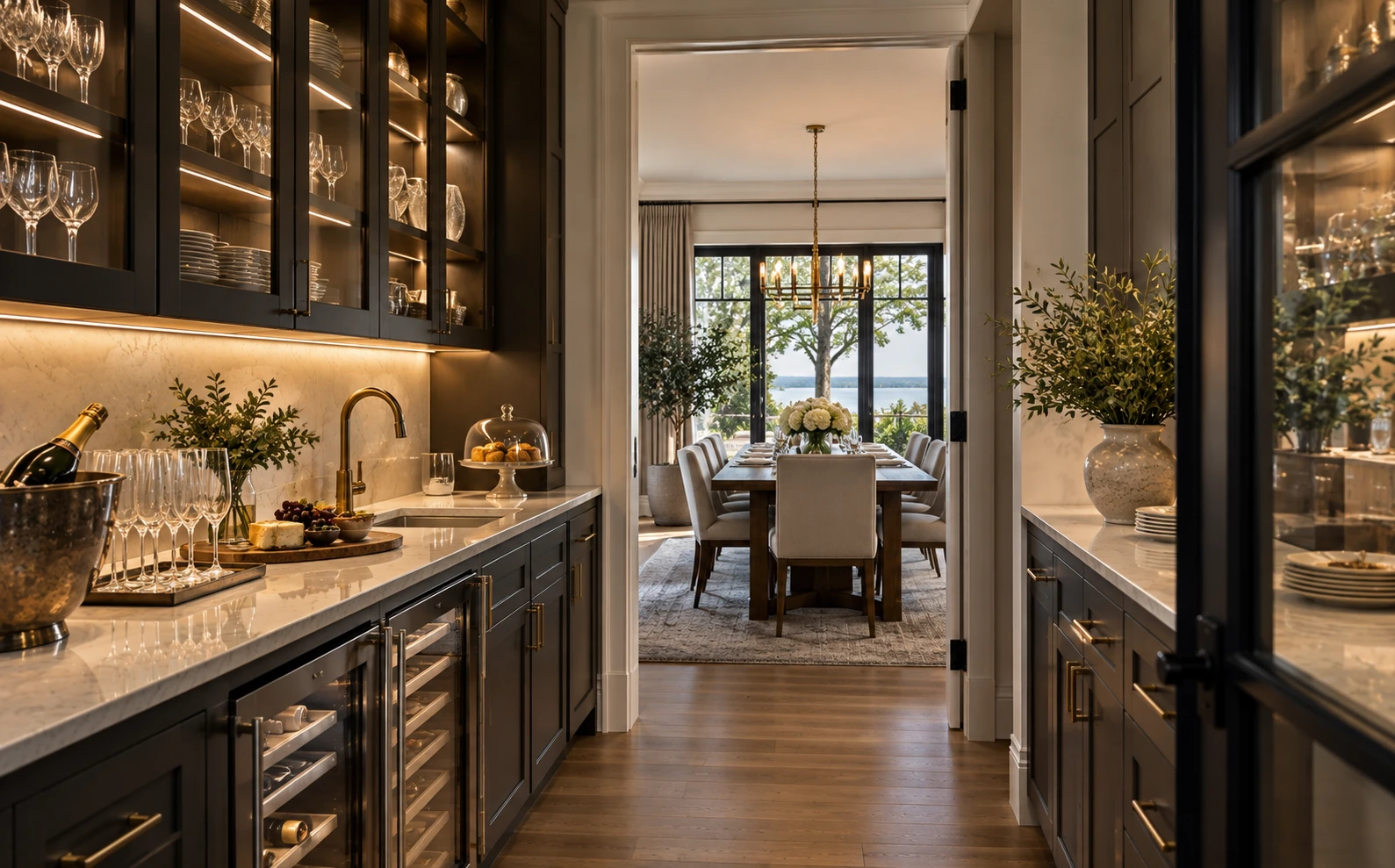
A butler’s pantry serves a different purpose. While it can certainly provide storage, its greatest value often comes from supporting entertaining and creating a transition between the working kitchen and dining areas.
For homeowners who regularly host family gatherings, holidays, dinners, or larger events, this secondary space can make the main kitchen significantly easier to manage.
Unlike a traditional pantry filled primarily with shelves, a butler’s pantry often includes usable countertop space.
That surface can serve many purposes. Drinks can be prepared away from the primary cooking area, desserts can wait before serving, dishes can be staged between courses, and small appliances can remain accessible without occupying the main kitchen.
Depending on the available space and homeowner's needs, the area might also incorporate a sink, beverage refrigerator, dishwasher, or other specialized features.
The goal is not to create a second full kitchen. It is to remove specific tasks from the main kitchen so that cooking and entertaining can happen more comfortably at the same time.
Formal dishes, glassware, serving platters, linens, specialty utensils, and seasonal pieces often occupy valuable kitchen cabinetry even though they are not used every day.
A butler’s pantry gives these items a logical home near the spaces where they are most likely to be needed.
This reduces pressure on everyday kitchen storage while making entertaining supplies easier to access when guests arrive.
Thoughtful organization can also make the transition between kitchen and dining room feel smoother. Instead of carrying everything across the main cooking zone, homeowners have a dedicated area for staging, serving, and clearing.
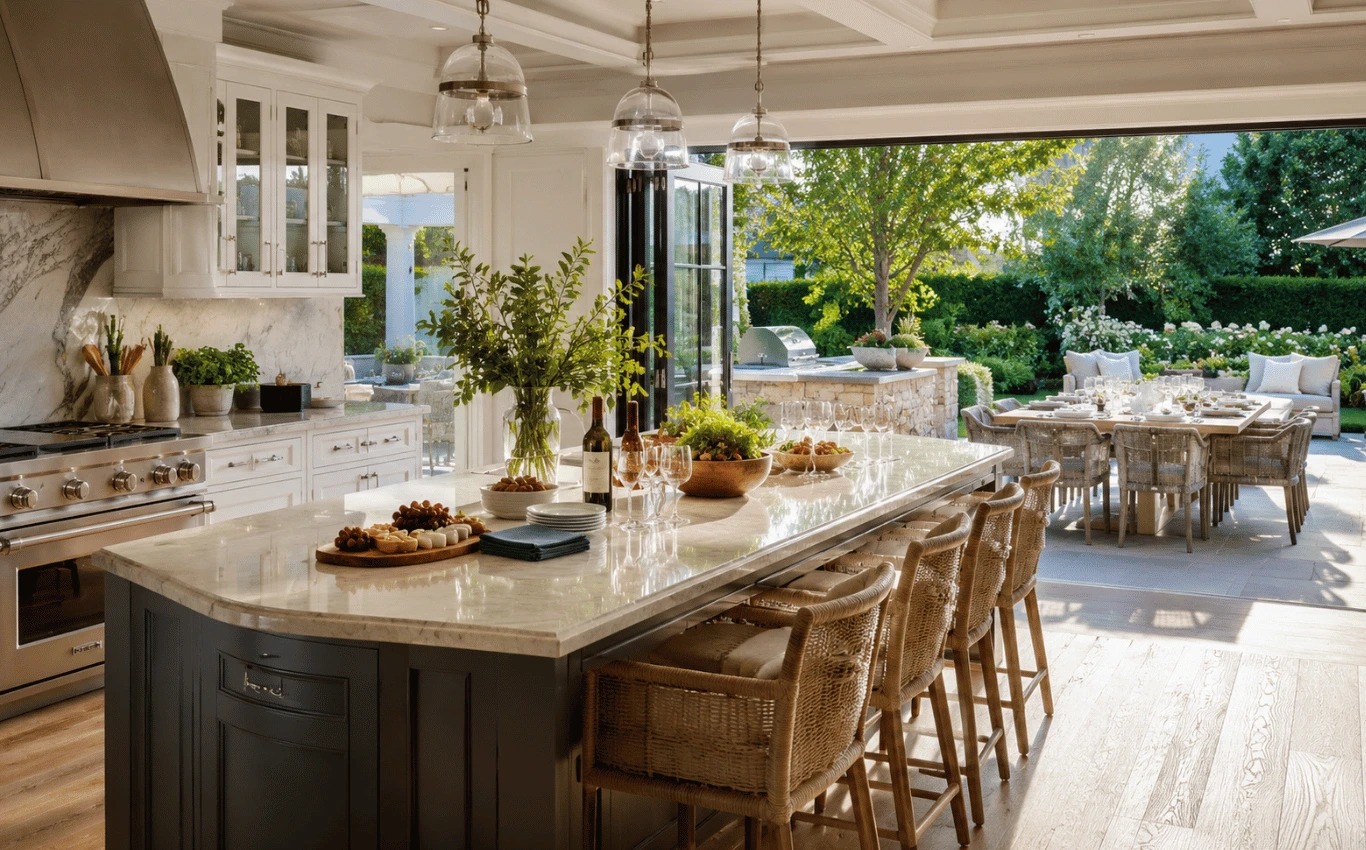
Modern kitchens often serve two roles at once. They are working spaces where food is prepared, but they are also social spaces where guests gather.
Those roles can sometimes compete.
A butler’s pantry can absorb some of the less attractive parts of entertaining: used serving pieces, beverage preparation, extra dishes, food packaging, and other temporary clutter.
That allows the main kitchen to remain more composed even while it is being actively used.
This idea connects naturally with The Summer Entertaining Kitchen: Designing for Long Island’s Indoor-Outdoor Lifestyle, where kitchen design is considered around movement, hosting, and the relationship between food preparation and social spaces. A well-planned secondary pantry can strengthen that experience by giving entertaining its own support zone.
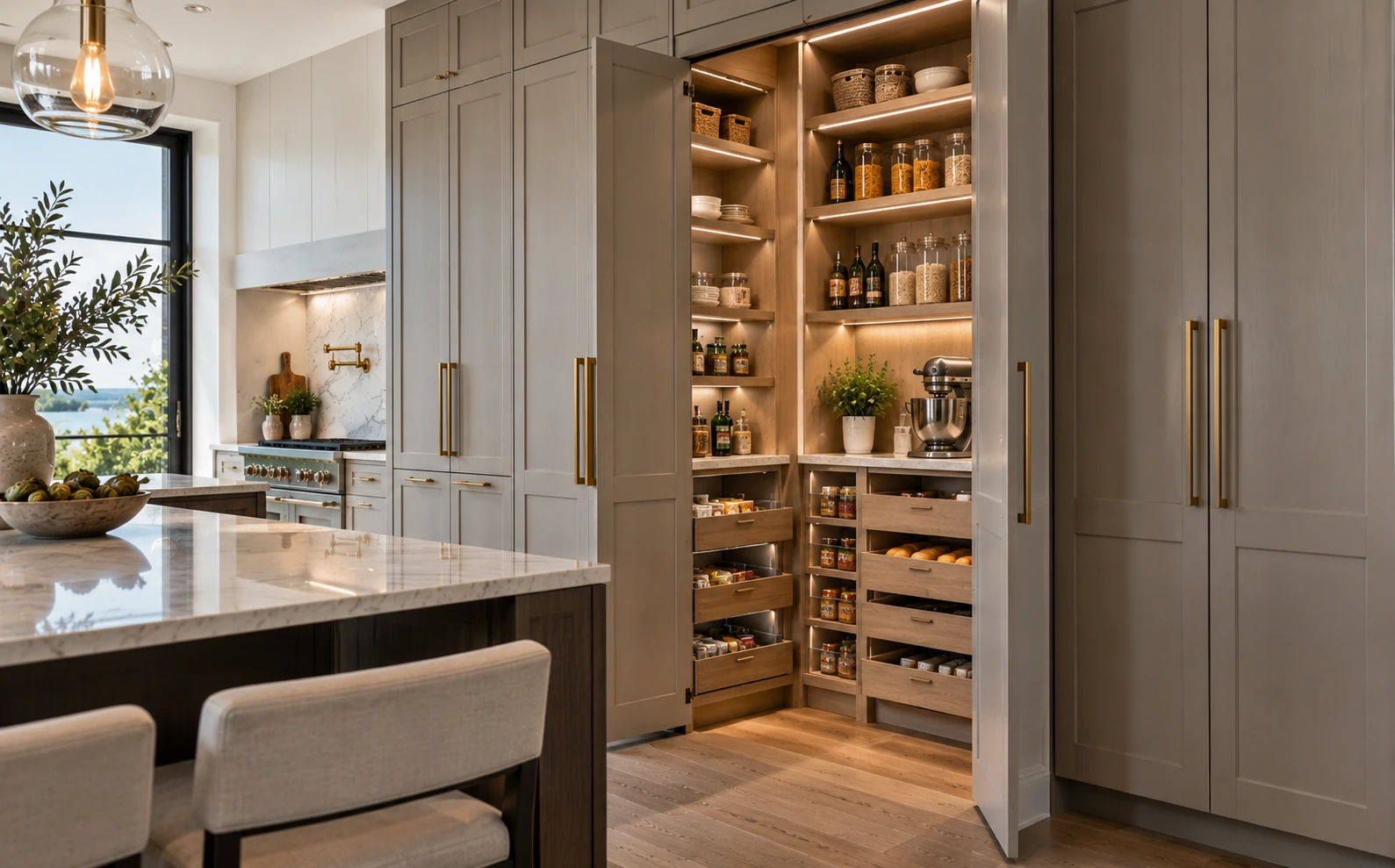
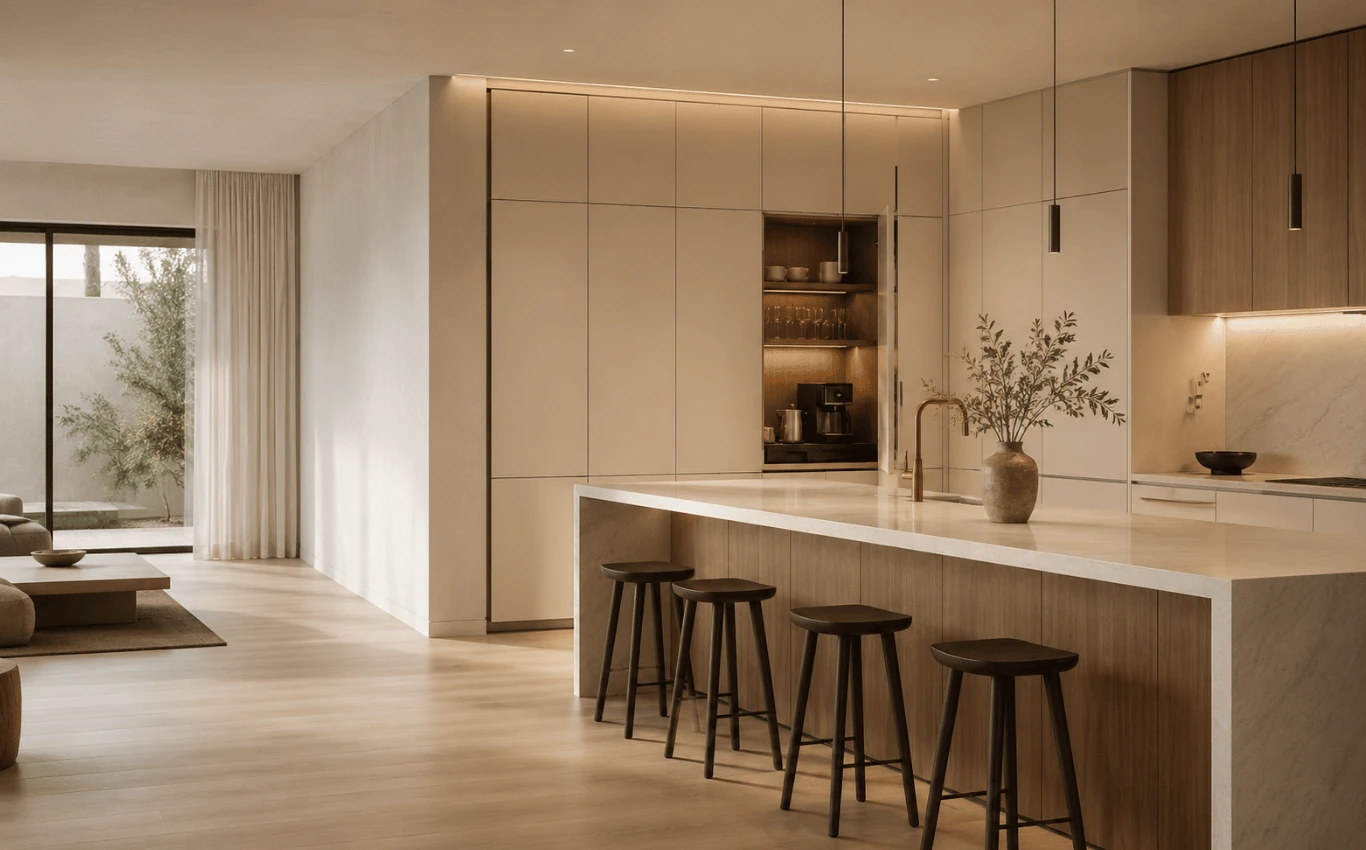
Not every kitchen has enough square footage for a separate pantry room, and not every homeowner needs one. In many cases, built-in pantry cabinetry can provide a more efficient solution.
A carefully designed pantry wall can store a surprising amount while using space that is already part of the kitchen. It can also integrate seamlessly with surrounding cabinetry, making storage feel like part of the architecture rather than an addition.
Standard upper and lower cabinets divide storage into multiple sections. Pantry cabinetry can approach the wall differently by using its full height.
Tall cabinets can accommodate dry goods, small appliances, cookware, serving pieces, and household supplies while maintaining a relatively compact footprint.
Interior features can make that storage even more useful. Pull-out shelves, internal drawers, adjustable shelving, vertical dividers, and specialized organizers can reduce the problem of items disappearing into deep cabinets.
For smaller kitchens in particular, using vertical space effectively can provide meaningful storage without sacrificing valuable circulation.
One advantage of custom pantry cabinetry is the ability to think beyond generic shelves.
A homeowner who bakes frequently may need dedicated storage for mixers, baking sheets, ingredients, and equipment. Someone who entertains regularly may prioritize glassware and serving pieces. A busy family might need accessible snack storage, breakfast supplies, and organized zones for different household members.
The internal design can respond to those routines.
This creates a pantry that is not merely a place to put things, but a storage system built around how the kitchen is actually used.
Built-in storage can also support a cleaner visual direction.
Cabinet fronts can match the rest of the kitchen, allowing a large amount of storage to sit behind a consistent architectural surface. Integrated hardware or carefully selected pulls can further reduce visual interruptions.
That approach relates closely to The Invisible Kitchen: Why Luxury Kitchen Design Is Hiding More Than Ever. As appliances and storage become more integrated, kitchens can maintain substantial functionality without displaying every practical element.
For homeowners who want a streamlined kitchen but still need generous storage, a concealed pantry wall can offer an effective balance.
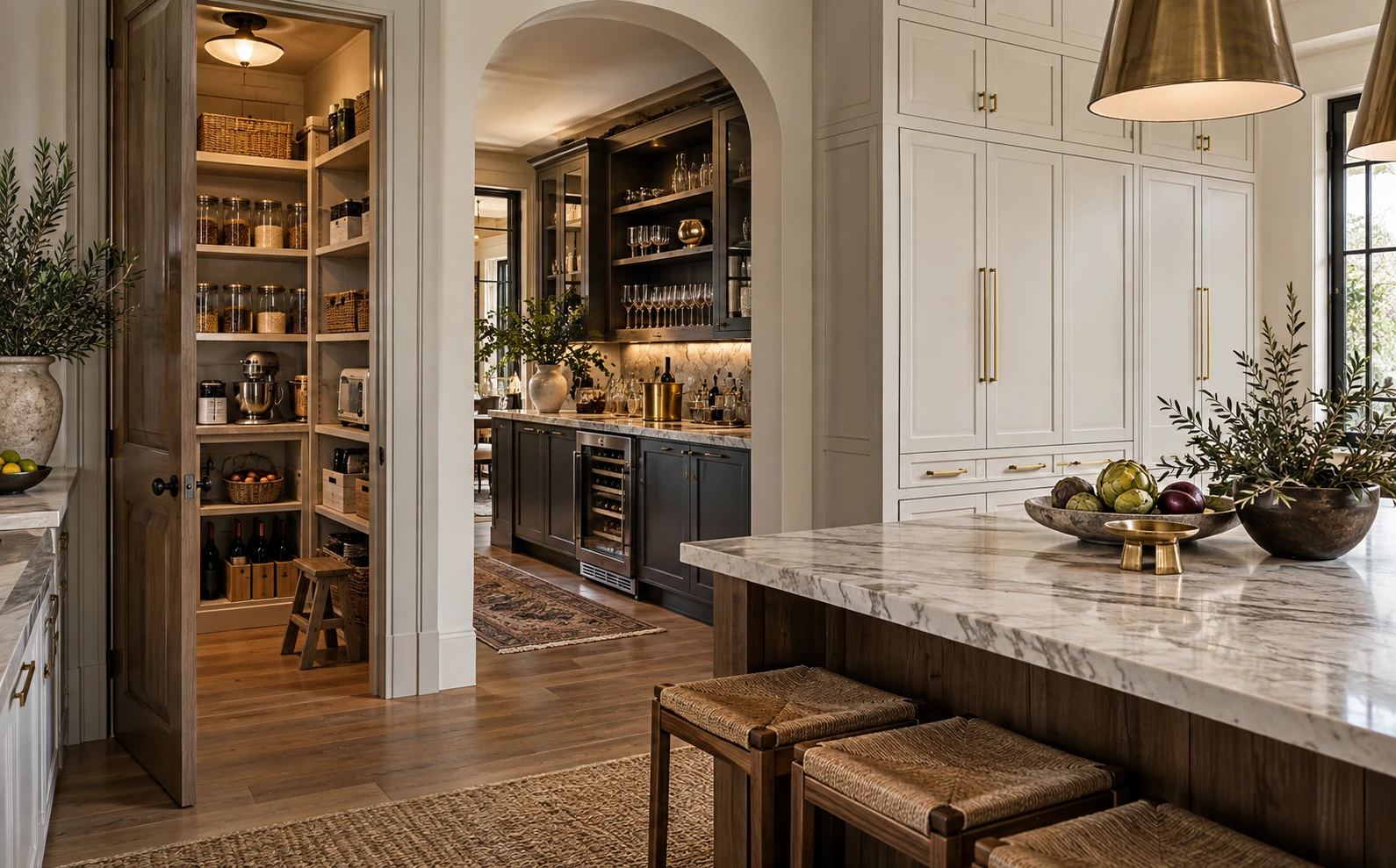
There is no single pantry type that works best for every kitchen. A walk-in pantry may provide enormous capacity but require valuable square footage. A butler’s pantry can transform entertaining but may be unnecessary for homeowners who rarely host. Built-in storage can be extremely efficient but needs careful internal planning to reach its full potential.
The right decision comes from understanding how the household uses the kitchen before deciding what the pantry should look like.
Before determining pantry size, homeowners should think about the items creating pressure on their existing kitchen.
Is the problem primarily food storage? Small appliances? Bulk purchases? Serving pieces? Beverage supplies? Everyday countertop clutter?
Different answers may lead to completely different pantry designs.
A household that shops in bulk may benefit greatly from a walk-in pantry. A homeowner with extensive entertaining pieces might get more value from a butler’s pantry. Someone primarily trying to improve everyday organization may find that well-designed built-in cabinetry solves the problem without requiring another room.
Storage should respond to the contents, not the other way around.
Lifestyle should also influence the decision.
For frequent hosts, the ability to stage food, prepare drinks, store serving pieces, and temporarily move clutter away from the main kitchen can make a butler’s pantry particularly useful.
For households focused more heavily on everyday family routines, a walk-in pantry or integrated pantry wall may provide greater value.
The important question is not which option feels most luxurious. It is which option removes the most friction from the way the kitchen is used.
It is easy to assume that the solution to insufficient kitchen storage is a larger pantry. Sometimes it is. But additional square footage does not correct inefficient organization.
A smaller pantry with carefully planned shelving, drawers, pull-outs, appliance storage, and dedicated zones can sometimes outperform a much larger room filled with generic shelves.
That is why pantry planning should happen as part of the overall kitchen design rather than after the major layout decisions have already been made. The pantry, cabinetry, appliances, work surfaces, and circulation all influence one another.
The perfect pantry does not need to be the largest or most elaborate option. It needs to make the kitchen easier to use.
A walk-in pantry can provide generous everyday storage and keep practical items away from the main kitchen. A butler’s pantry can create valuable support for entertaining and serving. Built-in pantry cabinetry can maximize storage while maintaining a clean, integrated appearance.
For Long Island homeowners planning a kitchen renovation, the right choice should come from the home's available space, storage needs, entertaining habits, and everyday routines. When those factors guide the design, the pantry becomes more than extra storage. It becomes an important part of how well the entire kitchen works.
Ready to Find the Perfect Pantry for Your Kitchen?
Get In Touch