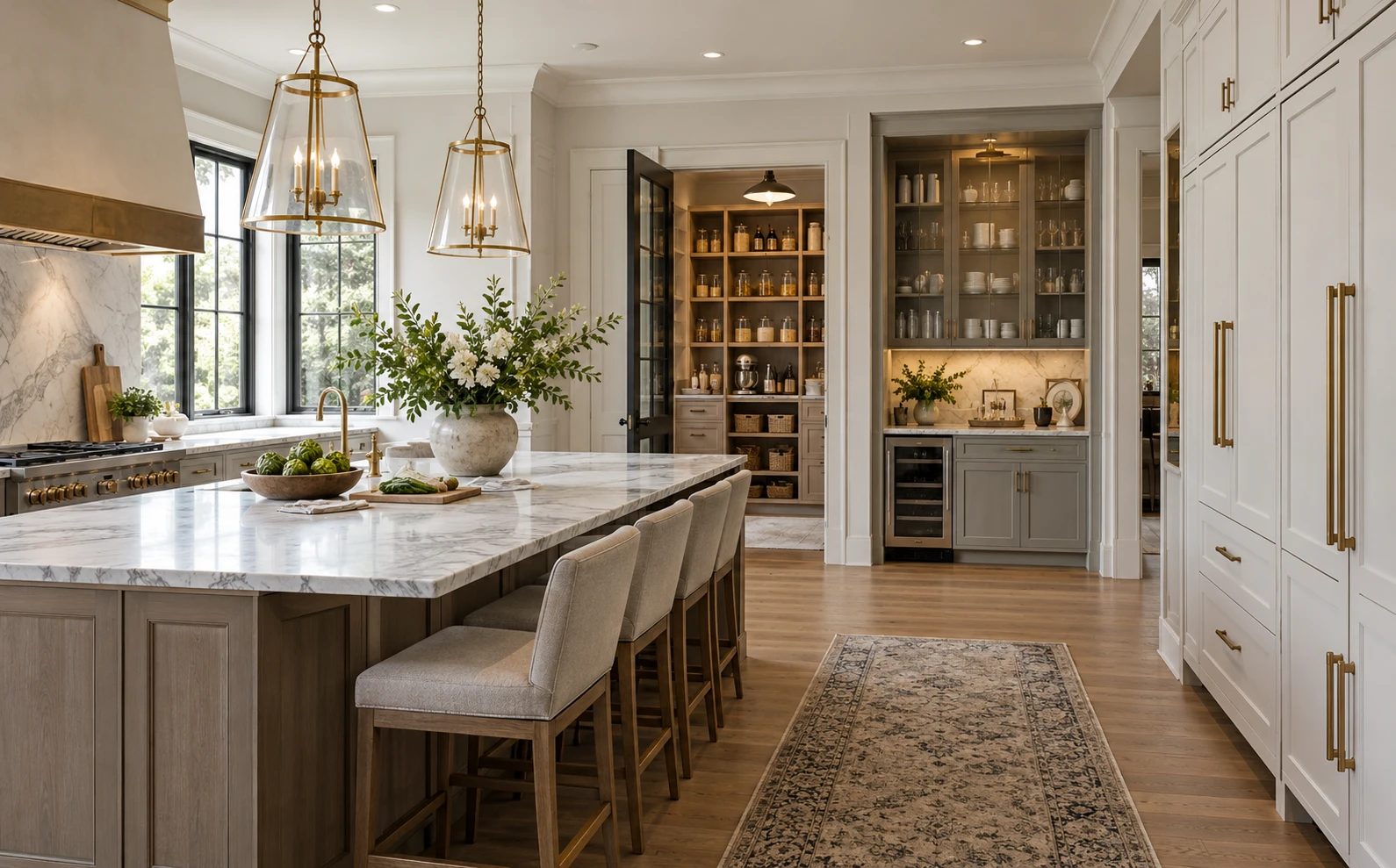
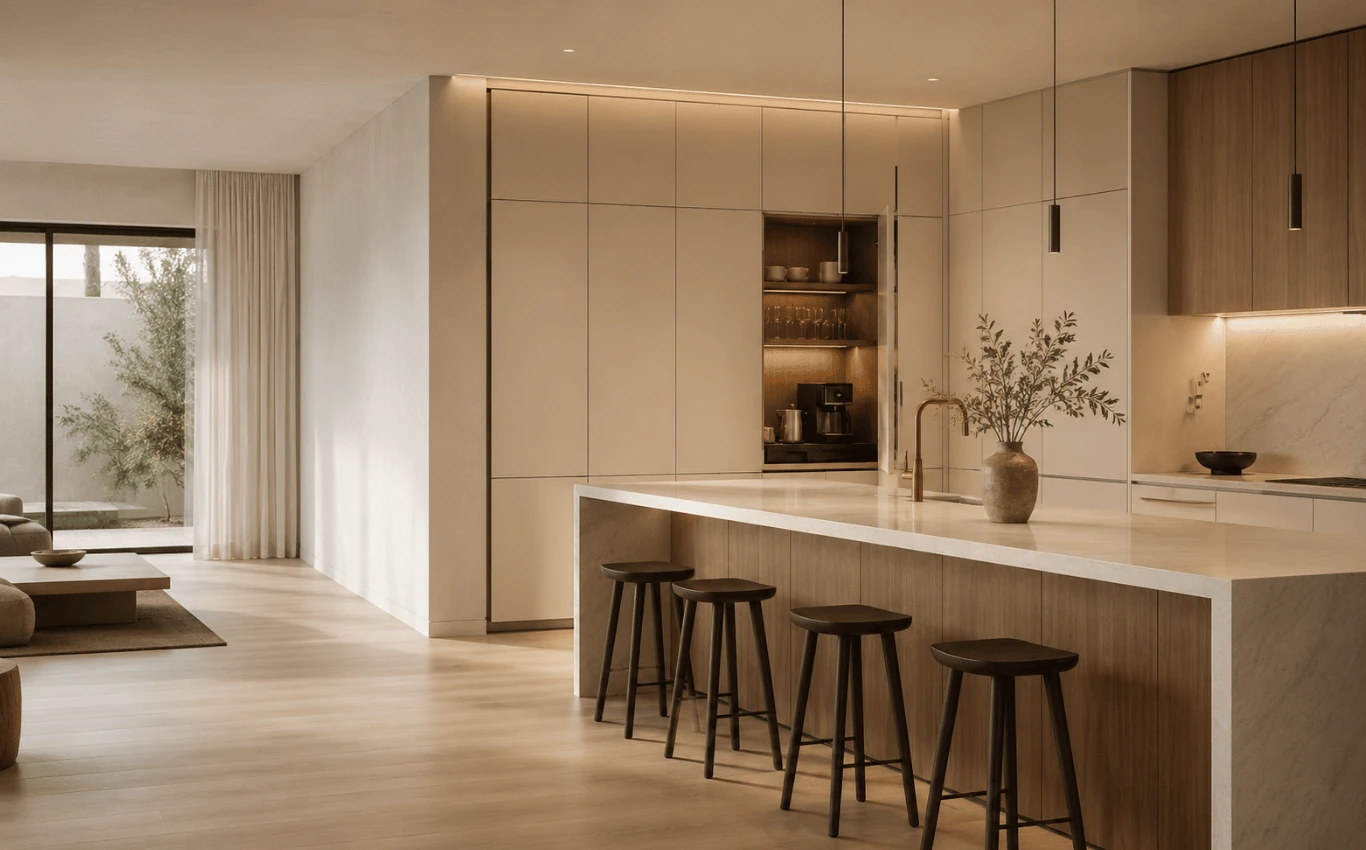
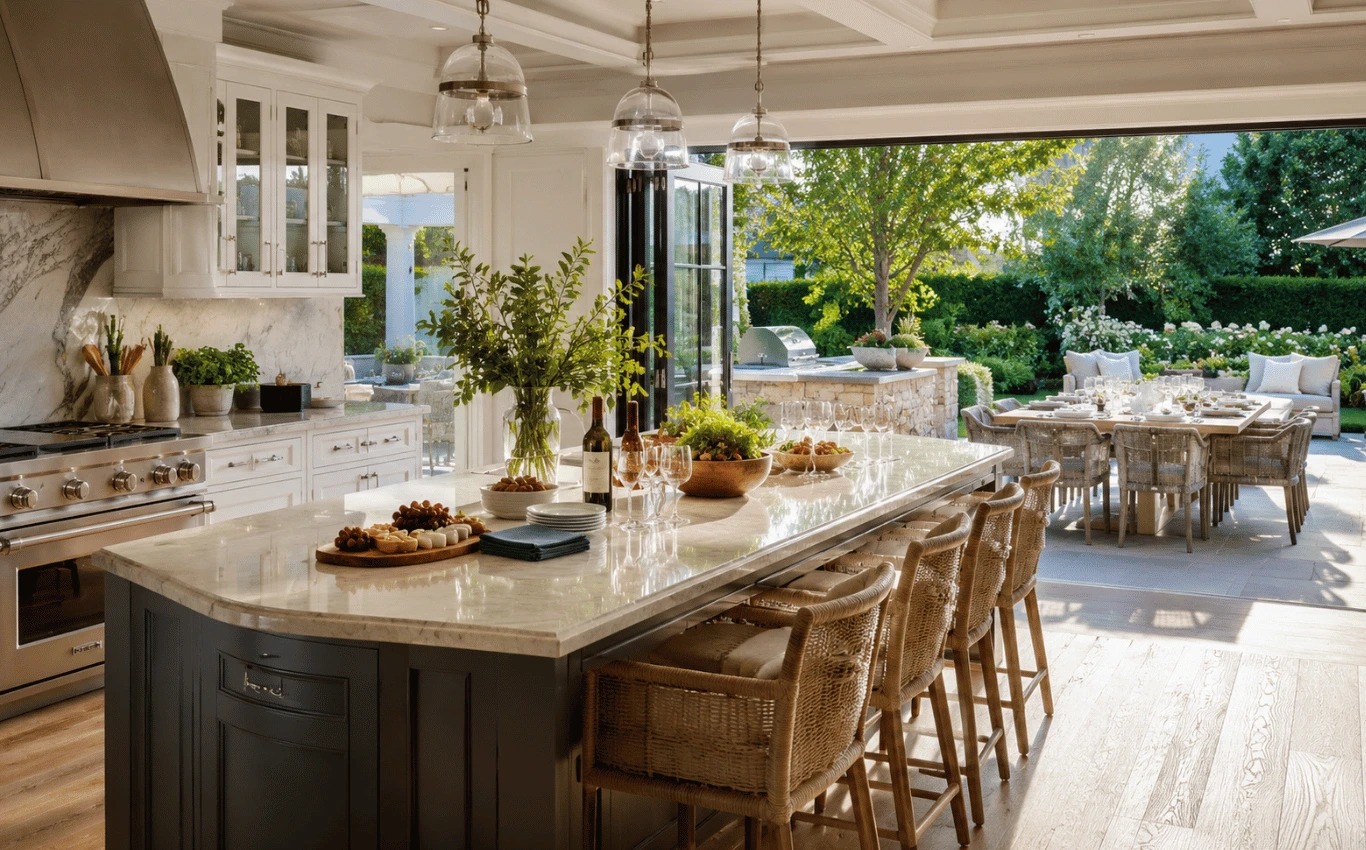
.webp)


Walk into two kitchens, and one instantly feels warm and inviting while the other feels cold, even if both look high-end. This difference isn’t about size or cost, it’s about the “temperature” of the space.
That temperature comes from how materials, lighting, and layout work together to shape how you feel. In this article, we explore what makes a kitchen truly warm, and how design creates a space that feels as good as it looks.

Most people assume that warm kitchens come from warm colors. While color plays a role, the real foundation of warmth comes from materials.
A kitchen filled with smooth, reflective surfaces can feel visually clean but emotionally cold. On the other hand, textured materials create depth and softness.
Materials that add warmth:
These elements absorb light instead of reflecting it harshly, creating a softer, more comfortable environment.
Every kitchen needs a mix of durable materials, but too many hard surfaces can make the space feel rigid.
To create balance:
This balance is what transforms a kitchen from visually impressive to emotionally inviting.
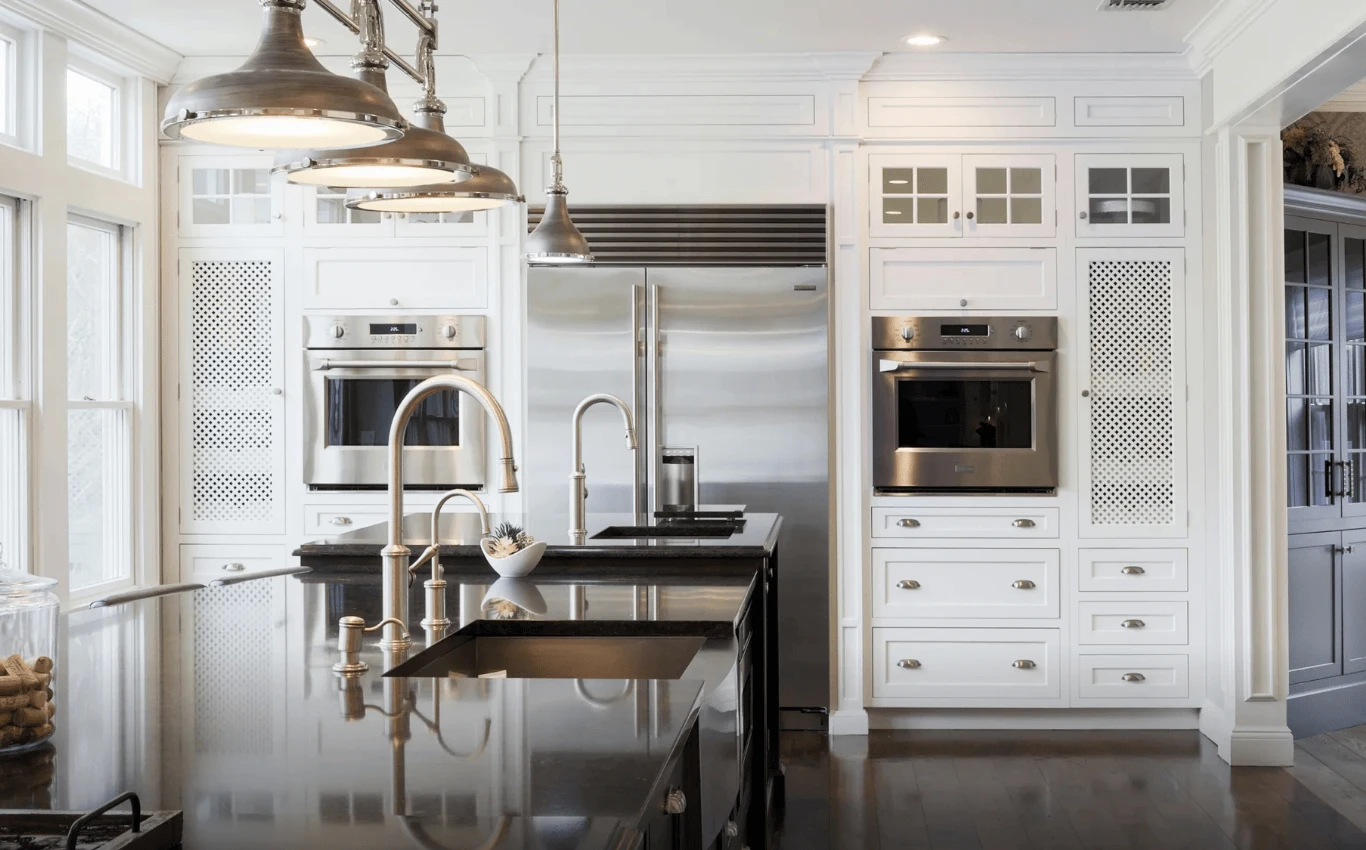
In this project: Residential | Nesconset NY, You can see how layered materials, subtle textures, and balanced finishes create a kitchen that feels warm without relying on heavy color. The space feels natural, not forced.

Lighting is one of the most powerful tools in creating warmth, and one of the most overlooked.
Many kitchens rely too heavily on overhead lighting, which can create harsh shadows and a clinical feel.
This often results in:
A kitchen shouldn’t feel like a workspace alone, it should feel like part of the home.
A warm kitchen uses multiple layers of lighting to create balance.
Effective lighting includes:
This layered approach allows the space to adapt throughout the day, brighter in the morning, softer in the evening.
Lighting doesn’t just affect how you see your kitchen, it affects how you feel in it. A well-lit space reduces strain, improves focus, and creates a sense of calm.
This connects with ideas explored in Elevating Your Kitchen with Lighting: A Guide to Ambient, Task, and Accent Options, where lighting is treated as both a functional and emotional design element.

Warmth isn’t just visual, it’s spatial. The way a kitchen is laid out determines how comfortable it feels to move through.
An open kitchen can feel inviting, but only when it’s properly structured. Without clear zones, openness can turn into emptiness.
A well-designed layout:
This balance makes the space feel both functional and welcoming.
Large kitchens sometimes feel cold not because they’re poorly designed, but because they lack connection.
To avoid this:
This creates a sense of intimacy within a larger layout.
Take a look at this project: Residential | Cold Spring Harbor NY, Here, the layout creates a natural flow between areas while maintaining a sense of comfort. The space feels open, but not empty, structured, but not rigid.

At its core, warmth is about how a space makes you feel, not just how it looks.
A warm kitchen feels intuitive. You don’t have to think about where things are or how to move, it just works.
This creates:
These qualities turn cooking from a task into an experience.
Design influences behavior more than most people realize. A comfortable kitchen encourages you to spend more time in it, to cook more, and to enjoy the process.
This idea connects with The Emotional Geography of the Modern Kitchen, where layout and design directly shape how you interact with the space.
A warm kitchen doesn’t try too hard. It doesn’t rely on bold statements or trends. Instead, it focuses on balance, comfort, and usability.
It’s the difference between:
A warm kitchen isn’t created by adding more, it’s created by designing better. Materials, lighting, layout, and flow all work together to shape how a space feels.
When these elements are aligned, the kitchen becomes more than just a place to cook. It becomes a space where you want to spend time, where movement feels natural, and where every detail supports your daily life.