.webp)


A small kitchen doesn’t have to feel small. In fact, some of the most comfortable and visually appealing kitchens are not the largest ones, they’re the ones designed with intention. The difference isn’t square footage, it’s perception. How a space feels is shaped by layout, light, materials, and how everything works together.
Many homeowners focus on size as the main limitation, but in reality, design has the power to completely transform how a kitchen is experienced. A well-designed small kitchen can feel open, efficient, and even expansive, while a poorly designed one can feel tight and cluttered, no matter its size. In this article, we’ll explore how smart design decisions can make a small kitchen look and feel more spacious without changing its actual footprint.
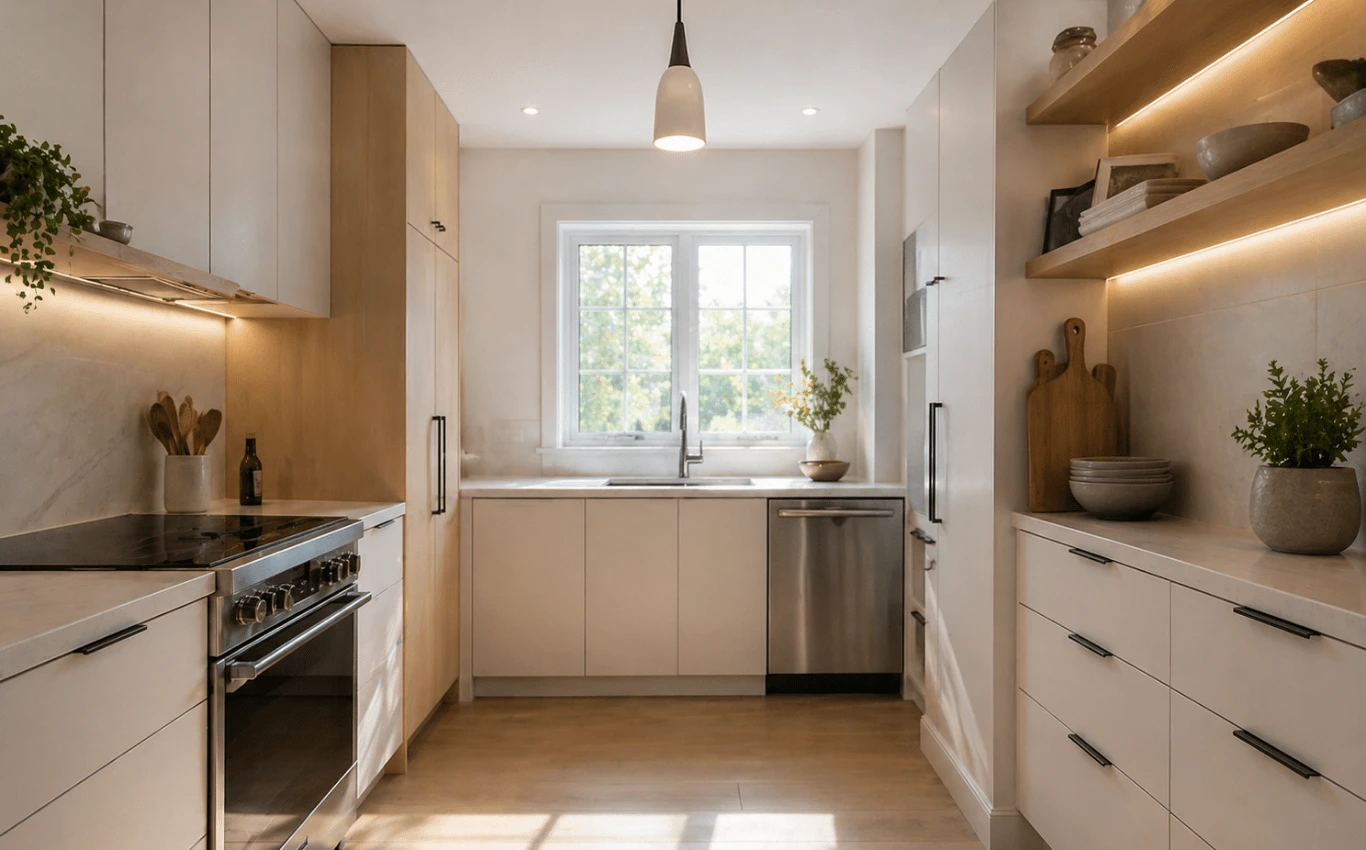
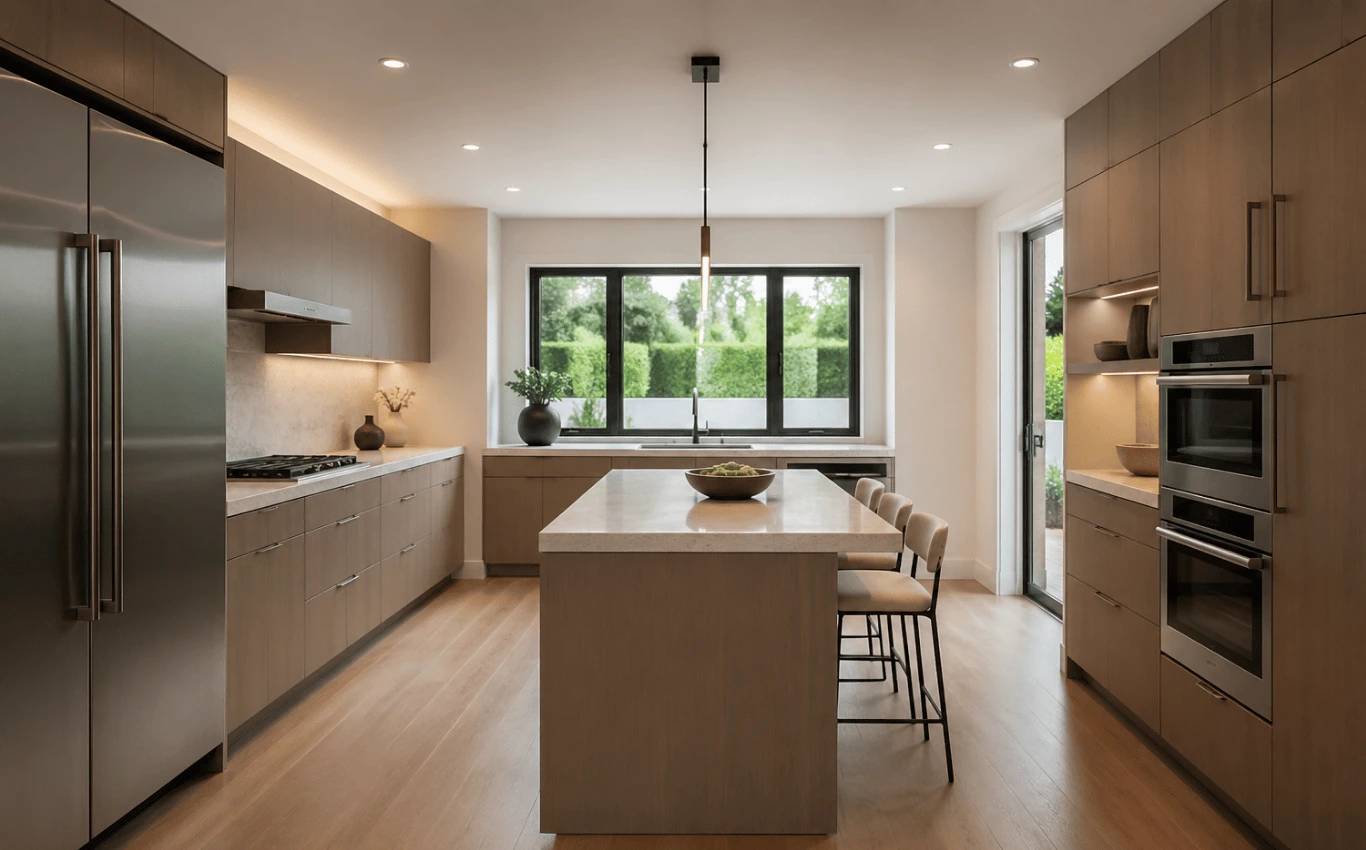
The foundation of a spacious-feeling kitchen is its layout. Before materials or colors come into play, how the space is organized determines how it will be experienced.
One of the biggest reasons small kitchens feel cramped is poor flow. When movement is restricted, the space immediately feels tighter.
A well-planned layout:
When movement feels natural, the kitchen instantly feels larger.
Trying to fit too many features into a small kitchen often backfires. Extra cabinets, oversized islands, or bulky appliances can quickly overwhelm the space.
Instead, focus on:
A simpler layout almost always feels more open.
In this project:
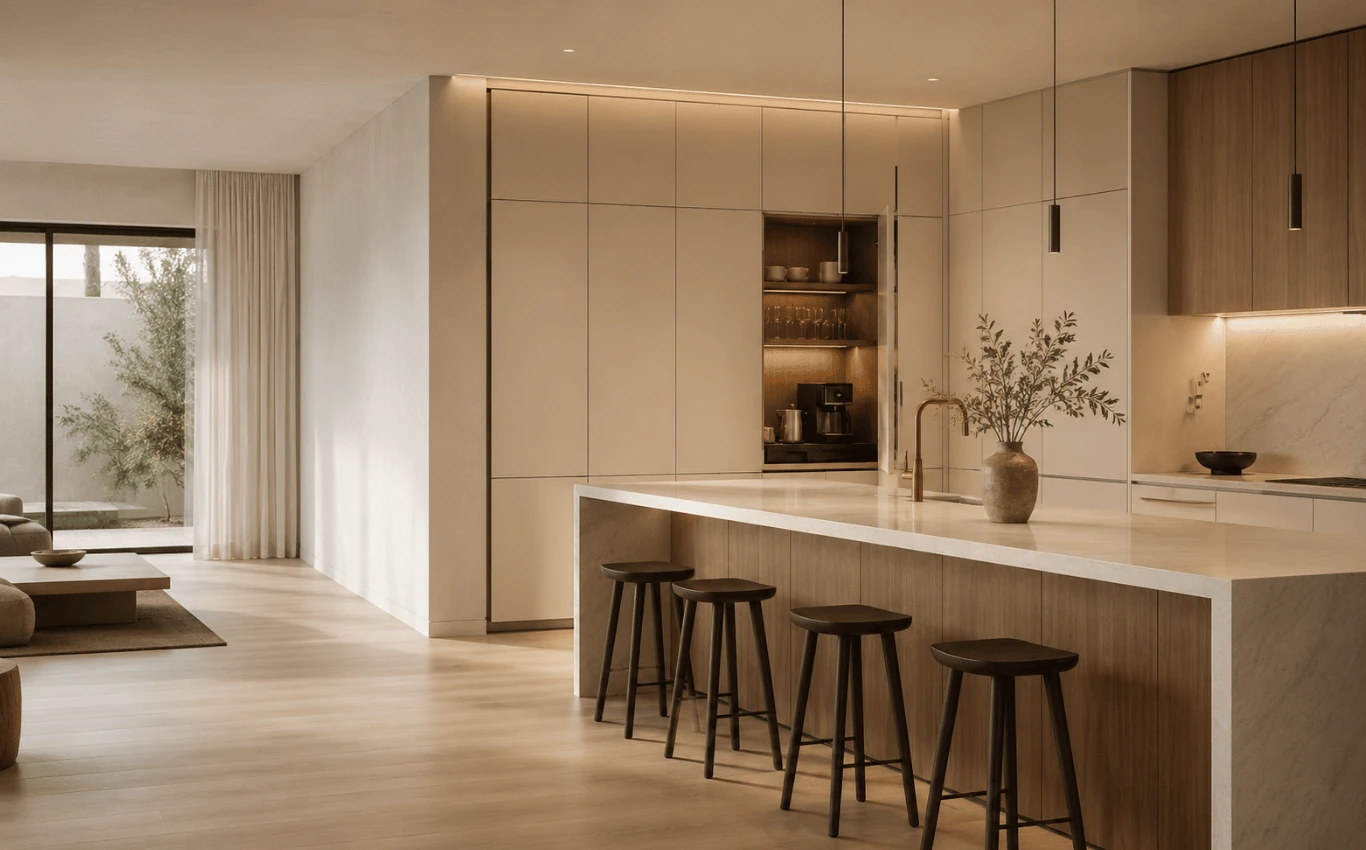
Great Neck, NY | Warm Contemporary Textured Kitchen
You can see how thoughtful spacing and layout create a sense of openness, even without excessive square footage. The design prioritizes flow and balance, making the kitchen feel comfortable and easy to move through.
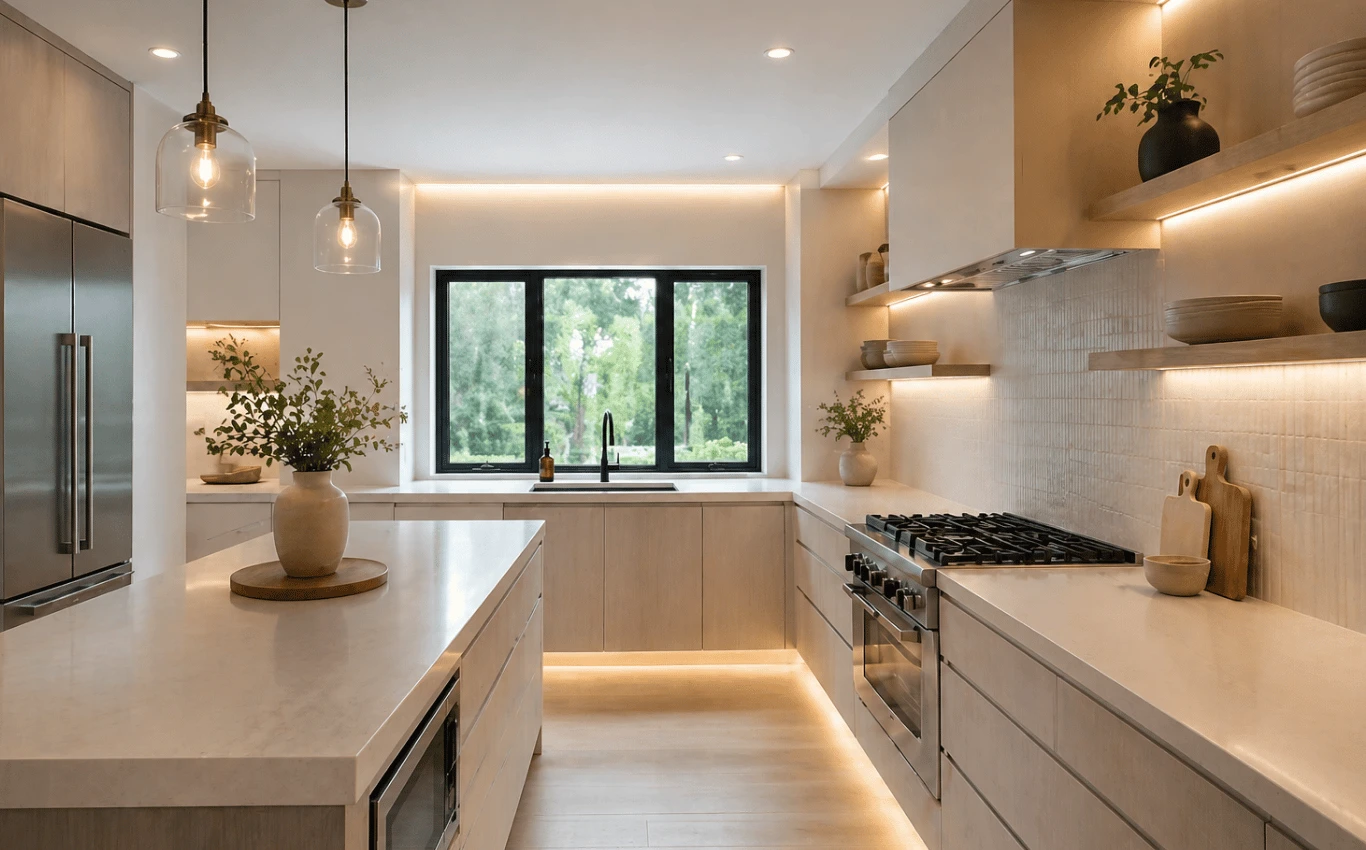
Lighting plays a major role in how large or small a kitchen feels. It’s not just about brightness, it’s about how light interacts with the space.
Natural light is one of the most effective ways to open up a kitchen. It softens edges, reduces visual weight, and creates a sense of depth.
To enhance it:
Even a small amount of natural light can make a big difference.
When natural light is limited, layered lighting becomes essential.
A well-lit kitchen includes:
This prevents the space from feeling flat or closed in.
Lighting doesn’t just illuminate, it shapes perception. A well-lit kitchen feels open, while a poorly lit one feels confined.
This connects with ideas explored in “Elevating Your Kitchen with Lighting: A Guide to Ambient, Task, and Accent Options”, where lighting is used to enhance both function and atmosphere.
The materials and finishes you choose can either visually open up a kitchen or make it feel heavier.
Lighter tones reflect light and create a sense of openness. This doesn’t mean everything has to be white, but balance is key.
Effective approaches include:
This creates a smoother, more expansive visual experience.
Too many textures, colors, or design elements can make a small kitchen feel busy and confined.
To simplify:
A cleaner design always feels more spacious.
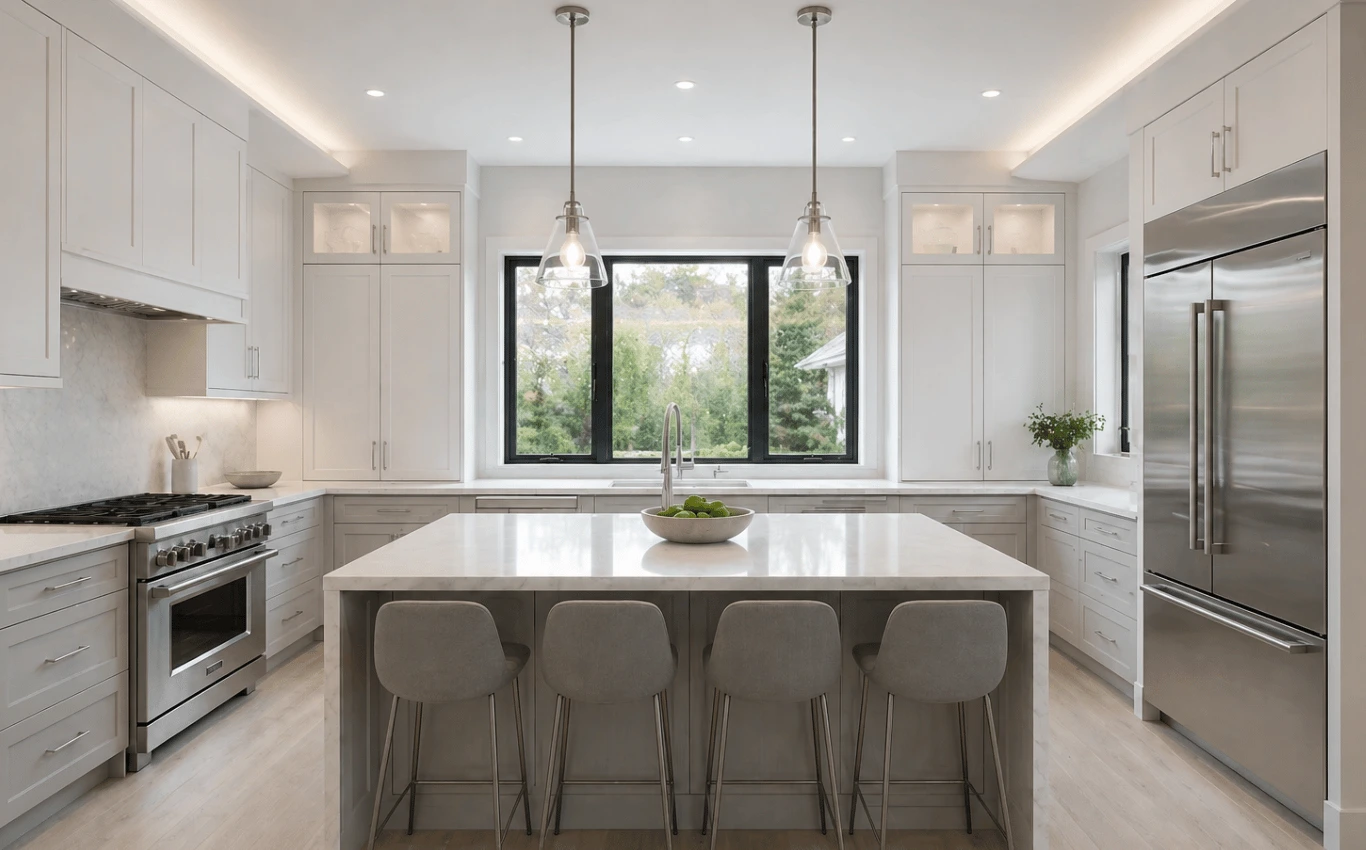
Take a look at:
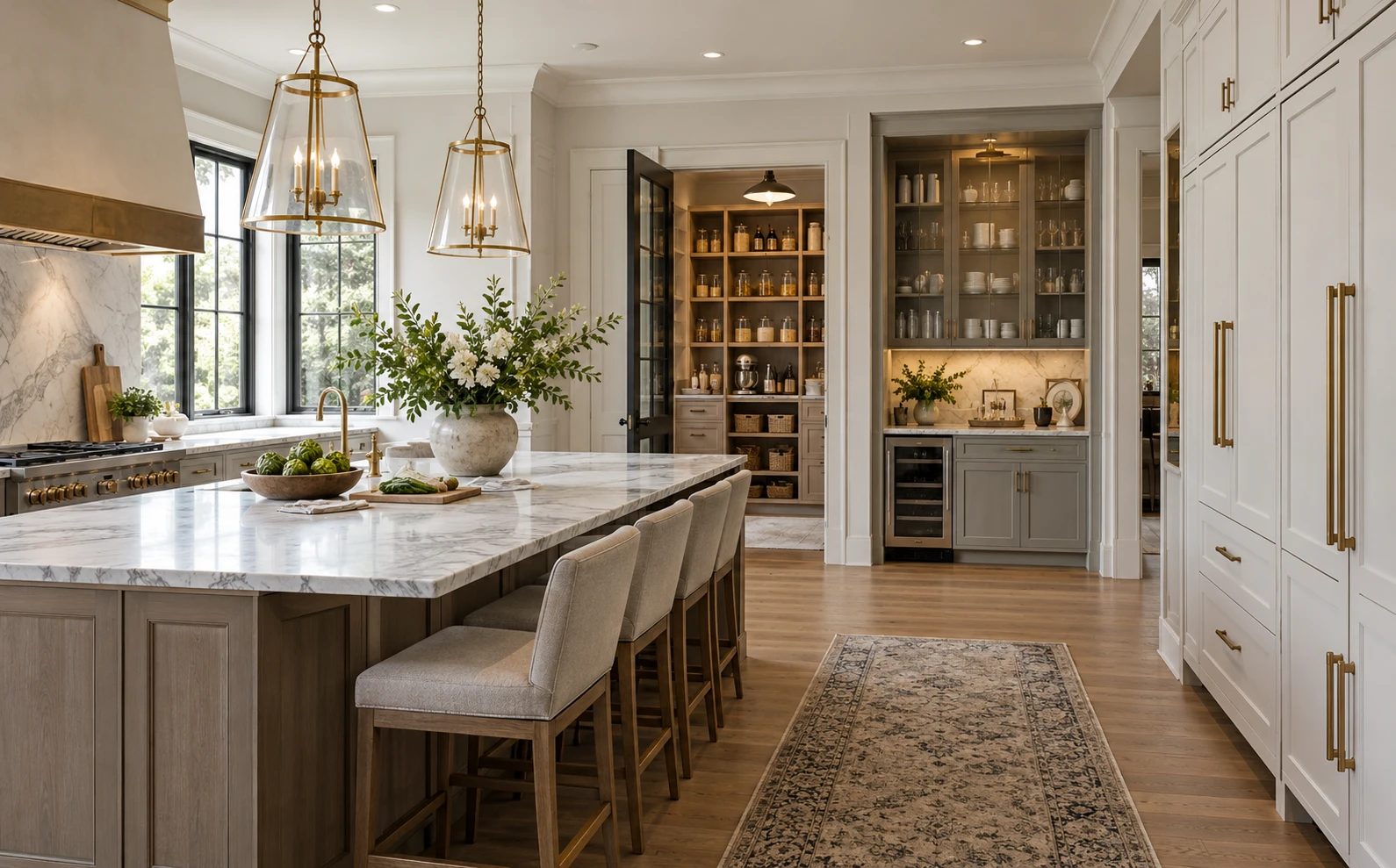
Great Neck, NY | Elegant Gray & White Kitchen
This kitchen uses a refined palette and balanced materials to create a space that feels bright, open, and visually calm.
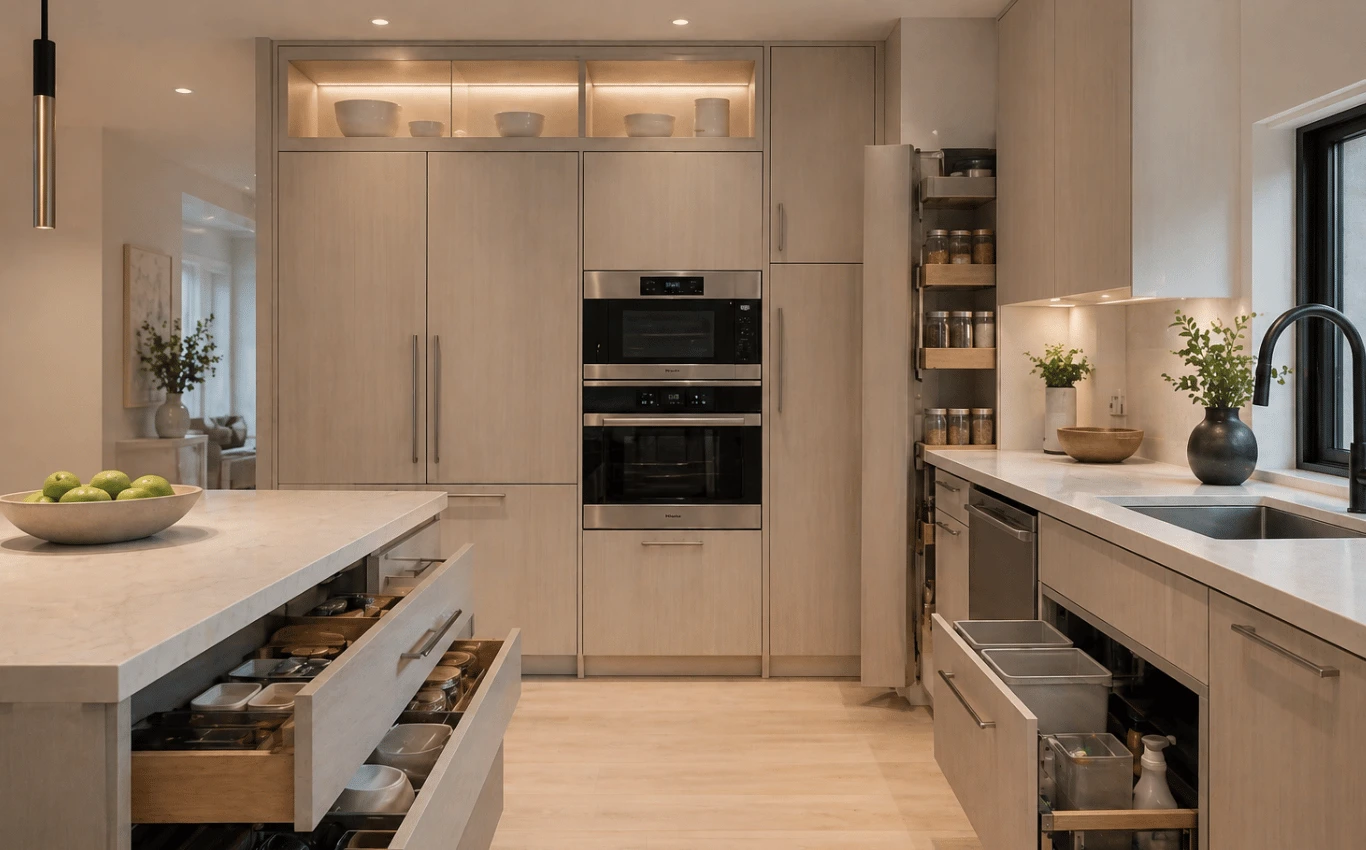
Storage is essential in small kitchens, but how it’s designed makes all the difference.
Good storage keeps everything within reach without creating clutter.
Effective storage solutions:
When storage works well, the kitchen feels more efficient and less crowded.
One of the best ways to make a small kitchen feel bigger is to hide clutter.
This can be achieved through:
The less visual noise, the more open the space feels.
Clutter doesn’t just take up space, it affects how you experience it. A well-organized kitchen feels calm and controlled.
This idea connects with “Maximizing Your Kitchen Storage Potential: Smart Solutions for a Clutter-Free Space”, where storage is treated as both functional and psychological.
Making a small kitchen feel bigger isn’t about removing walls or adding square footage. It’s about designing with intention. Layout, lighting, materials, and storage all work together to shape how the space is experienced.
When these elements are aligned, the kitchen feels open, balanced, and comfortable, regardless of its size. Instead of working around limitations, you create a space that works effortlessly for you.