.webp)


Summer on Long Island changes how homeowners use their kitchens. Cooking, entertaining, and outdoor living often blend together, making layout, airflow, storage, and indoor-outdoor connections especially important.
A well-designed summer kitchen should make hosting feel easy while staying comfortable and functional year-round. Thoughtful planning can turn the kitchen into a natural hub for both everyday life and seasonal entertaining.
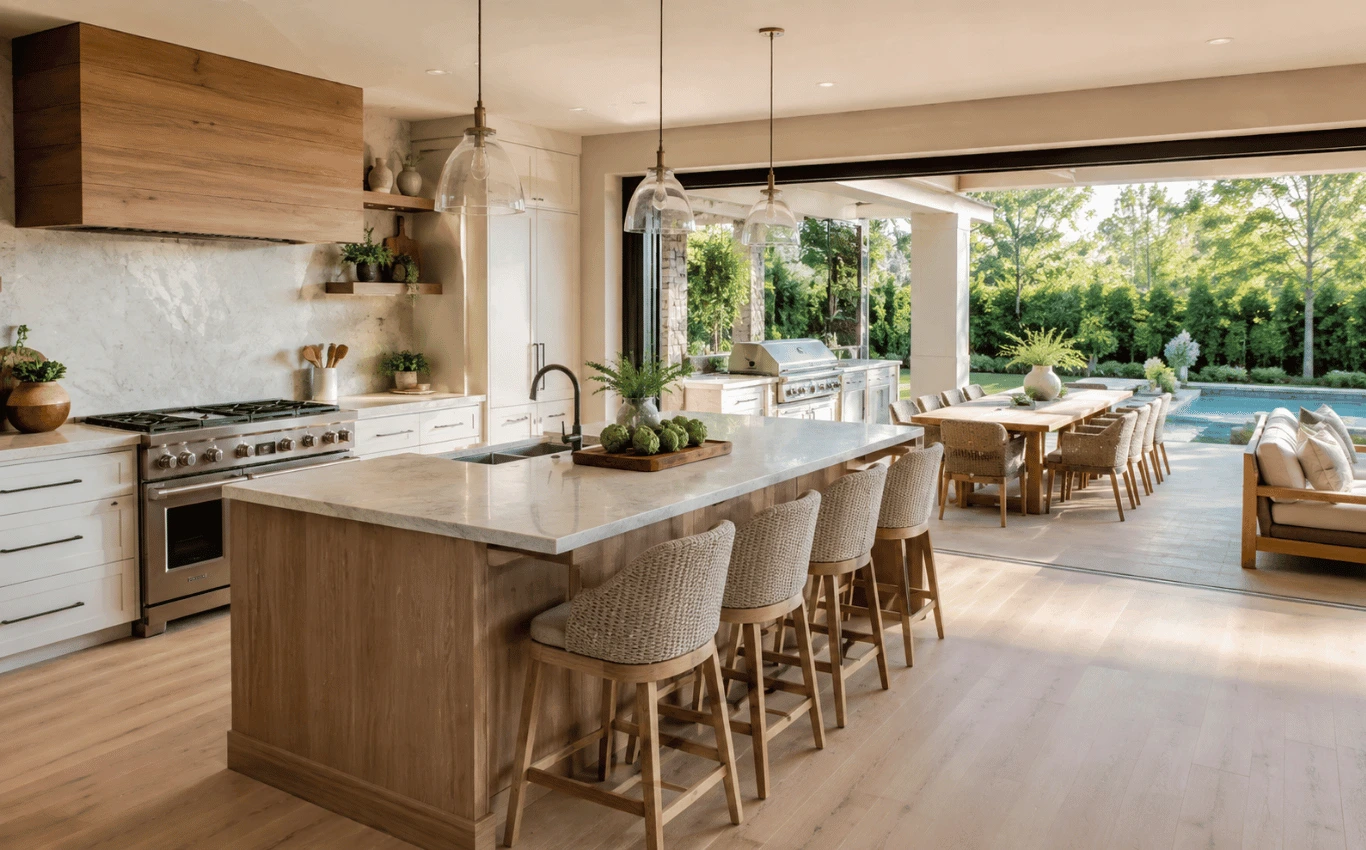
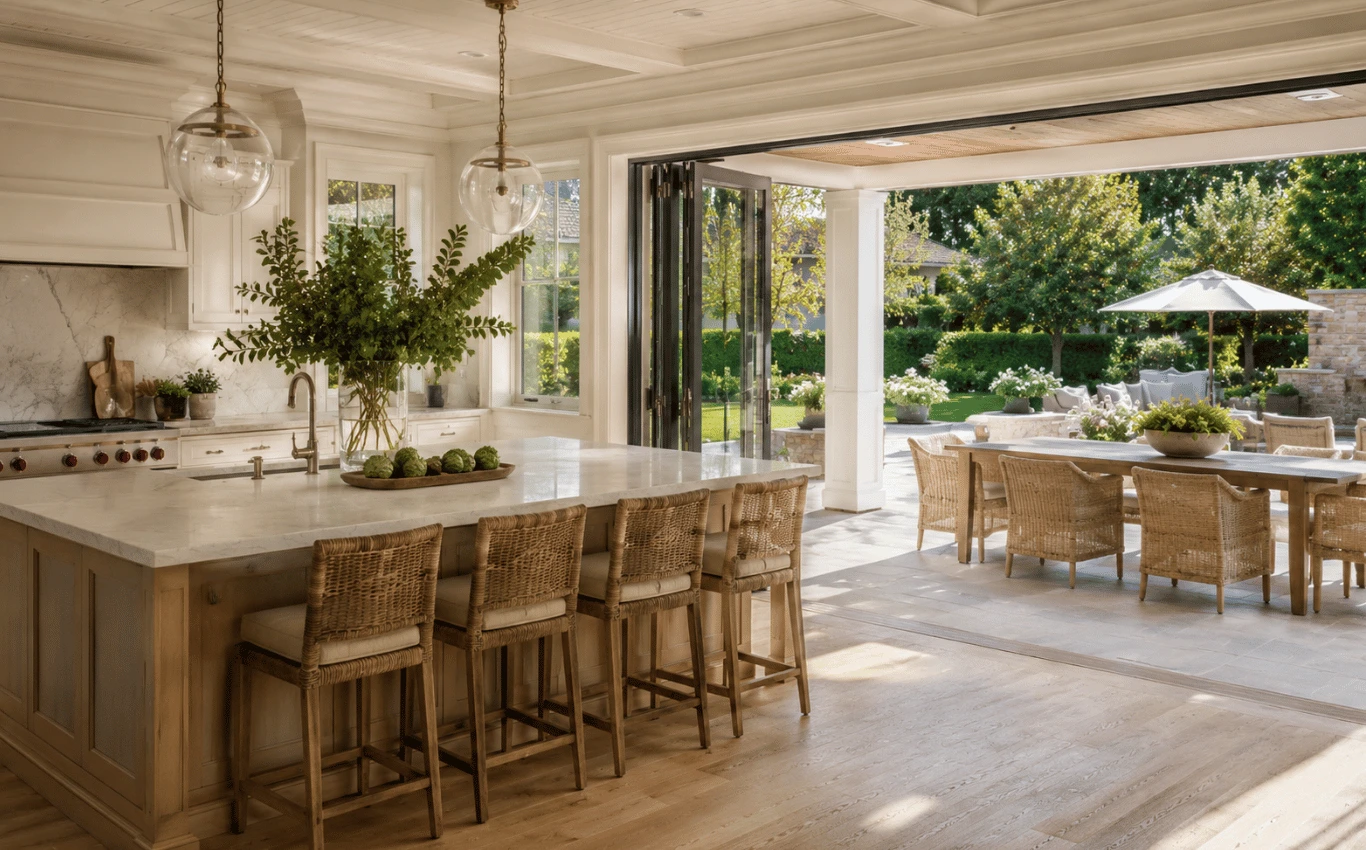
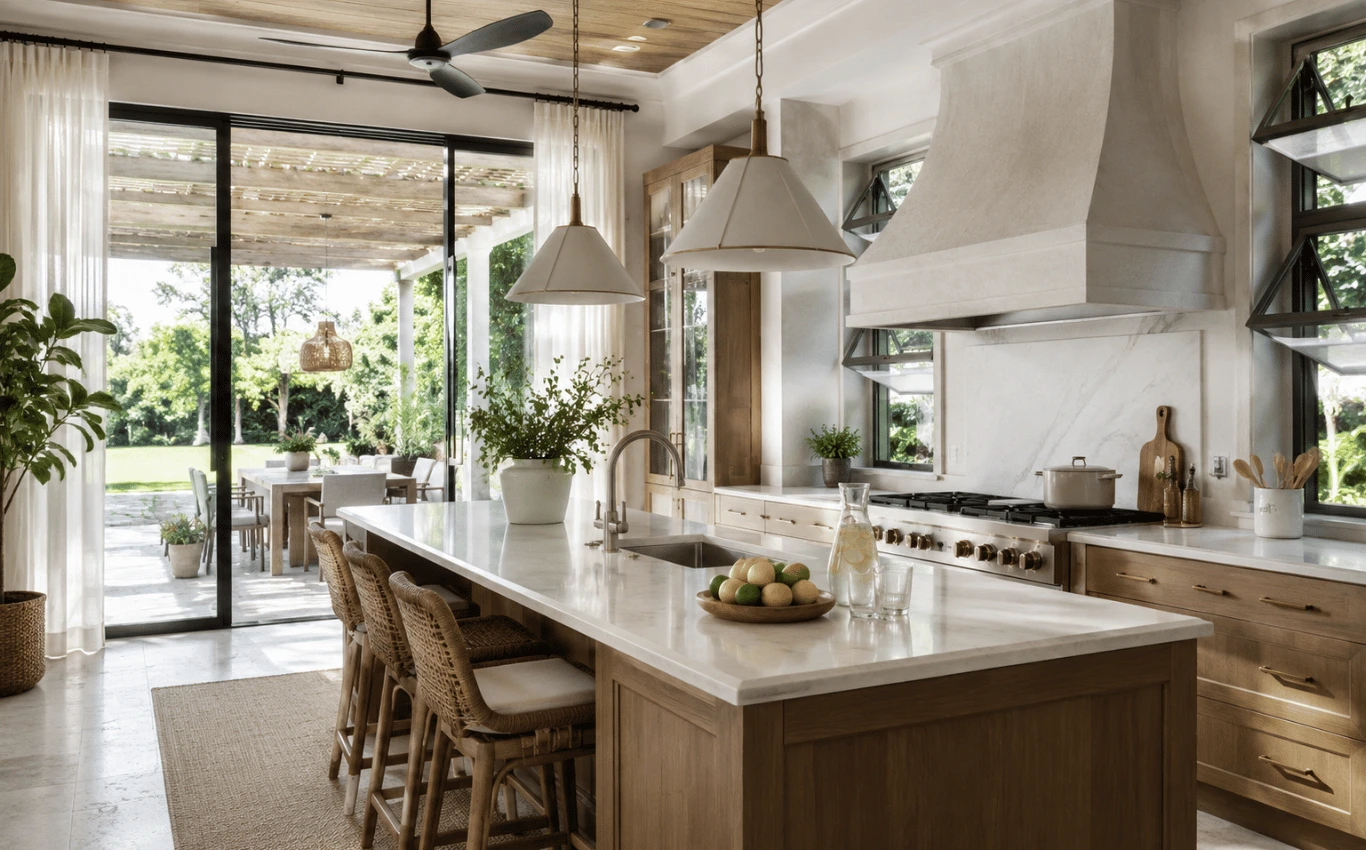
One of the most important characteristics of a summer-friendly kitchen is its relationship with the exterior of the home. When the kitchen and outdoor entertaining areas feel disconnected, homeowners and guests constantly move through narrow doorways or unrelated rooms. A more intentional design creates a natural transition between the two environments.
The location of doors and windows can significantly influence how well the kitchen supports outdoor entertaining. When possible, direct access to a patio, terrace, pool area, or backyard allows food and drinks to move outside without requiring people to travel through several rooms.
Wide openings, large glass doors, and strategically positioned pathways can strengthen this connection even further. The objective is not necessarily to completely erase the boundary between indoors and outdoors, but to make movement between them feel intuitive. When the path from the kitchen to the entertaining area is clear, hosting becomes noticeably easier.
Long Island summers provide an opportunity to bring abundant daylight into the kitchen. Larger windows and glazed doors can make the interior feel brighter and visually connect it to the surrounding landscape.
Natural light should still be planned carefully. Window orientation, shading, cabinetry placement, and countertop materials can influence how sunlight behaves throughout the day. A kitchen that receives beautiful morning light may respond very differently to strong afternoon sun. Thoughtful planning allows homeowners to enjoy a brighter environment without sacrificing comfort or usable storage.
Indoor-outdoor living feels more intentional when the two spaces share a common design language. That doesn't mean exterior materials need to perfectly match the kitchen. Instead, subtle connections can make the transition feel natural.
Similar wood tones, complementary stone surfaces, coordinated neutral colors, or consistent architectural lines can visually connect the spaces. Even the direction of flooring or the positioning of an island can help draw the eye toward the backyard, making the outdoor environment feel like part of the kitchen experience.
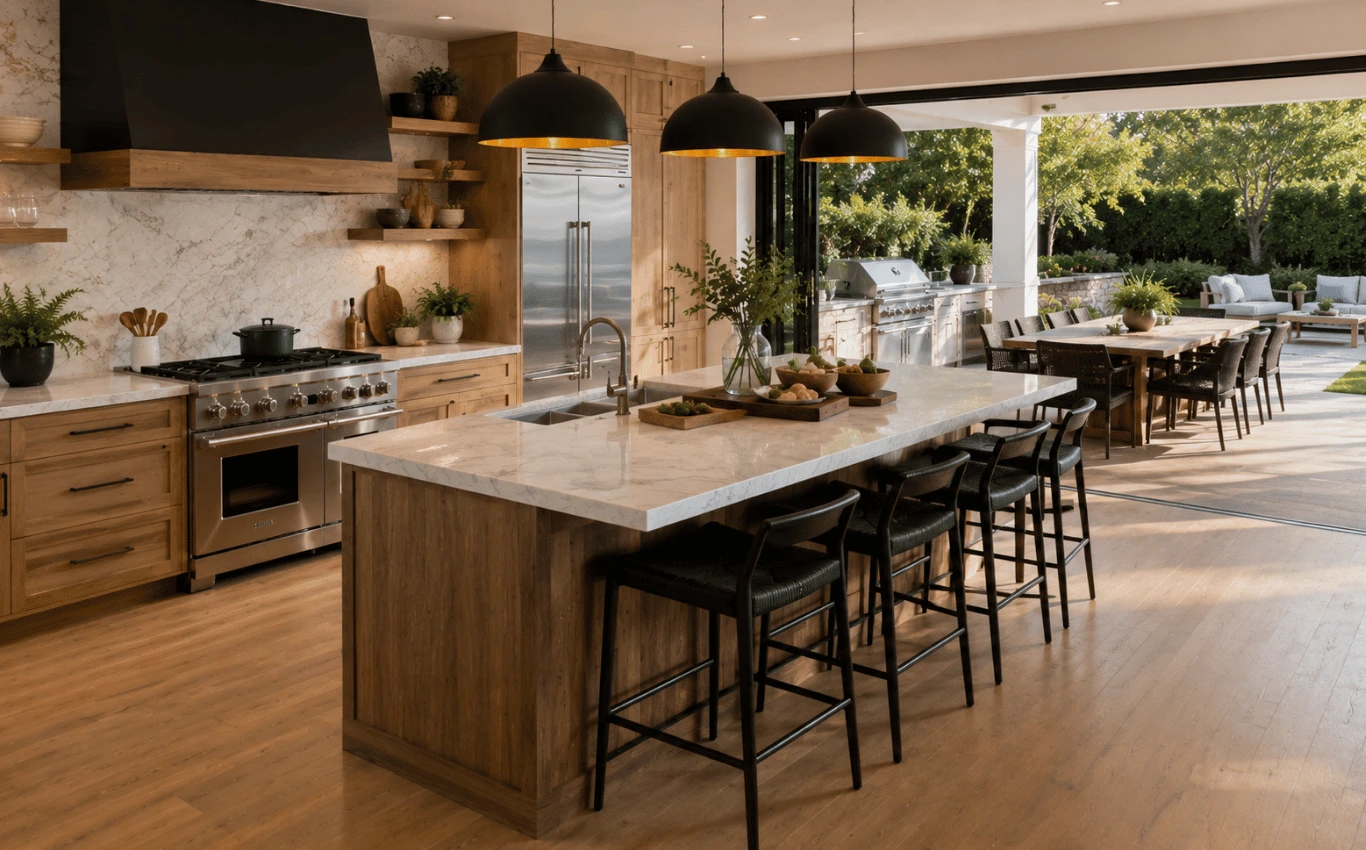
A kitchen can work perfectly for one person preparing dinner and still become frustrating the moment several guests arrive. Summer entertaining introduces more movement, more food, more drinks, and more people into the space, which makes circulation particularly important.
People tend to gather in kitchens regardless of how much seating exists elsewhere in the house. Rather than fighting that behavior, good kitchen design anticipates it.
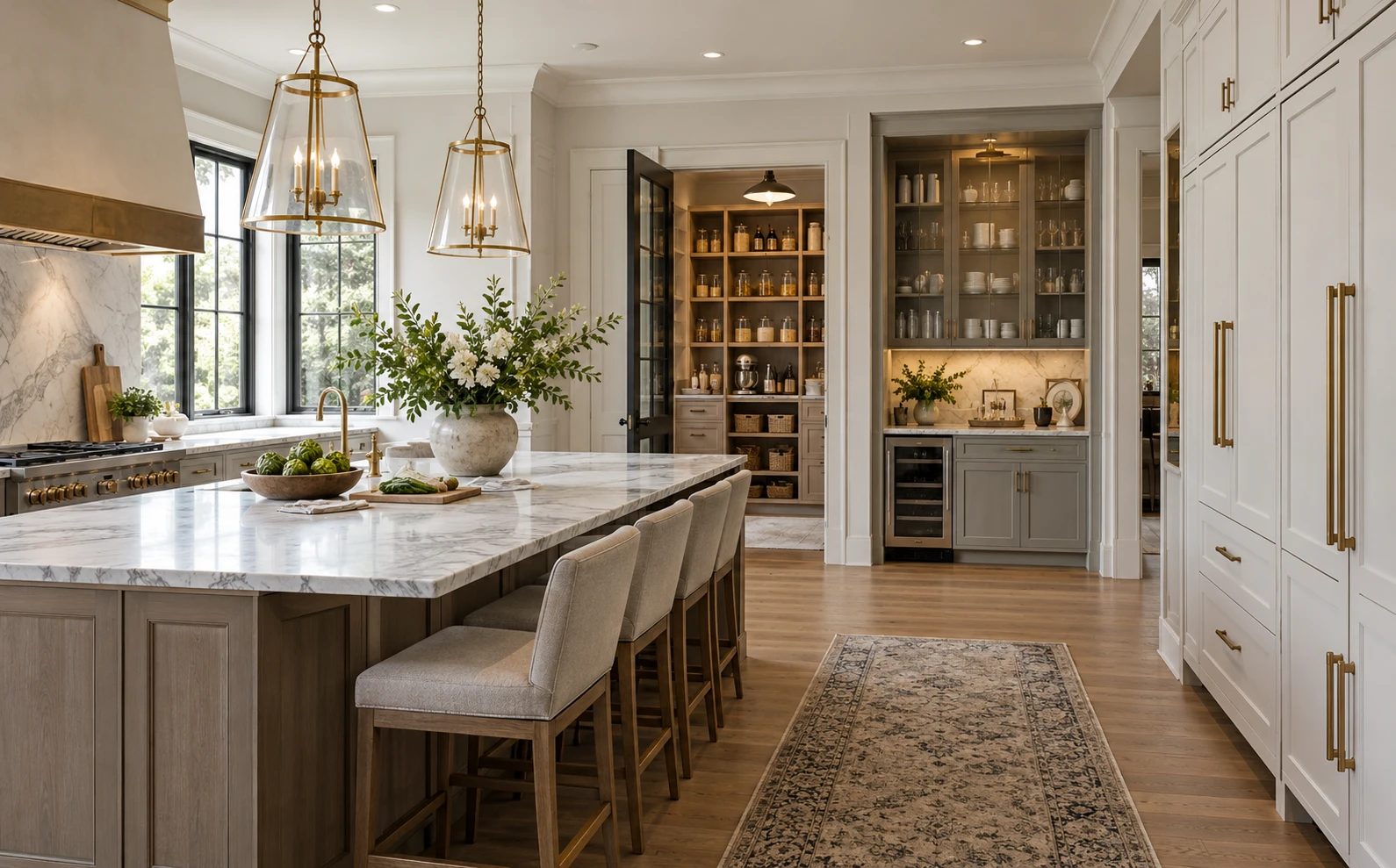
A generously proportioned island can provide a comfortable place for guests to sit, talk, and enjoy drinks without entering the primary cooking area. The important detail is positioning. Seating should encourage conversation without placing guests directly in front of the refrigerator, sink, oven, or major traffic routes.
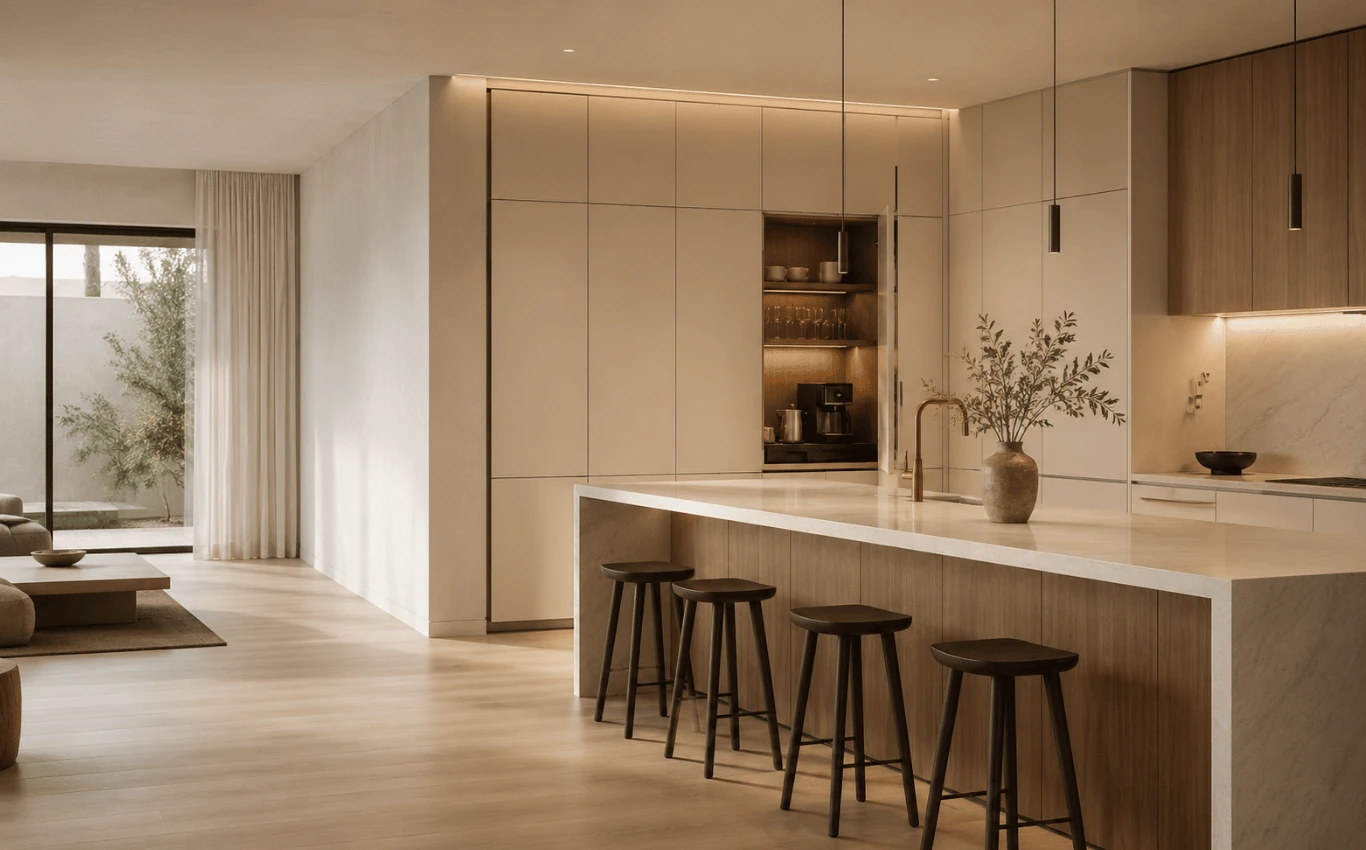
This balance between social interaction and practical workflow can be seen in the Great Neck, NY | Warm Contemporary Textured Kitchen, where material warmth, generous work surfaces, and a thoughtful layout create a kitchen that feels equally suited to daily routines and gathering.
During a party, the refrigerator may be opened constantly, drinks need to be replenished, dishes travel outside, and guests move throughout the kitchen. If all of these activities cross the cook's primary workspace, the room can quickly become stressful.
A well-designed entertaining kitchen creates different paths for different activities. Guests might reach seating or outdoor areas without crossing the cooking zone, while the person preparing food retains clear access to the sink, cooktop, refrigerator, and preparation surfaces.
These differences can seem subtle on a floor plan, but they have a major impact when the kitchen is filled with people.
Serving shouldn't become an afterthought. Counter space near outdoor access can provide a natural staging area for trays, drinks, appetizers, or dishes waiting to be carried outside.
For larger kitchens, a secondary serving zone or beverage station can be particularly valuable. It gives guests access to refreshments without requiring them to repeatedly enter the main preparation area. The kitchen becomes easier to navigate because different activities are no longer concentrated around one countertop.
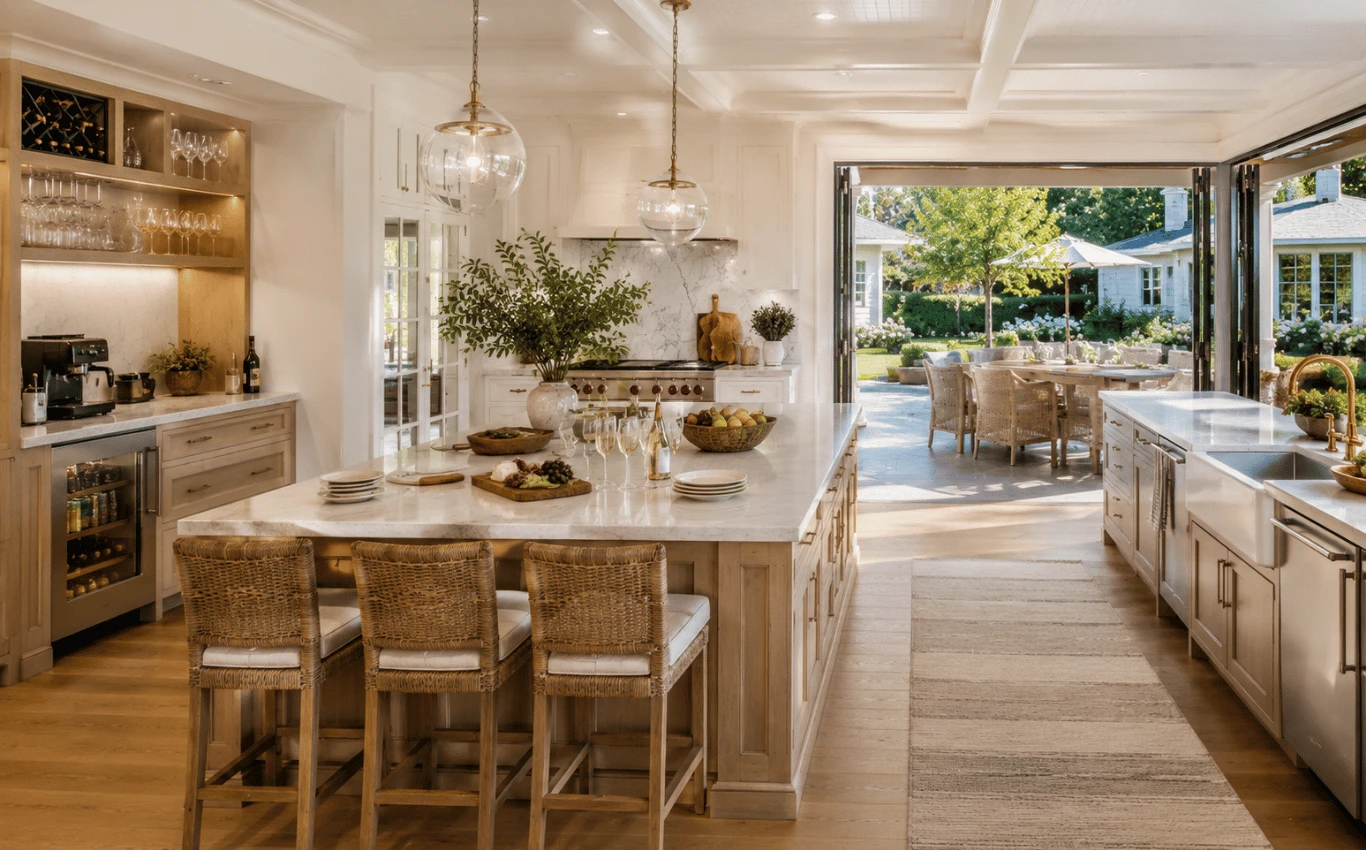
The traditional kitchen work triangle remains useful in some spaces, but modern entertaining kitchens often need to support far more than cooking, refrigeration, and washing. Summer gatherings can involve food preparation, cocktails, coffee, serving, cleanup, conversation, and outdoor dining happening almost simultaneously.
A separate beverage station can dramatically improve an entertaining kitchen. Instead of guests repeatedly entering the primary cooking zone for water, wine glasses, ice, or soft drinks, frequently used items can be grouped together in another part of the room.
Depending on the kitchen, this area might include an undercounter refrigerator, beverage drawers, glassware storage, a sink, coffee equipment, or additional countertop space. The result is greater independence for guests and fewer interruptions for the person preparing food.
A kitchen island should contribute more than visual impact. During summer entertaining, it can become a preparation surface, buffet, conversation area, serving station, and informal dining table within the same afternoon.
Designing an island around these different uses requires careful attention to dimensions, circulation, seating, storage, and appliance placement. An island that is simply made as large as possible can actually interfere with movement. The better approach is to determine what the island needs to accomplish and size it accordingly.
Our previous article, Can a Kitchen Reduce Stress? The Design Features That Actually Help, explores this broader relationship between layout, organization, and everyday comfort. Many of those same principles become even more important when a kitchen needs to accommodate summer guests.
Entertaining doesn't end when dinner is served. Glasses, plates, cookware, serving pieces, and outdoor dining items eventually return to the kitchen.
Positioning the sink, dishwasher, waste storage, and dish storage intelligently can make cleanup significantly easier. In larger kitchens, a secondary sink or additional dishwasher may also be worth considering when frequent entertaining is part of the homeowner's lifestyle.
Good design considers the entire gathering, including what happens after the guests leave.
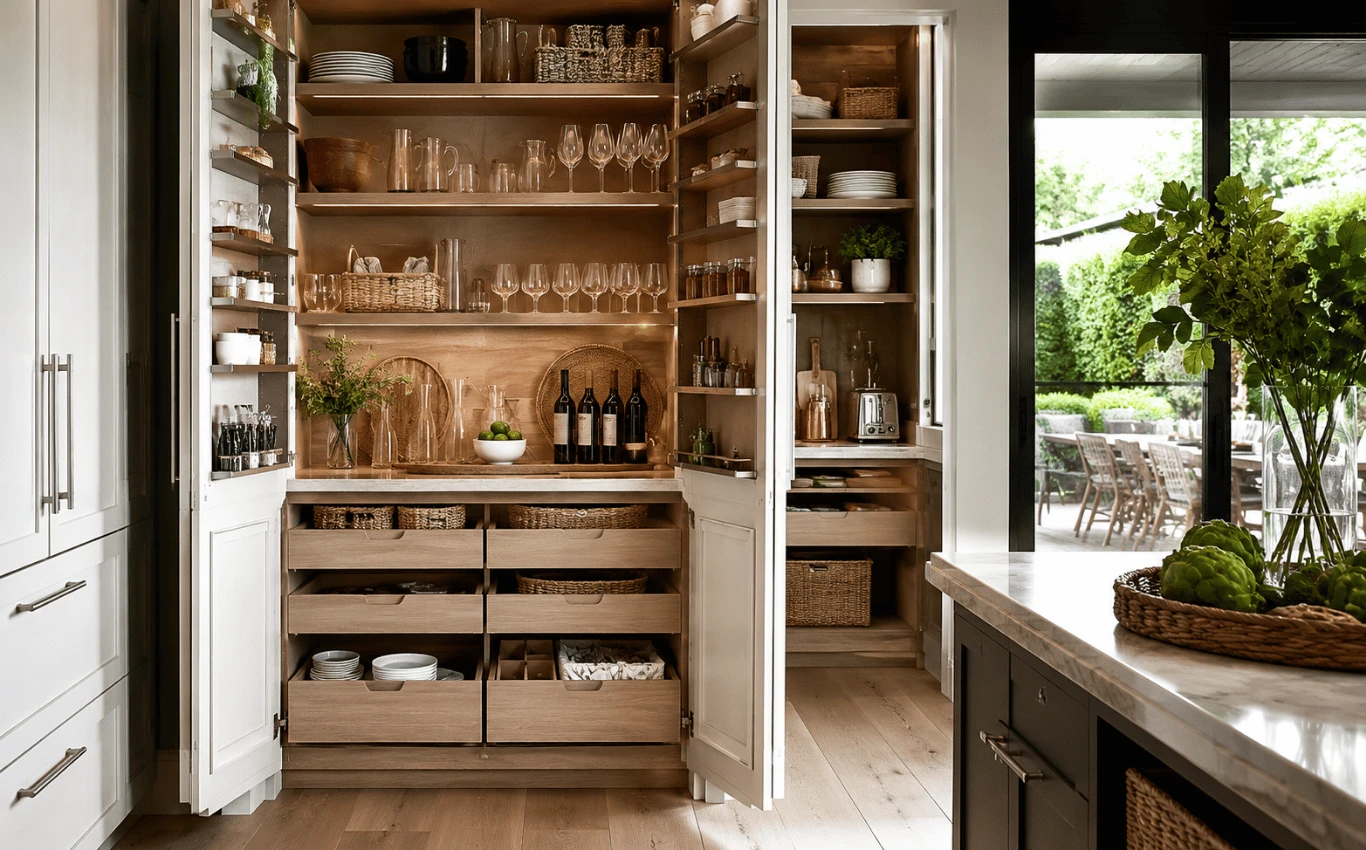
A summer-ready kitchen requires more than everyday storage. Serving platters, outdoor dishes, beverage supplies, grilling accessories, pitchers, linens, and entertaining pieces all need somewhere convenient to live.
Storage becomes far more effective when items are positioned according to activity rather than simply wherever cabinets are available. Outdoor dishes might belong near the patio entrance, while glassware should be close to the beverage area and serving pieces near the primary preparation surface.
These small decisions reduce unnecessary movement and make entertaining feel more organized. Instead of searching through multiple cabinets while guests are waiting, homeowners can reach what they need exactly where they expect it to be.
Entertaining naturally introduces more objects into the kitchen, making clear surfaces particularly valuable. Integrated storage can keep small appliances, chargers, bottles, cookware, and everyday necessities accessible without allowing them to dominate the room visually.
Appliance garages, deep drawers, tall pantry cabinets, and customized interior organizers can all help create a cleaner environment. When the kitchen begins from an organized foundation, temporary entertaining clutter is much easier to manage.
One of the most common planning mistakes is designing storage around what is currently visible rather than everything the kitchen needs to accommodate. A homeowner who regularly hosts summer dinners may have significantly different storage requirements from someone who primarily cooks for two.
Designing around lifestyle creates a kitchen that feels more generous without necessarily increasing its footprint. Often, the difference comes from using existing space more intelligently.
Indoor-outdoor entertaining is enjoyable only when the kitchen itself remains comfortable. Large windows, frequent cooking, direct sunlight, and doors opening throughout the day can all influence the interior environment during summer.
A beautiful wall of glass can transform a kitchen, but direct summer sunlight can also introduce glare and unwanted heat. Window orientation, roof overhangs, treatments, landscaping, and glazing all influence the amount of solar exposure entering the space.
Understanding these conditions early allows the kitchen design to maximize daylight and outdoor views without making summer comfort an afterthought.
Cooking produces heat, moisture, smoke, and odors, which become especially noticeable during warm weather. Effective ventilation helps remove these byproducts and makes the kitchen more comfortable when preparing meals for larger groups.
Range hood selection and placement should therefore be integrated into the design rather than treated purely as an appliance decision. The ventilation solution needs to work effectively while complementing cabinetry, ceiling conditions, and the kitchen's overall aesthetic.
An entertaining kitchen experiences spills, condensation, frequent cleaning, serving trays, food preparation, and heavy countertop use. Materials should be selected with these realities in mind.
Durable countertops, easy-to-maintain cabinetry finishes, practical flooring, and quality hardware allow homeowners to enjoy the kitchen without constantly worrying about damaging it. Luxury doesn't have to mean fragile. In a well-designed kitchen, sophisticated materials and practical performance should work together.
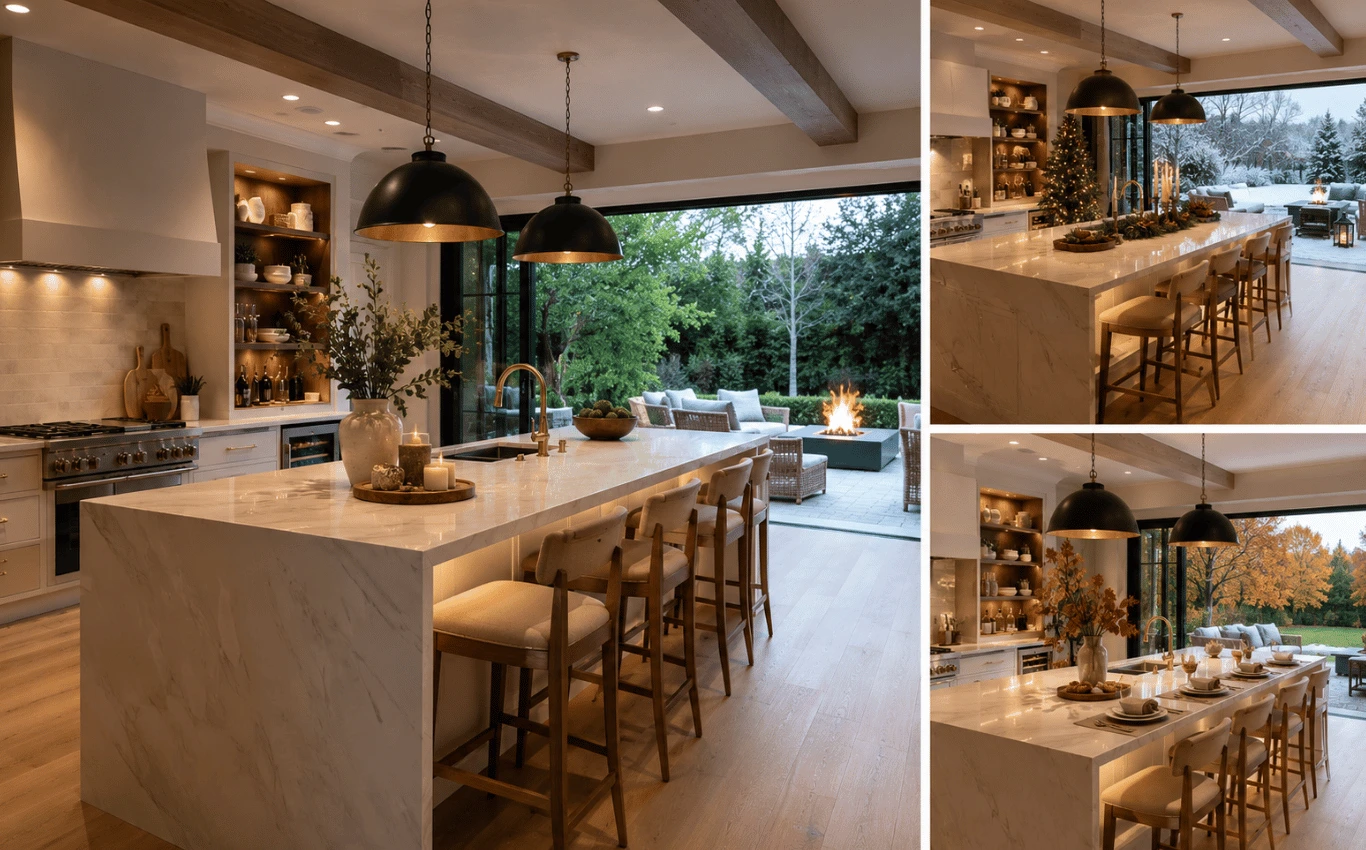
Although summer may inspire the design, a successful Long Island kitchen needs to remain comfortable throughout fall, winter, and spring. The strongest remodeling decisions improve seasonal entertaining without making the kitchen feel designed exclusively for warm weather.
A summer-friendly kitchen doesn't need obvious coastal colors or decorative references to the beach. Architectural openness, natural light, functional circulation, durable materials, and connections to the landscape can create a seasonal feeling without relying on trends.
This gives homeowners the freedom to change accessories, flowers, table settings, and décor throughout the year while maintaining a timeless foundation.
During winter, the same island that supported summer cocktails may become a breakfast area or holiday buffet. A beverage station can serve coffee instead of cold drinks, and the dining area that opened onto the patio can become a comfortable gathering space around the kitchen.
The best features adapt naturally rather than becoming unnecessary when the season changes.
There is no single perfect entertaining kitchen. Some homeowners regularly host large gatherings, while others prefer smaller dinners with family and close friends. Some prioritize outdoor cooking, while others want the indoor kitchen to remain the center of food preparation.
A personalized design starts by understanding those habits. From there, decisions about seating, storage, appliances, circulation, lighting, and outdoor connections can be made around how the homeowner actually intends to use the space.
A great summer entertaining kitchen is designed around flow, comfort, and connection. For Long Island homeowners, thoughtful layouts, smart storage, good ventilation, and easy indoor-outdoor access can make hosting simpler while keeping the kitchen functional all year.