.webp)


Homeowners often focus on kitchen aesthetics, storage, or resale value, overlooking its impact on daily comfort. A well-designed kitchen enhances ease and reduces stress, transforming routine tasks into smoother experiences.
Modern kitchen design prioritizes comfort and well-being. Effective layouts, lighting, storage, and organization enhance functionality and reduce stress, making daily routines smoother and more enjoyable. This article explores key design features that create a calmer, more efficient kitchen.
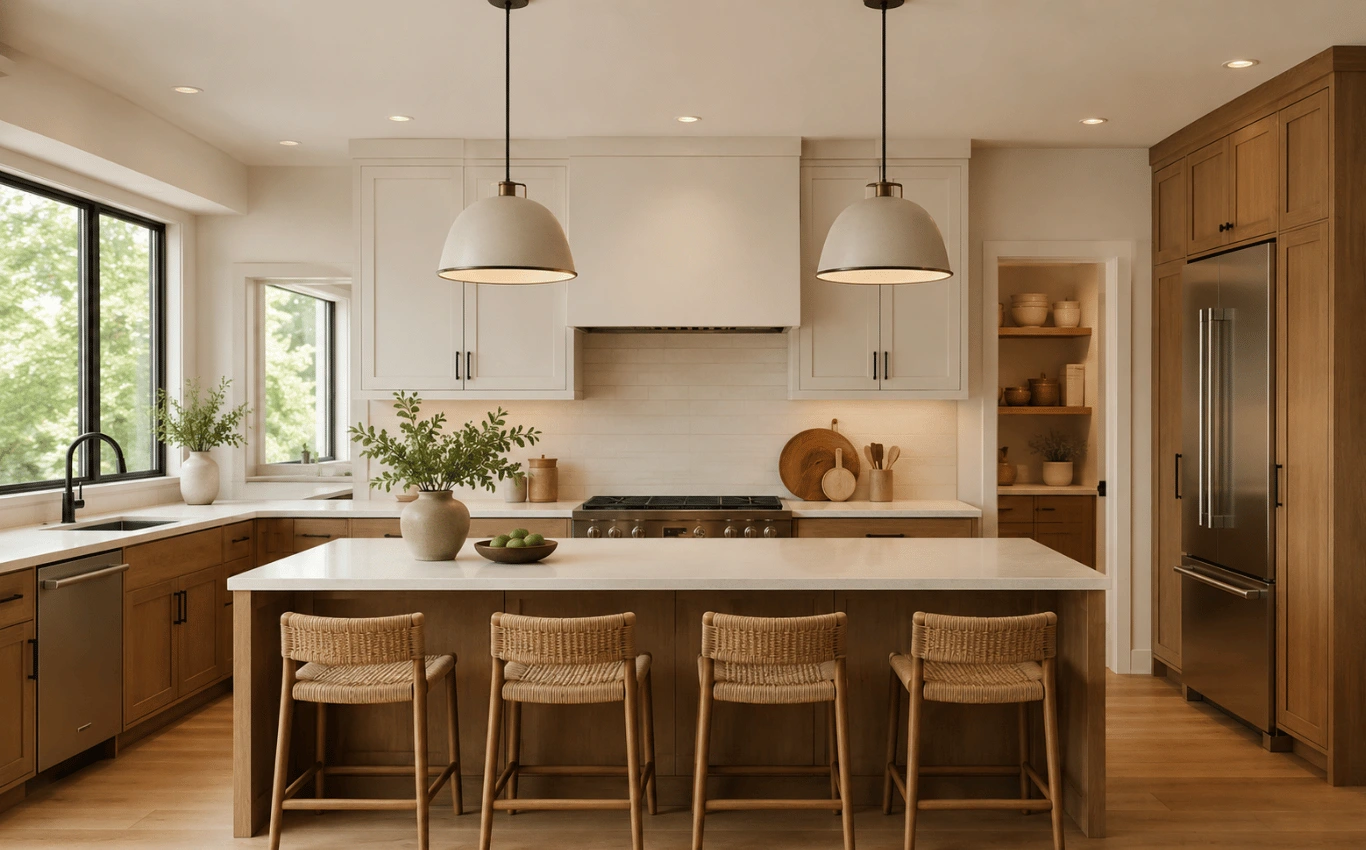
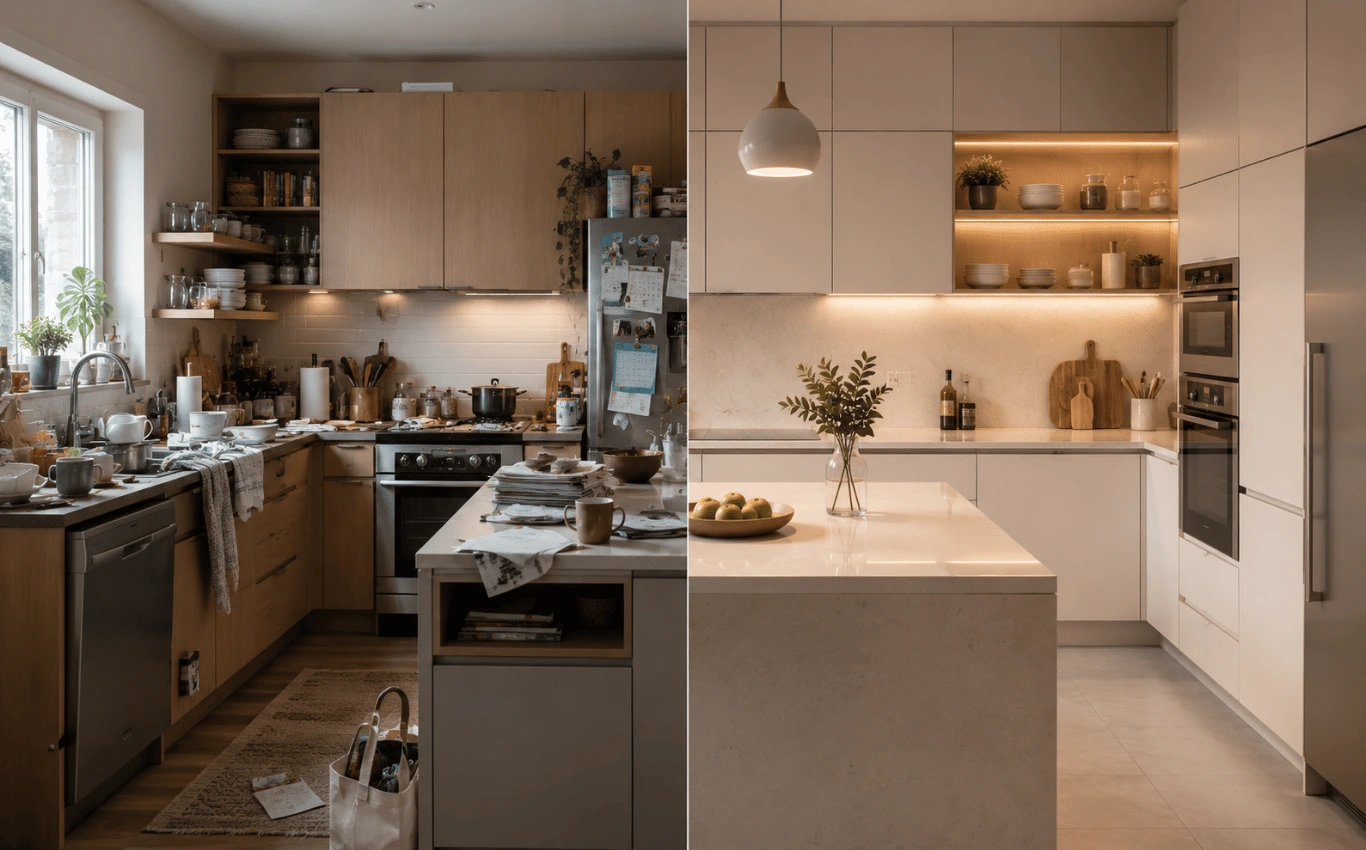
Many homeowners assume stress comes from being busy, but often the kitchen itself contributes to daily frustration. Poor layouts, limited storage, cluttered surfaces, and awkward workflows create small inconveniences that add up over time. These repeated interruptions can make cooking, cleaning, and entertaining feel more difficult than they need to be.
Visual clutter affects more than appearance. When countertops are crowded with appliances, paperwork, and everyday items, the kitchen can feel chaotic even when it is technically clean. Excess visual stimulation makes it harder to focus and relax within the space. Modern kitchen design often prioritizes hidden storage and cleaner surfaces because a more organized environment naturally feels calmer.
A kitchen that requires unnecessary movement can make daily tasks feel exhausting. Constantly walking around obstacles, reaching awkwardly for items, or navigating tight spaces creates friction throughout the day. The best kitchen layouts reduce these frustrations by supporting natural movement and improving workflow.
The kitchen is full of decisions. Where are the ingredients? Where should dishes go? Where is the storage space? Poor organization increases the number of decisions required throughout the day. Thoughtful design simplifies these choices and allows daily routines to feel more automatic and comfortable.
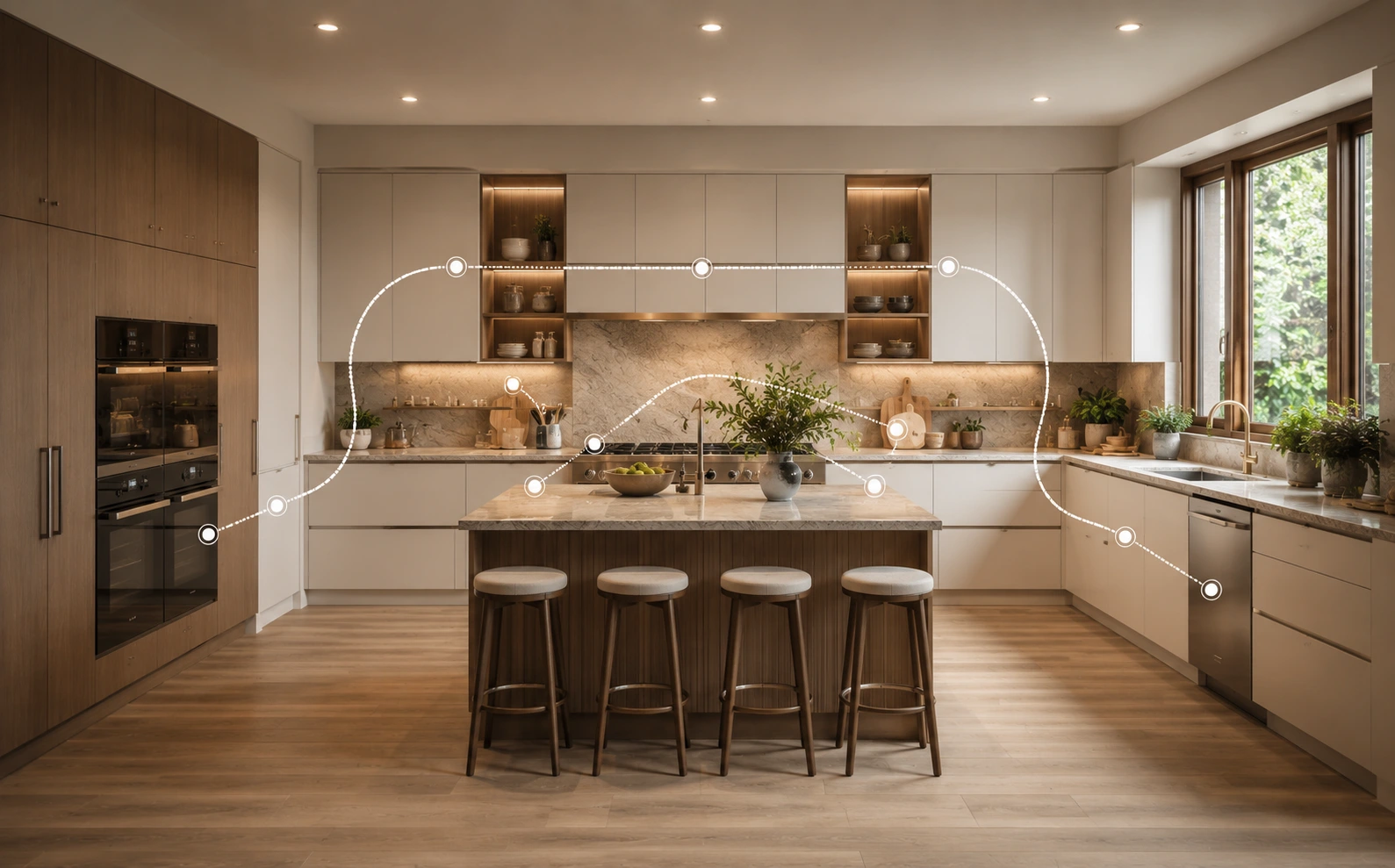
The layout of a kitchen influences nearly every experience within the space. When appliances, storage, and work zones are positioned effectively, daily tasks become significantly easier.
One of the primary goals of kitchen design is reducing unnecessary movement. A kitchen should support the natural flow between cooking, cleaning, preparing food, and storing items. When movement feels intuitive, tasks require less effort and less mental energy.
This concept is clearly demonstrated in the Great Neck, NY | Warm Contemporary Textured Kitchen project:
The layout prioritizes comfort and usability while maintaining a sophisticated aesthetic, creating a space that feels calm and functional throughout the day.
Modern kitchens increasingly use designated zones for specific tasks. Food preparation, cooking, cleaning, and storage each have their own areas, helping homeowners move naturally through routines without constantly adjusting or searching for items.
A well-zoned kitchen creates a sense of order that directly contributes to a more relaxing environment.
When the kitchen is designed around the way homeowners actually live, the space becomes easier to use. This idea connects closely with "Why Kitchen Design Changes the Way You Cook (And How It Affects Your Comfort)," which explores how thoughtful layouts influence both functionality and overall comfort.
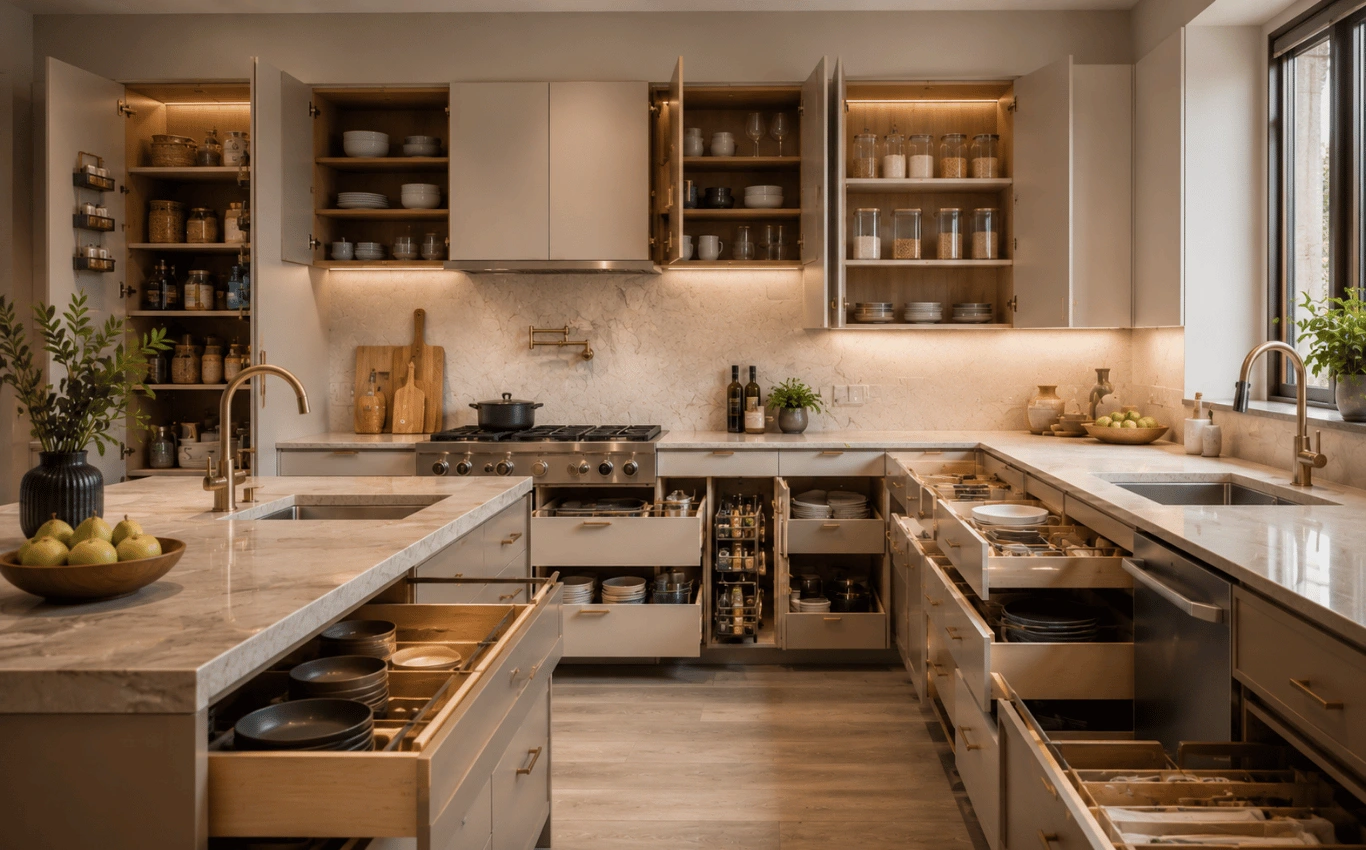
Storage is often discussed as a practical feature, but it also has a major impact on stress levels. A lack of storage leads to clutter, while well-designed storage helps maintain order and simplify daily life.
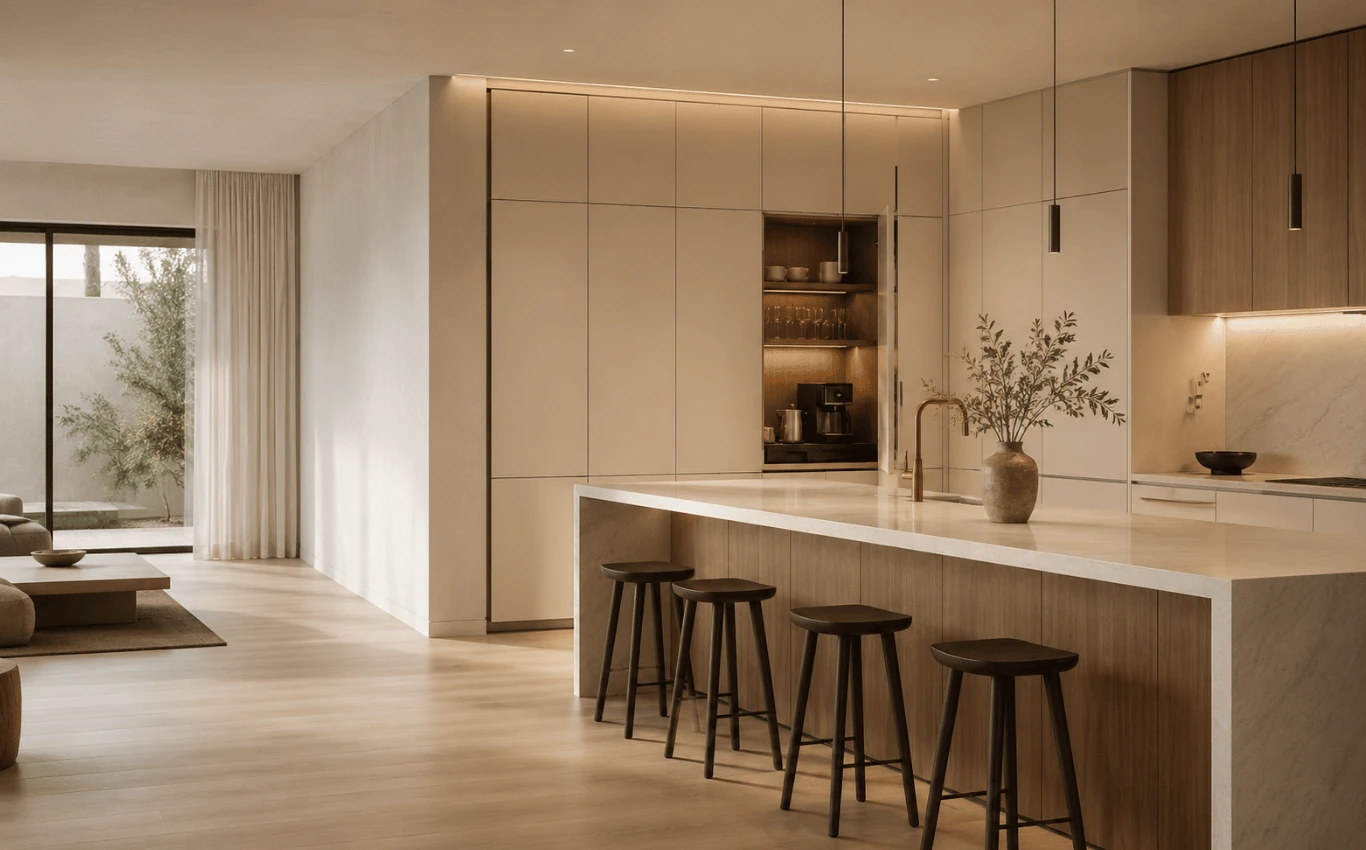
One of the most effective ways to reduce kitchen stress is by minimizing countertop clutter. Appliance garages, deep drawers, pull-out storage systems, and concealed organization features allow homeowners to keep essential items nearby without constantly seeing them.
The result is a kitchen that feels cleaner, calmer, and easier to maintain.
When everything has a designated place, routine tasks become more efficient. Homeowners spend less time searching for items and more time enjoying the space. This may seem like a small benefit, but it has a meaningful impact on everyday comfort.
Storage needs often change over time. Modern kitchen design takes future needs into account by creating flexible solutions that can adapt as routines evolve. This helps ensure the kitchen remains functional and stress-free for years.
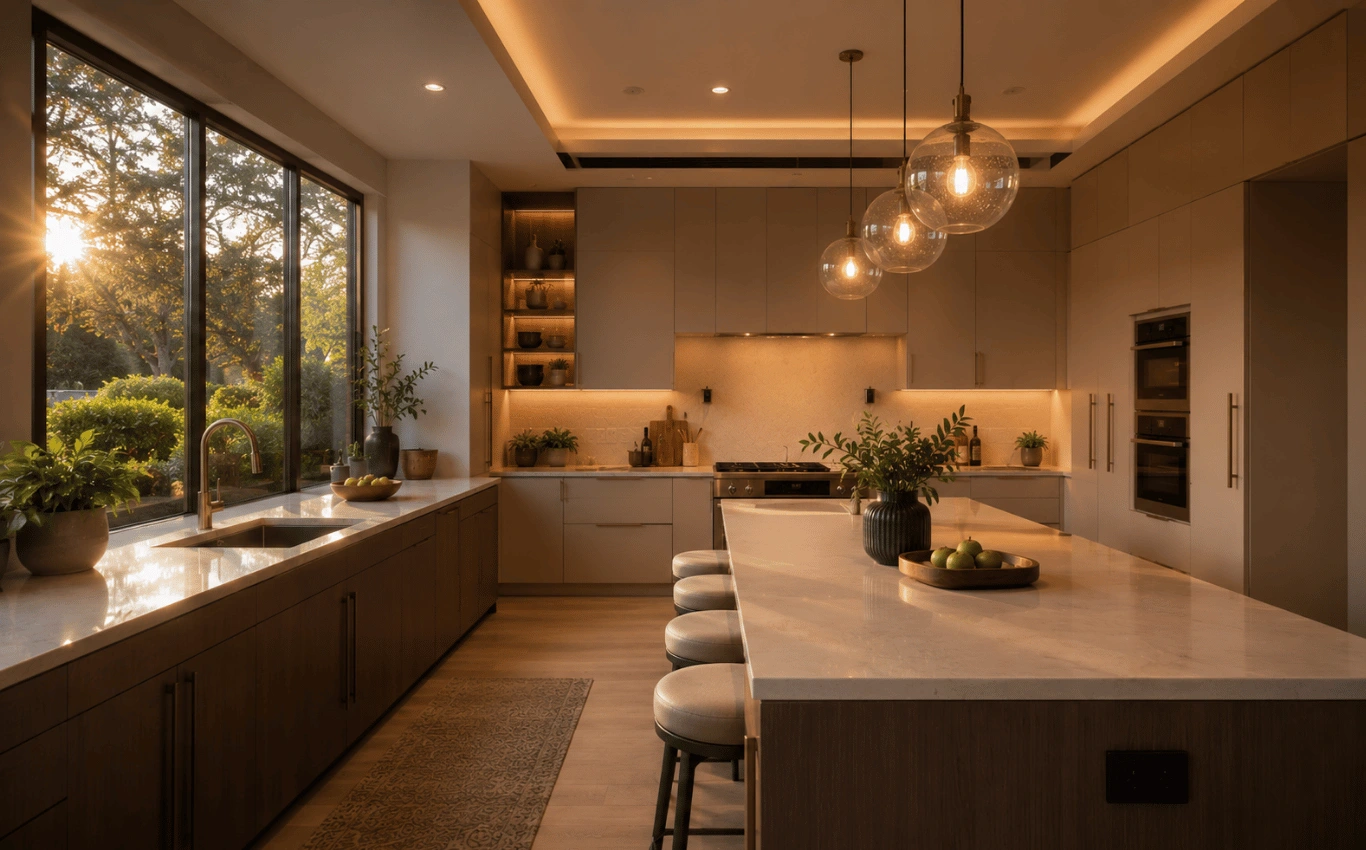
Lighting is one of the most powerful yet overlooked elements in kitchen design. It affects visibility, atmosphere, and emotional comfort throughout the day.
Natural light helps kitchens feel larger, brighter, and more inviting. It improves visibility while creating a stronger connection to the outdoors. Many homeowners report feeling more energized and comfortable in kitchens that maximize natural light.
Modern kitchens use multiple types of lighting rather than relying on a single overhead fixture. Task lighting improves functionality during cooking, while ambient lighting creates a softer atmosphere for dining and entertaining.
This layered approach helps the kitchen adapt to different needs throughout the day.
Lighting color temperature significantly affects how a space feels. Harsh lighting can make a kitchen feel clinical, while warmer lighting creates a more welcoming atmosphere. The right lighting design helps balance functionality and comfort.
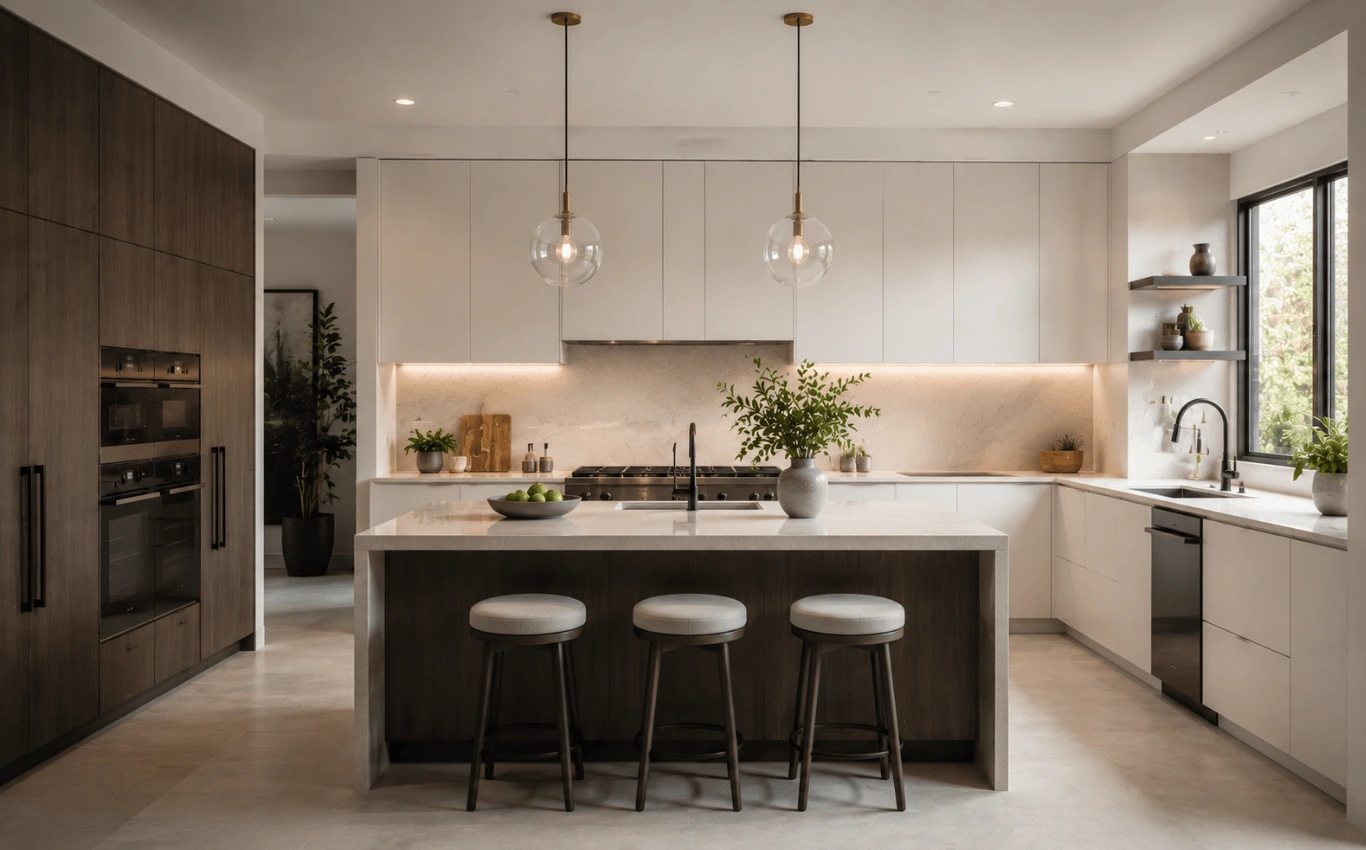
Many of the most relaxing kitchens share a common trait: simplicity. Rather than filling every surface and corner with features, they focus on creating balance and breathing room.
A kitchen does not need to be minimalistic to feel calm. However, reducing unnecessary visual clutter allows important design elements to stand out while helping the space feel more organized.
The Port Washington, NY | Modern Two-Tone Minimalist Kitchen project demonstrates this beautifully:
Its clean lines, balanced materials, and thoughtful layout create a kitchen that feels open, functional, and surprisingly relaxing.
Durable materials help homeowners feel more comfortable using the kitchen without constantly worrying about maintenance or wear. Confidence in the durability of the space contributes to overall peace of mind.
Ultimately, stress reduction comes from eliminating unnecessary obstacles. Whether through better storage, improved lighting, or a more efficient layout, the best kitchens remove friction from daily life and allow routines to feel easier.
A kitchen may not eliminate every source of stress, but thoughtful design can significantly improve how the space feels and functions. Layouts that support natural movement, storage systems that reduce clutter, lighting that improves comfort, and materials that simplify maintenance all contribute to a more enjoyable daily experience.
The best kitchen designs are not simply beautiful. They are supportive. They help homeowners move through routines with less frustration and more ease, creating a space that feels calm, organized, and comfortable every day.