.webp)


Discover how smart kitchen design reduces clutter, hides mess, and keeps your space clean with less effort in Long Island homes.



A clean kitchen is often associated with discipline, routine, and constant effort. But in reality, the cleanest kitchens are not the ones that are cleaned the most, they are the ones that are designed the smartest. In many Long Island homes, homeowners invest in high-end finishes and modern layouts, only to find themselves constantly managing clutter, fingerprints, and visual noise.
The difference isn’t effort, it’s design. When a kitchen is planned with cleanliness in mind from the start, it naturally stays organized, calm, and easier to maintain without demanding daily attention.

The key to a kitchen that stays clean longer is reducing what’s visible.
Most kitchens don’t feel messy because they are dirty, they feel messy because too much is exposed. Small appliances, utensils, and everyday items sitting on countertops create constant visual noise.
Kitchens that feel calm are designed to hide:
This principle connects closely with ideas discussed in “The 60-Second Kitchen Test: How to Tell if Your Layout Is Actually Working.” What you see and how a kitchen flows directly affect how clean it feels.
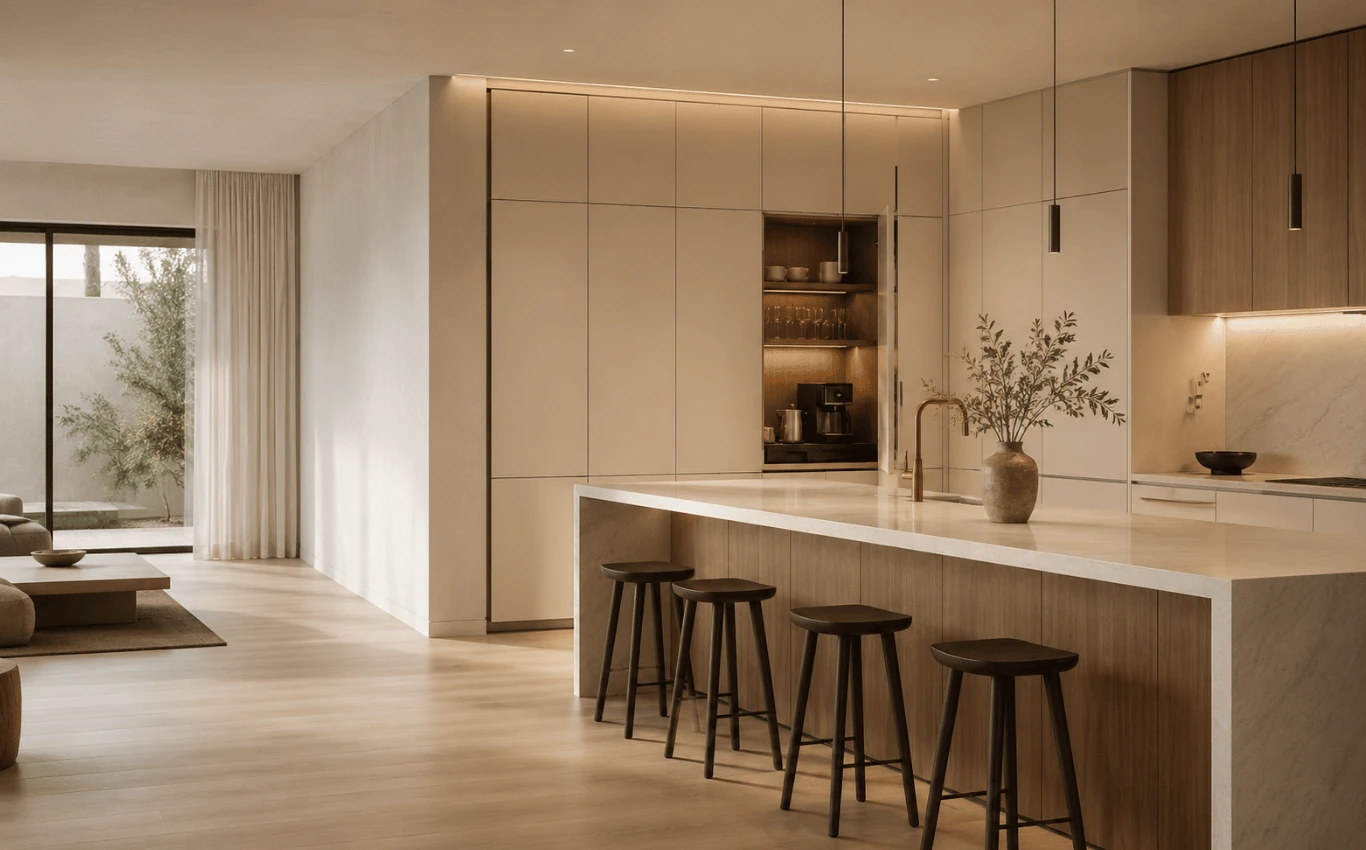
Appliance garages and concealed cabinetry allow homeowners to use their kitchens fully without sacrificing visual order. Coffee stations, toasters, and mixers can remain accessible without being constantly visible.
When fewer items are exposed, there are fewer surfaces collecting dust, grease, and fingerprints. Clean design reduces cleaning effort automatically.
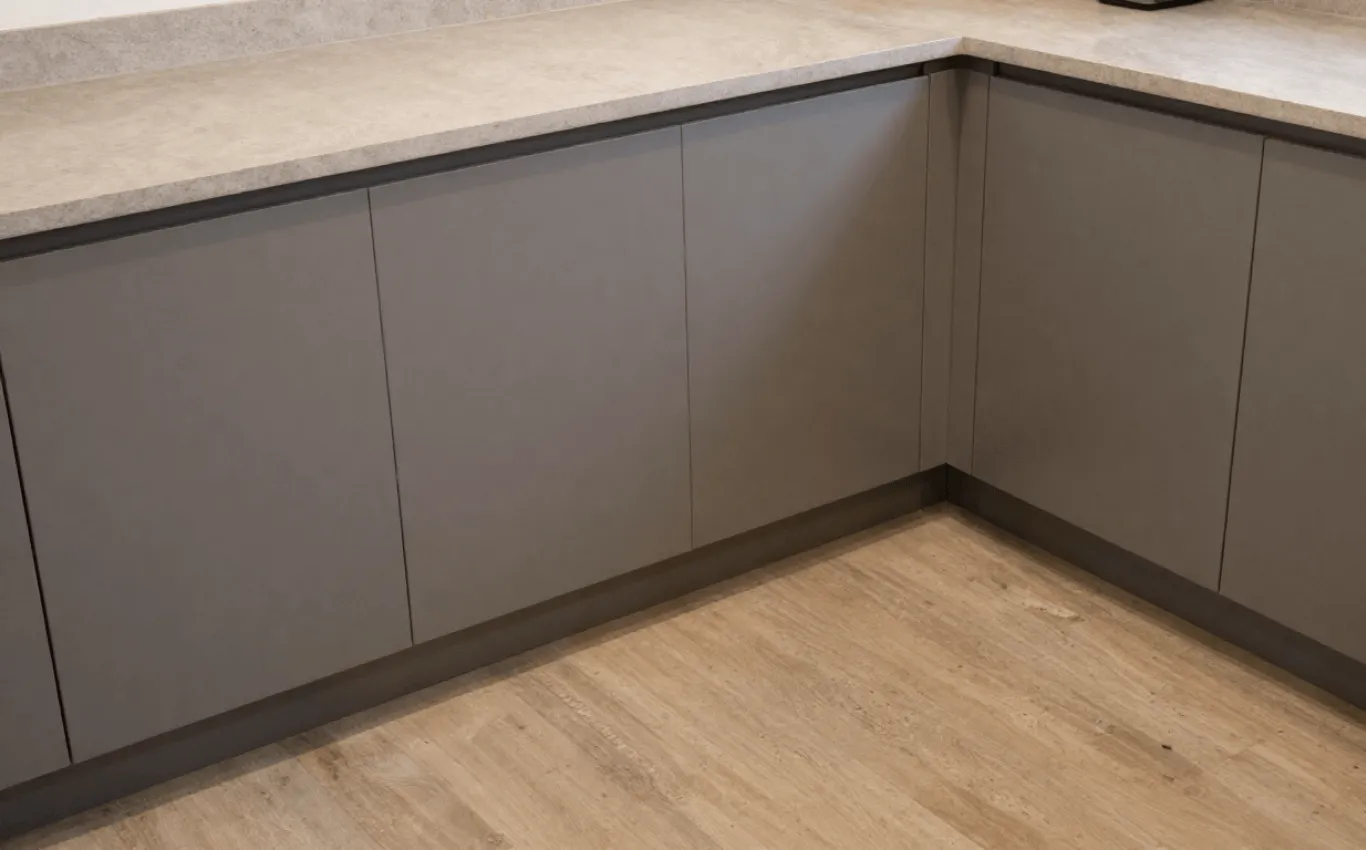
Not all materials behave the same in real life.
High-gloss cabinets and dark matte finishes often highlight fingerprints and water spots. While visually striking, they can require constant maintenance.
Choosing materials that soften visibility makes a major difference:
Pure white or extremely dark countertops tend to show everything. Subtle veining or mid-tone stone surfaces hide crumbs, streaks, and minor imperfections much better.
Flooring is often overlooked. In high-traffic Long Island homes, choosing materials that don’t highlight dust or footprints helps maintain a clean look throughout the day.
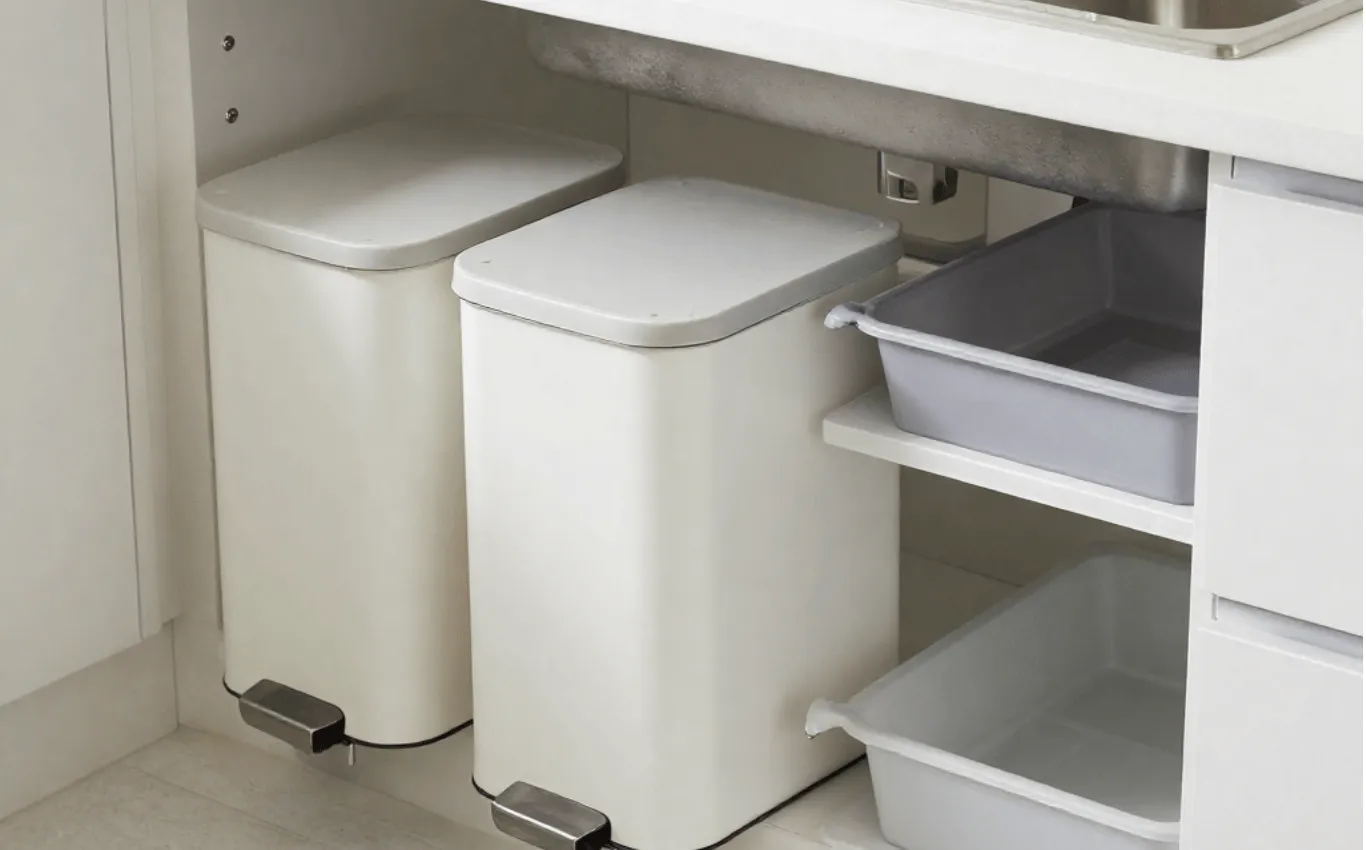
A clean kitchen is not just about surfaces, it’s about flow.
Poor layouts create unnecessary steps, which leads to clutter buildup. When trash, sink, prep areas, and storage are not aligned, items get left out.
This ties into concepts explored in “Open Concept vs Closed Kitchens: Which Design Is Right for You?” where layout decisions directly impact movement, visibility, and daily use.
Designing kitchens around real use means placing:
When everything has a logical place, it naturally gets put away.
Islands often become clutter magnets. When designed properly, they support function without becoming dumping zones. Storage inside islands and clear zoning prevent buildup.
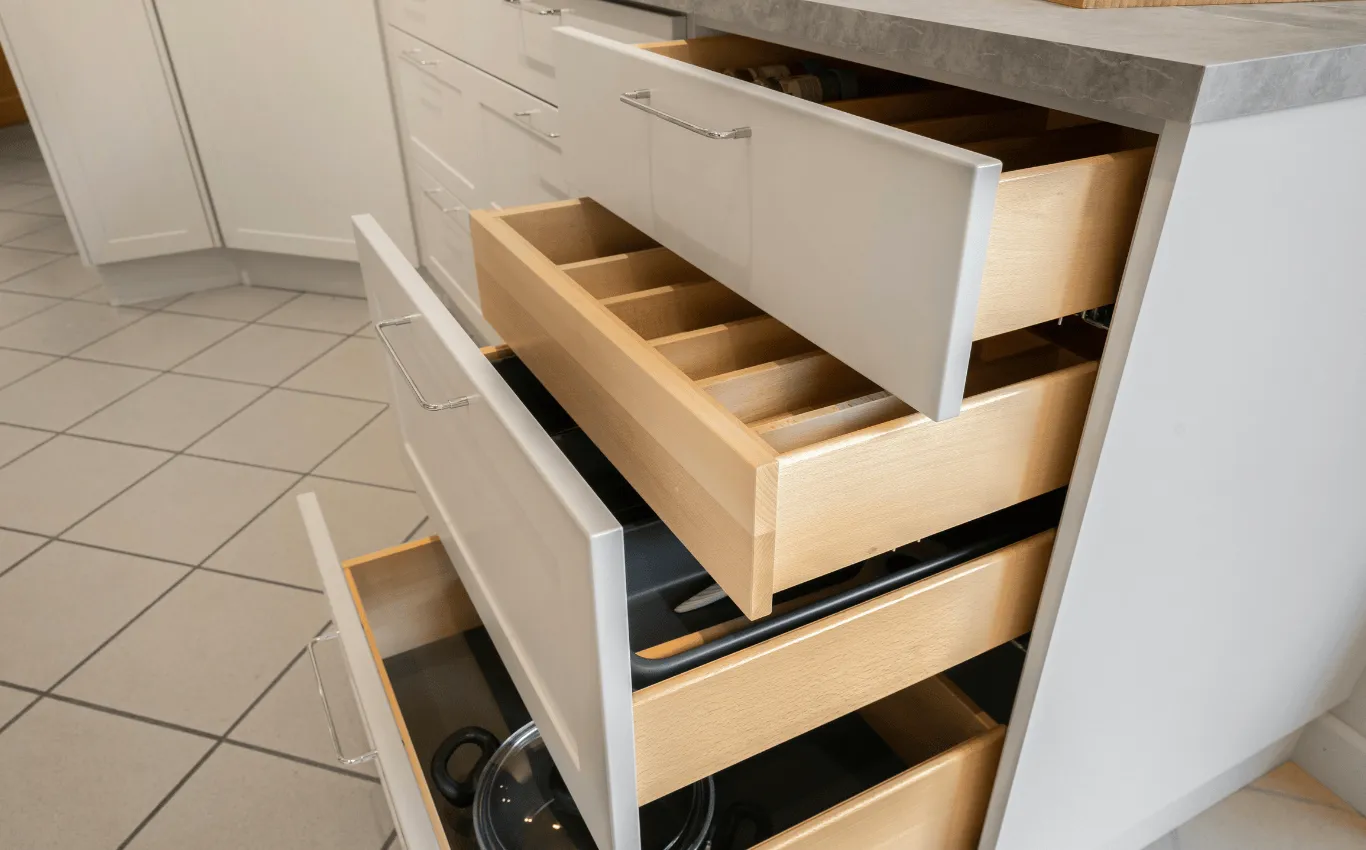
Minimalism isn’t just a style, it’s a strategy.
The fewer visible elements a kitchen has, the less there is to clean, adjust, or organize. Simplicity reduces effort.
Kitchens like the Port Washington, NY | Modern Two-Tone Minimalist Kitchen show how minimal design naturally supports cleanliness. Clean lines and controlled materials prevent visual overload.
A kitchen that is designed with intention doesn’t rely on decorative elements to feel complete. This aligns with principles discussed in “Why Spacious Kitchens Are the Heart of Modern Luxury Homes.” where balance and proportion create kitchens that feel open, calm, and clean.
For contrast, the Nesconset, NY | Navy & Gold Luxe Kitchen demonstrates how even bold kitchens can remain clean when materials and layout are carefully controlled.
Kitchens that stay clean longer are not the result of constant effort, they are the result of thoughtful design. By reducing visual exposure, selecting practical materials, improving layout flow, and designing storage around real life, homeowners can create kitchens that feel organized without trying. In Long Island homes, where kitchens serve as central gathering spaces, this balance between beauty and function becomes even more important. A well-designed kitchen doesn’t demand attention, it supports life quietly and efficiently.

A clean kitchen starts with smart design, not effort. This article shows how layout, materials, and hidden storage help keep your kitchen organized with less work.