.webp)


Your kitchen doesn’t sleep when you don’t. Learn how intentional design brings quiet, safety, and calm to the kitchen at any hour.



Not every moment in a kitchen happens under bright lights and busy energy. Some of the most important moments occur quietly, when the house is asleep, the lights are low, and the world feels paused. A glass of water at 3:00 AM.
A late-night snack after a long day. An early-morning start before anyone else wakes up. These moments reveal whether a kitchen truly works. At night, flaws become obvious: harsh lighting, noisy drawers, awkward layouts, and unsafe pathways.
A thoughtfully designed kitchen anticipates these hours, creating a space that feels calm, intuitive, and safe without waking the rest of the home. The 3:00 AM kitchen isn’t about show, it’s about trust, comfort, and design that quietly supports life when no one is watching.
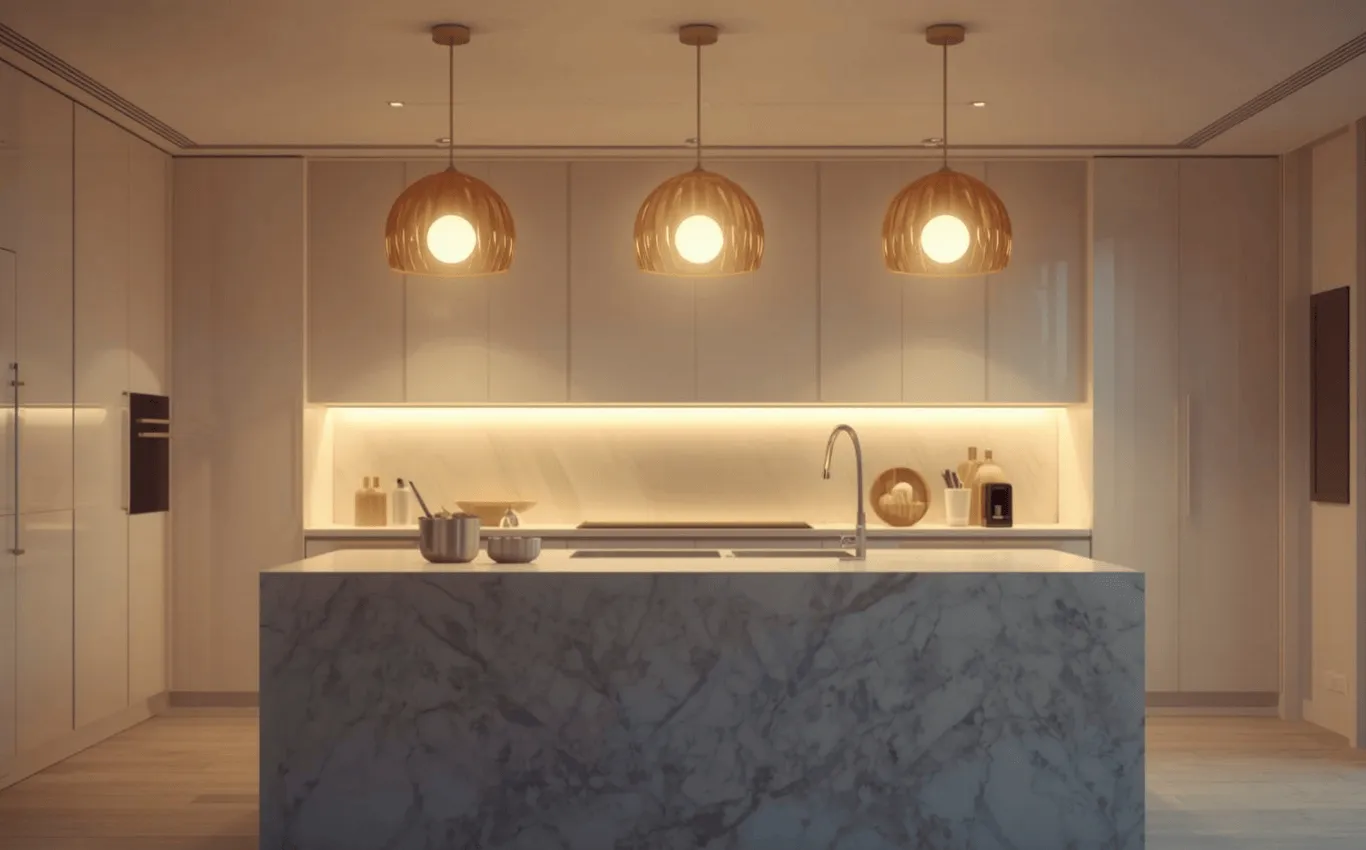

During the day, kitchens can hide their weaknesses behind activity and light. At night, every sound, glare, and misstep is amplified. Designing for these hours requires a different mindset - one focused on calm, clarity, and subconscious guidance.
Thoughtful planning through Jeff Boico’s Kitchen Design services ensures the kitchen works just as well in silence as it does during the busiest part of the day.
At night, harsh overhead lights feel aggressive, and poorly placed switches force unnecessary movement. A kitchen that relies on a single lighting source becomes uncomfortable after dark.
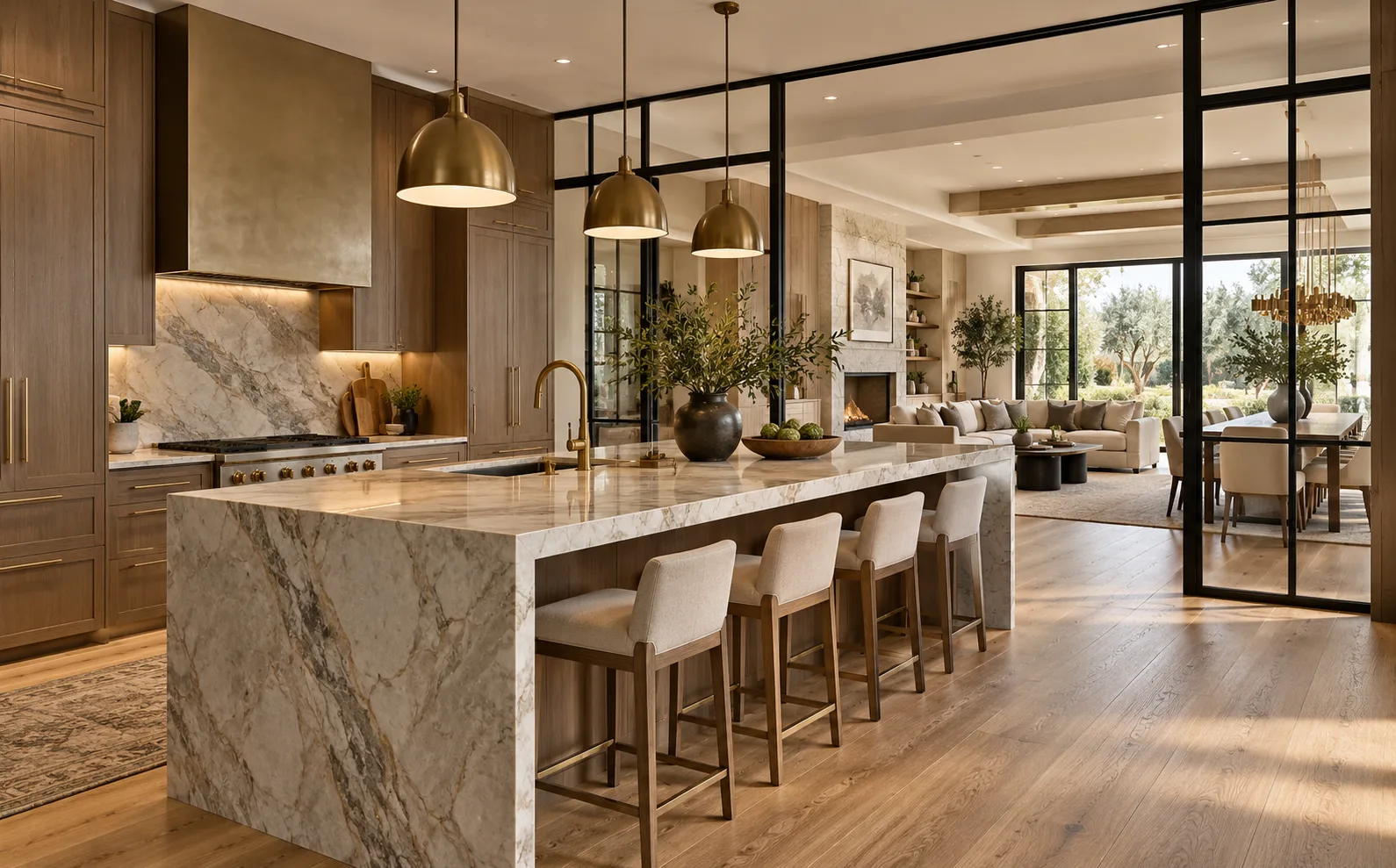
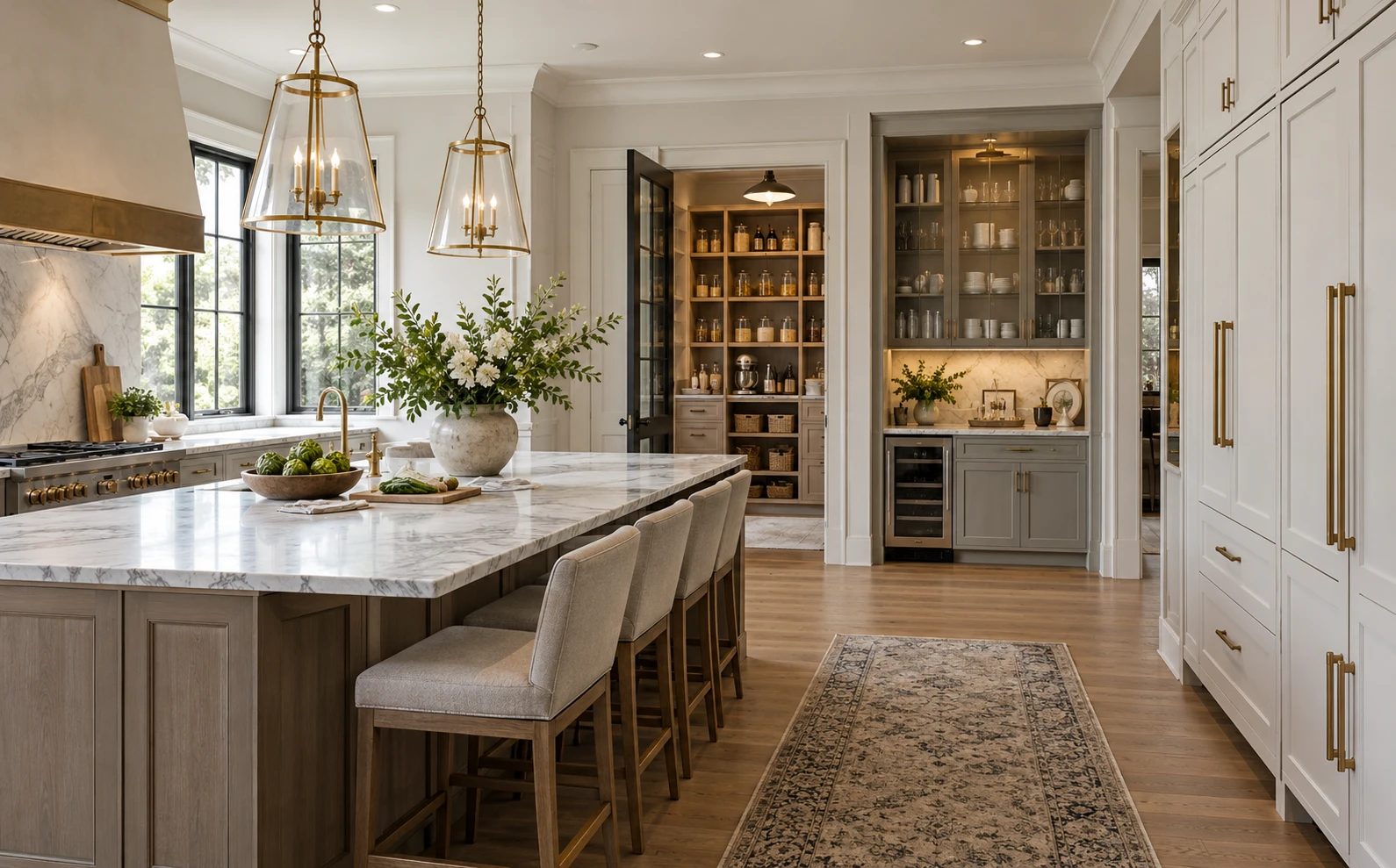
In refined projects like Port Washington NY 3, layered lighting allows the kitchen to shift effortlessly into nighttime mode, providing visibility without intrusion.
A drawer slam or cabinet door echoing at night feels ten times louder than during the day. Kitchens not designed with acoustics in mind can feel disruptive and stressful during quiet hours.
Soft-close cabinetry, integrated appliances, and thoughtful material selection minimize nighttime noise and preserve the calm of the home.
Navigating a kitchen in low light shouldn’t feel risky. When circulation paths are unclear or cluttered, even a simple glass of water can feel uncertain.
Good nighttime kitchens guide movement instinctively, removing hesitation and restoring confidence.

At 3:00 AM, the goal isn’t brightness, it’s orientation. Lighting should gently guide, not demand attention. This is where many kitchens fail and thoughtful ones succeed.
Toe-kick lighting, under-cabinet illumination, and soft accent lighting provide just enough visibility to move safely without waking the body or the house.
In the Great Neck, NY project, discreet lighting layers create a quiet nighttime environment that feels intentional rather than improvised.
Cool lighting signals daytime and activity. Warm lighting signals rest. At night, color temperature matters more than brightness.
This principle complements insights from Elevating Your Kitchen with Lighting: A Guide to Ambient, Task, and Accent Options, where lighting is treated as a behavioral tool—not just a visual one.
At night, no one wants to search for switches. Motion sensors, dimmers, and predictable control placement allow lighting to respond automatically.
When lighting behaves intuitively, it removes decision-making entirely, exactly what a nighttime kitchen needs.

Luxury kitchens are often judged by appearance, but nighttime reveals a more important quality: how quietly the space operates.
At night, even careful movements can create noise. Soft-close drawers, doors, and pull-outs absorb impact and prevent accidental disruption.
This attention to detail reflects ideas explored in The Chef’s Psychology: How Kitchen Layout Shapes the Way You Cook—where design influences behavior even when users aren’t consciously thinking about it.
Appliances placed near bedrooms or shared walls become liabilities at night. Strategic zoning keeps sound-producing elements away from quiet areas of the home.
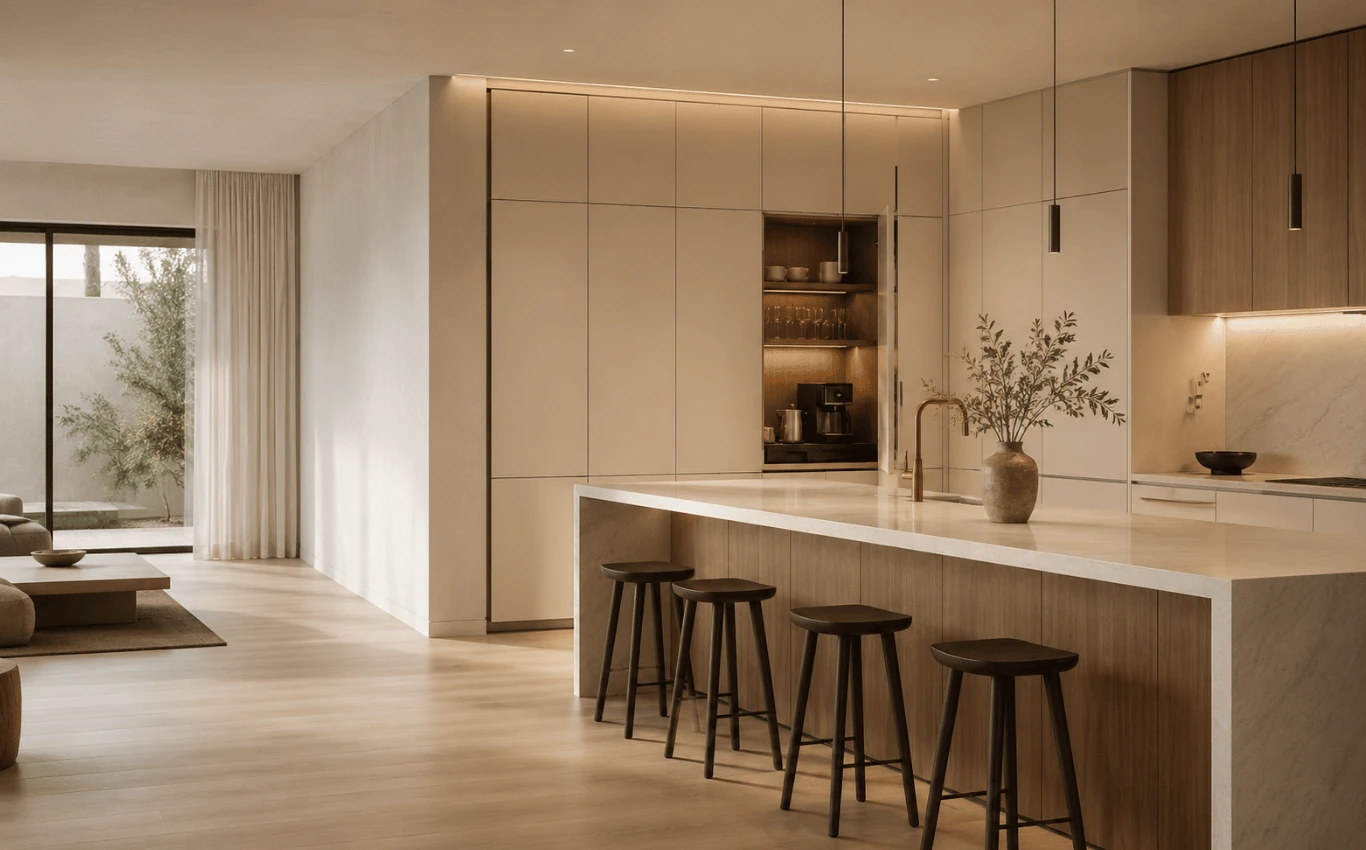
In the Port Washington, NY project, appliance placement was carefully considered to preserve nighttime calm throughout the house.
Hard surfaces reflect sound. Softer finishes, wood tones, and layered textures help dampen noise and create a warmer nighttime atmosphere.
These choices support a kitchen that feels calm rather than echoing when the house is silent.

Safety at night shouldn’t feel clinical or obvious. The best kitchens protect quietly, without drawing attention to the measures themselves.
At night, the brain is slower and the body less alert. Clear pathways, unobstructed corners, and predictable layouts reduce the risk of accidents.
This aligns with principles discussed in The 60-Second Kitchen Test: How to Tell If Your Layout Is Actually Working, where efficiency and clarity reveal true performance.
Changes in floor texture, cabinet depth, or lighting intensity help orient users without conscious effort. These cues quietly communicate where to step and where to pause.
When done well, they feel natural rather than instructional.
Nighttime use reveals the importance of tactile design. Hardware should be easy to grip without looking, and drawers should open smoothly with minimal effort.
These small details build trust between user and space, especially when vision is limited.
A truly successful kitchen doesn’t demand attention at 3:00 AM, it supports quietly. It allows you to move safely, retrieve what you need, and return to rest without disruption. These late-night moments expose whether a kitchen was designed for real life or just daytime appearances. When lighting is gentle, sound is controlled, and layout feels intuitive, the kitchen becomes a calm extension of the home, even when the world is asleep.

Not every kitchen moment happens during the day. This article explores how thoughtful design creates a quiet, safe, and calming kitchen experience during late-night hours.