.webp)


Open kitchens can amplify noise in modern homes. Discover how smart acoustic design creates quieter, more luxurious kitchens in Long Island homes.



Modern kitchens are more open than ever. Walls have come down, ceilings are higher, and hard surfaces dominate the design landscape. While these choices create beautiful, expansive spaces, they introduce a hidden challenge that most homeowners don’t anticipate: sound. In open-concept homes across Long Island, kitchens no longer operate in isolation.
Every clink of a dish, hum of an appliance, and echo of conversation travels freely into living and dining spaces. Designing a kitchen for silence isn’t about muting activity, it’s about controlling acoustics so the space feels calm rather than chaotic.
.webp)
.webp)
Open kitchens are visually seamless, but acoustically exposed. The very elements that make them feel high-end often amplify noise.
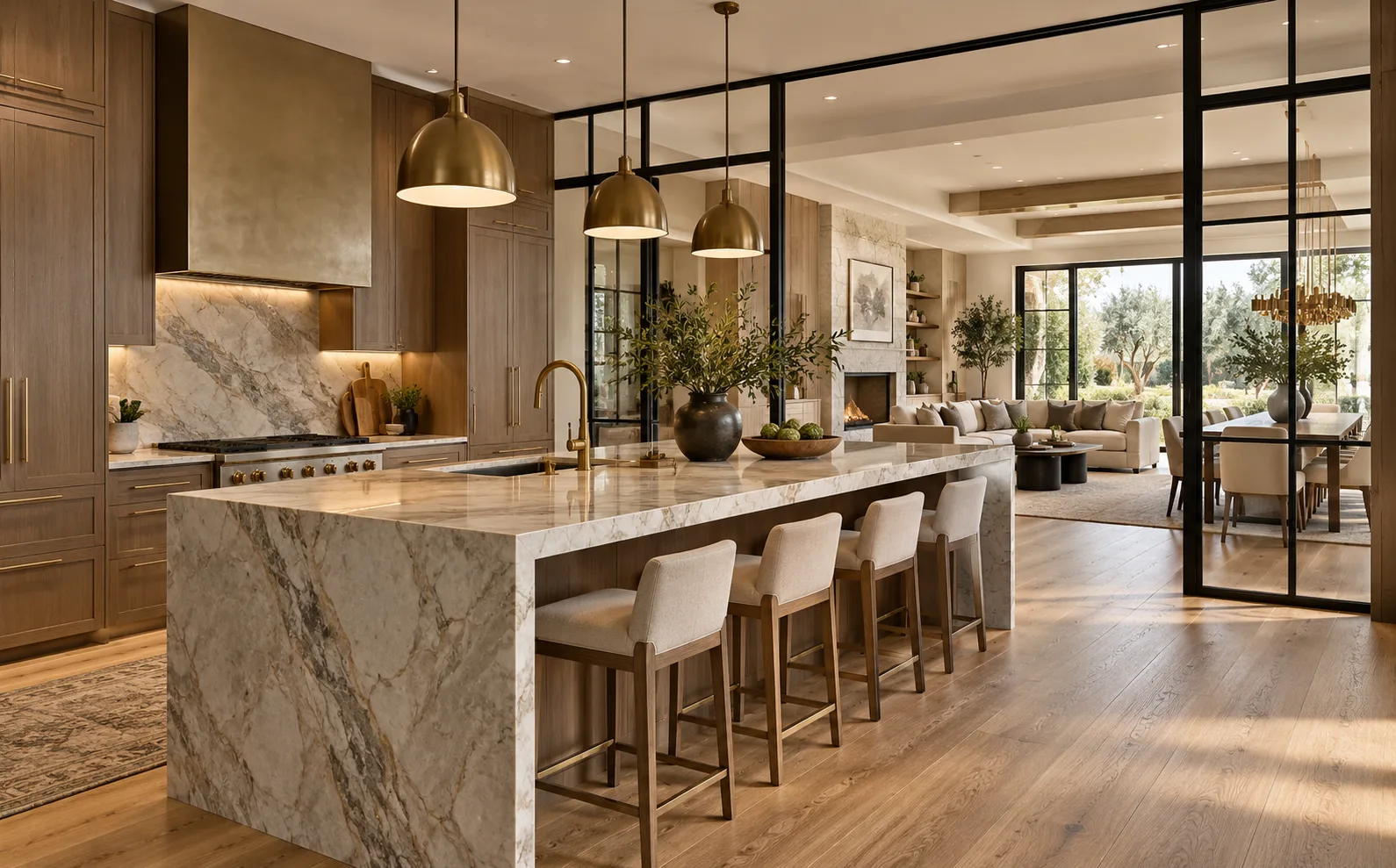
Stone countertops, tile backsplashes, hardwood floors, and glass cabinetry are beautiful, but they reflect sound rather than absorb it. When layered together, these materials create echo and reverberation. In large Long Island homes with vaulted ceilings, this effect can intensify.
Silence in a kitchen begins with understanding how materials behave acoustically, not just aesthetically.
Traditional kitchens were separated by walls and doors. Modern open layouts eliminate those buffers. Without barriers, sound travels unfiltered into family rooms and dining areas. This is particularly noticeable during:
Open design requires smarter acoustic planning.
High-performance appliances improve cooking experiences, but they often increase decibel levels. Vent hoods, built-in espresso machines, and commercial-style ranges add background noise that can overwhelm open spaces.
Design must balance performance with peace.
.webp)
Noise isn’t just physical, it’s emotional. Kitchens that sound busy often feel busy, even when visually clean.
Low-level appliance hum, echoing footsteps, and clattering dishes build subtle tension over time. Homeowners may not consciously identify acoustics as the issue, but they describe the kitchen as “chaotic” or “overstimulating.”
Luxury isn’t only about finishes, it’s about experience. Kitchens that feel acoustically controlled allow conversations to flow naturally without raising voices. The absence of echo creates intimacy.
Projects like the Remsenburg, NY | Coastal Elegance Kitchen demonstrate how material balance and layout can create a calm atmosphere even within an open plan.
In open homes, kitchens are social hubs. If acoustics are poorly managed, conversations compete with appliances. If acoustics are controlled, the space feels comfortable and connected.
Sound directly influences how people gather.
.webp)
Silence isn’t accidental. It’s designed.
Softening elements within a kitchen can significantly reduce reverberation. This does not mean sacrificing elegance. Instead, it means incorporating subtle balance.
Examples include:
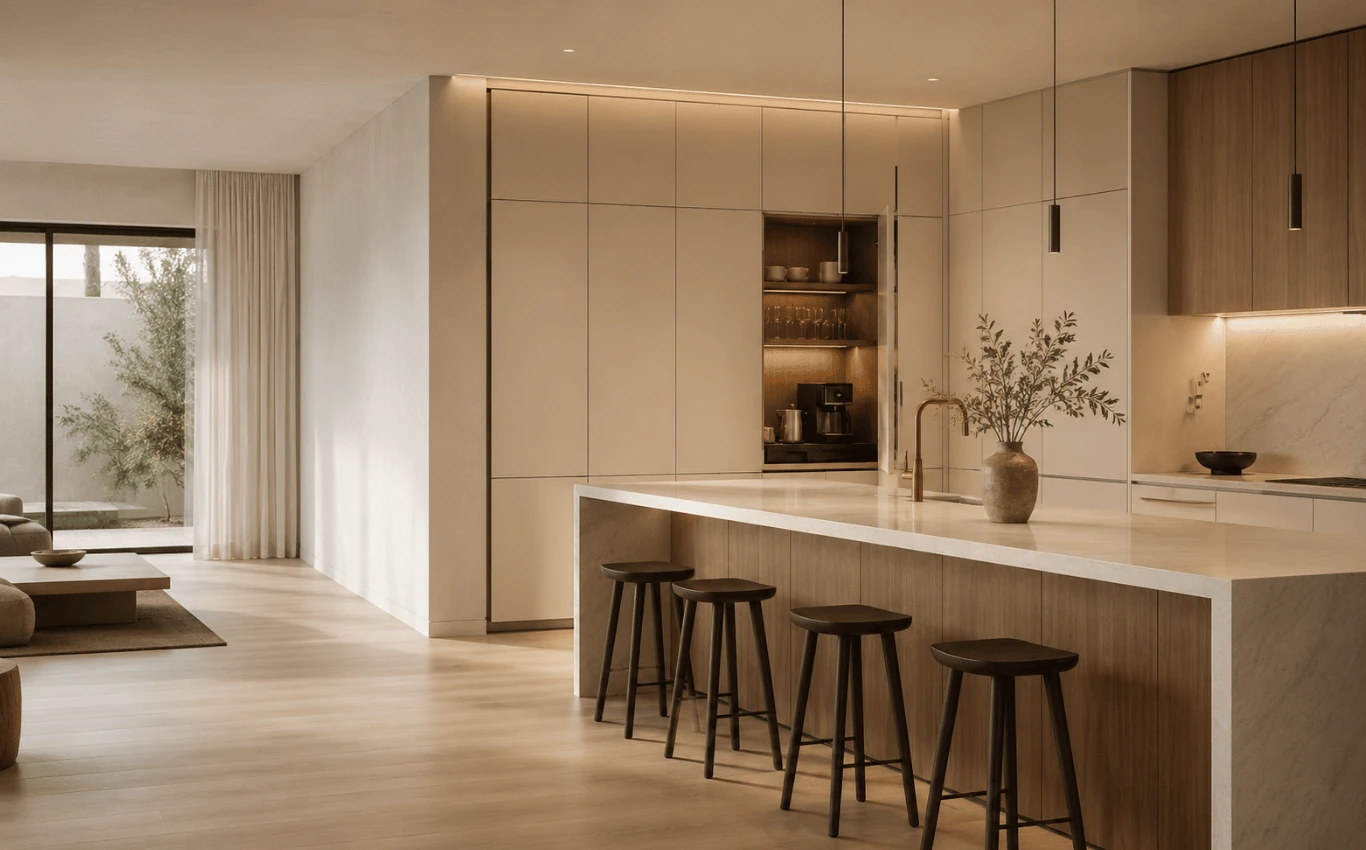
The Port Washington, NY | Modern Two-Tone Minimalist Kitchen shows how clean minimalism paired with thoughtful material layering prevents echo from dominating the space.
Large islands can either absorb or reflect sound depending on material composition. Overly hard, oversized islands often amplify noise. Proper scale and material contrast reduce reflection.
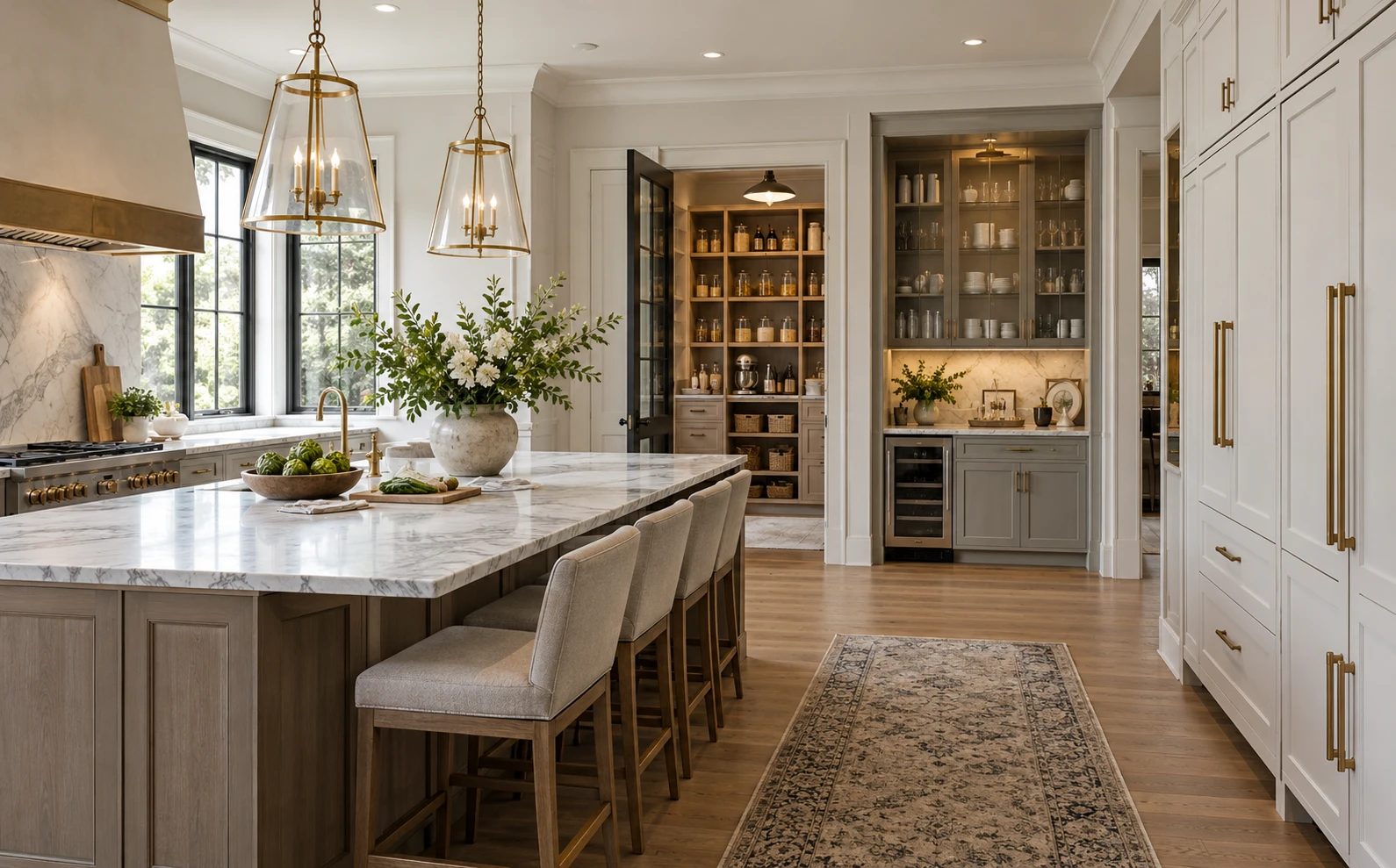
Full-height cabinetry and paneled appliance integration soften sound reflection by breaking up flat surfaces. Kitchens that incorporate integrated design often feel quieter because there are fewer exposed hard edges.
Working with professional Kitchen Design Services ensures these details are considered during planning, not after problems appear.
.webp)
Long Island homes frequently feature tall ceilings and expansive footprints. While visually impressive, volume increases acoustic complexity.
Sound rises and reflects downward in tall rooms. Without acoustic consideration, conversations can feel amplified.
Large metal or glass fixtures reflect sound. More textured or fabric-lined elements soften it.
Kitchens designed with balanced proportions, not just dramatic scale, feel more contained acoustically. The Nesconset, NY | Navy & Gold Luxe Kitchen demonstrates how bold finishes can coexist with thoughtful spatial balance, preventing the room from feeling acoustically harsh.
.webp)
In coastal and suburban Long Island homes, open living is standard. But as open layouts become expected, differentiation comes from refinement, not expansion.
Homeowners increasingly value serenity. Kitchens that support quiet mornings and peaceful evenings feel more livable long-term.
Potential buyers subconsciously respond to how a home sounds. Echoing, noisy kitchens can feel overwhelming during showings.
Trends change, but comfort does not. A kitchen designed with acoustic awareness ages better because it supports daily life beyond aesthetics.
Exploring Jeff Boico’s broader kitchen portfolio reveals that the most successful kitchens are not only visually balanced, but experientially calm.
Modern kitchens are more open, more connected, and more beautiful than ever. But beauty without acoustic consideration can quietly undermine comfort. Hard surfaces, high ceilings, and powerful appliances all contribute to sound levels that affect daily living. Designing kitchens for silence is not about removing activity, it is about controlling how sound behaves within the space. When acoustics are thoughtfully planned, open kitchens feel composed, inviting, and truly luxurious.

Open kitchens look beautiful, but they’re often louder than expected. This article explains how modern layouts amplify noise and how smart acoustic design creates calmer, more comfortable kitchens.