.webp)


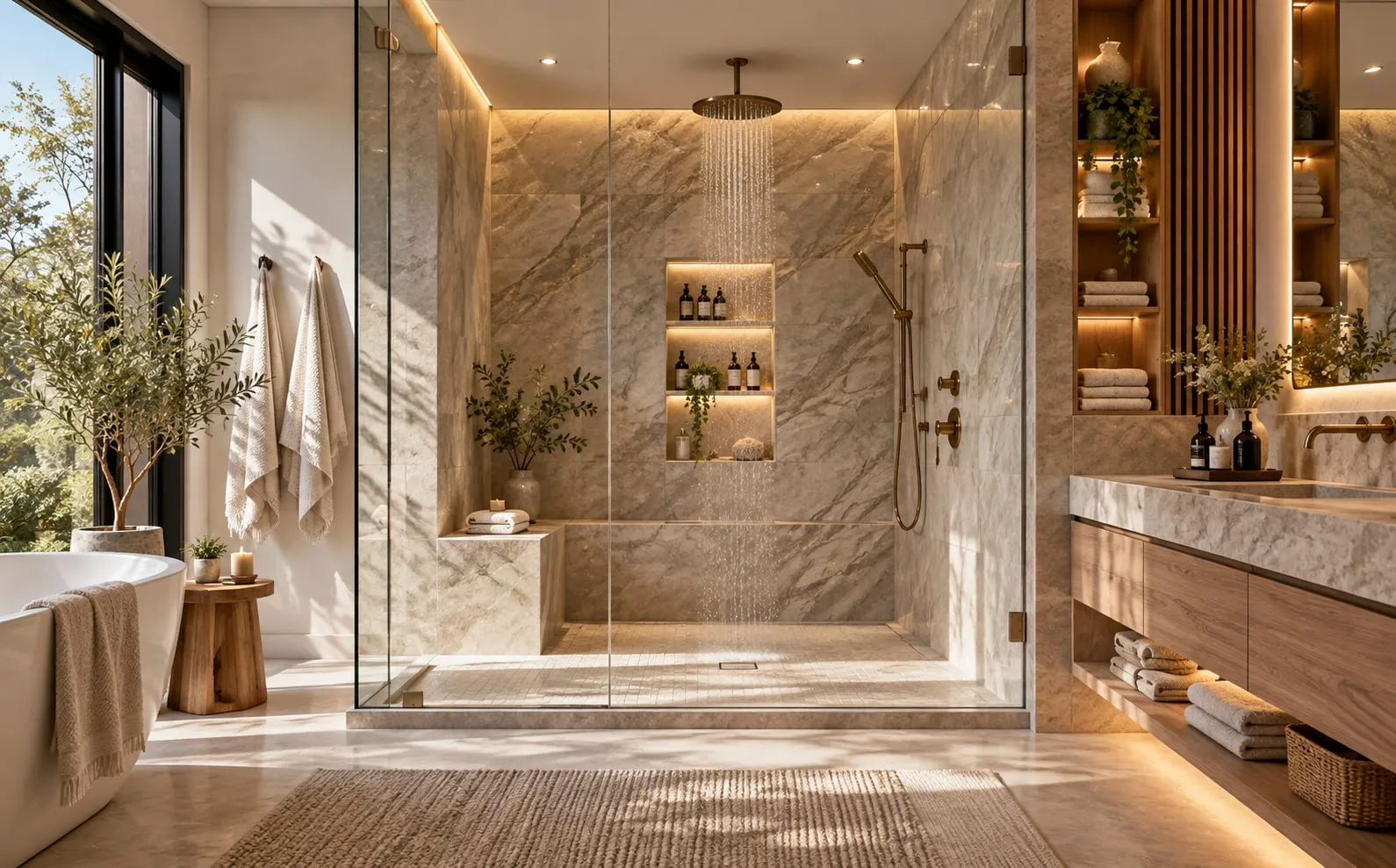
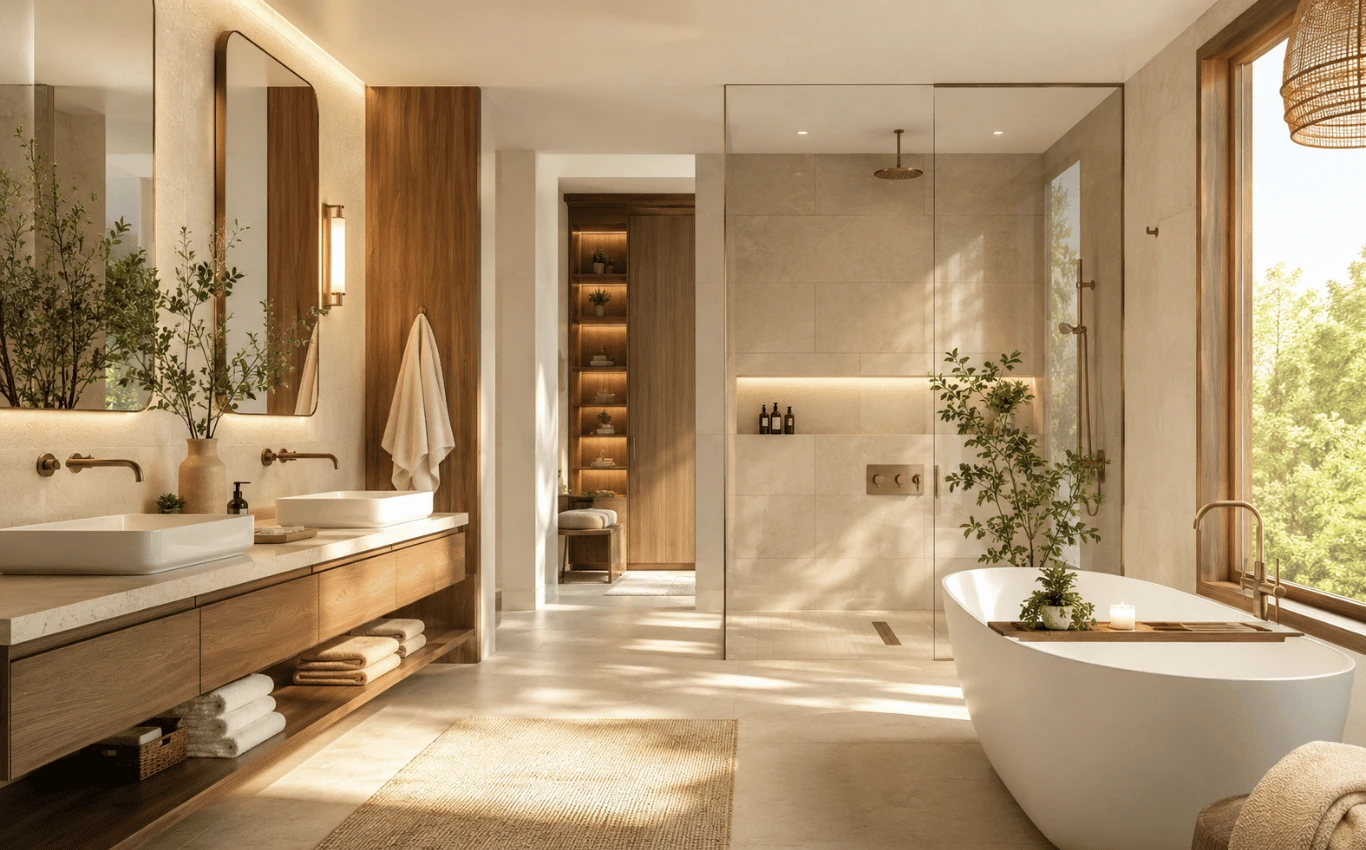
Your bedroom bathroom should feel more personal than the main bath. Discover how lighting, layout, and materials create a private retreat in Long Island homes.



In many Long Island homes, bathrooms are designed with consistency in mind. Matching finishes, similar layouts, and repeated materials create a sense of cohesion throughout the house. But when it comes to the bedroom bathroom, that approach often misses an opportunity.
An en suite bathroom should not feel like a smaller version of the main bath. It should feel more personal, more intentional, and more connected to the private rhythm of the bedroom itself. While the main bathroom often serves guests or multiple family members, the bedroom bathroom is a retreat. Its design priorities should reflect that difference.
The biggest mistake homeowners make is treating every bathroom as if it serves the same purpose. The bedroom bathroom functions differently from a hallway or main-level bath.
A main bathroom typically balances durability and neutrality because it accommodates guests or multiple users. A bedroom bathroom, however, is deeply personal. It supports one routine, one lifestyle, and one set of habits.
Design decisions can therefore be more tailored:
Personalization is the defining advantage of an en suite.
Main bathrooms often need to feel clean, bright, and universally appealing. A bedroom bathroom can feel softer and more intimate. Warmer tones, textured materials, and dimmable lighting create an atmosphere that feels connected to the bedroom rather than separate from it.
The idea of designing around feeling rather than function alone aligns with themes discussed in “The Hidden Costs of Overdesigning a Bathroom.” Overdesign becomes especially problematic in personal spaces where calm matters most.
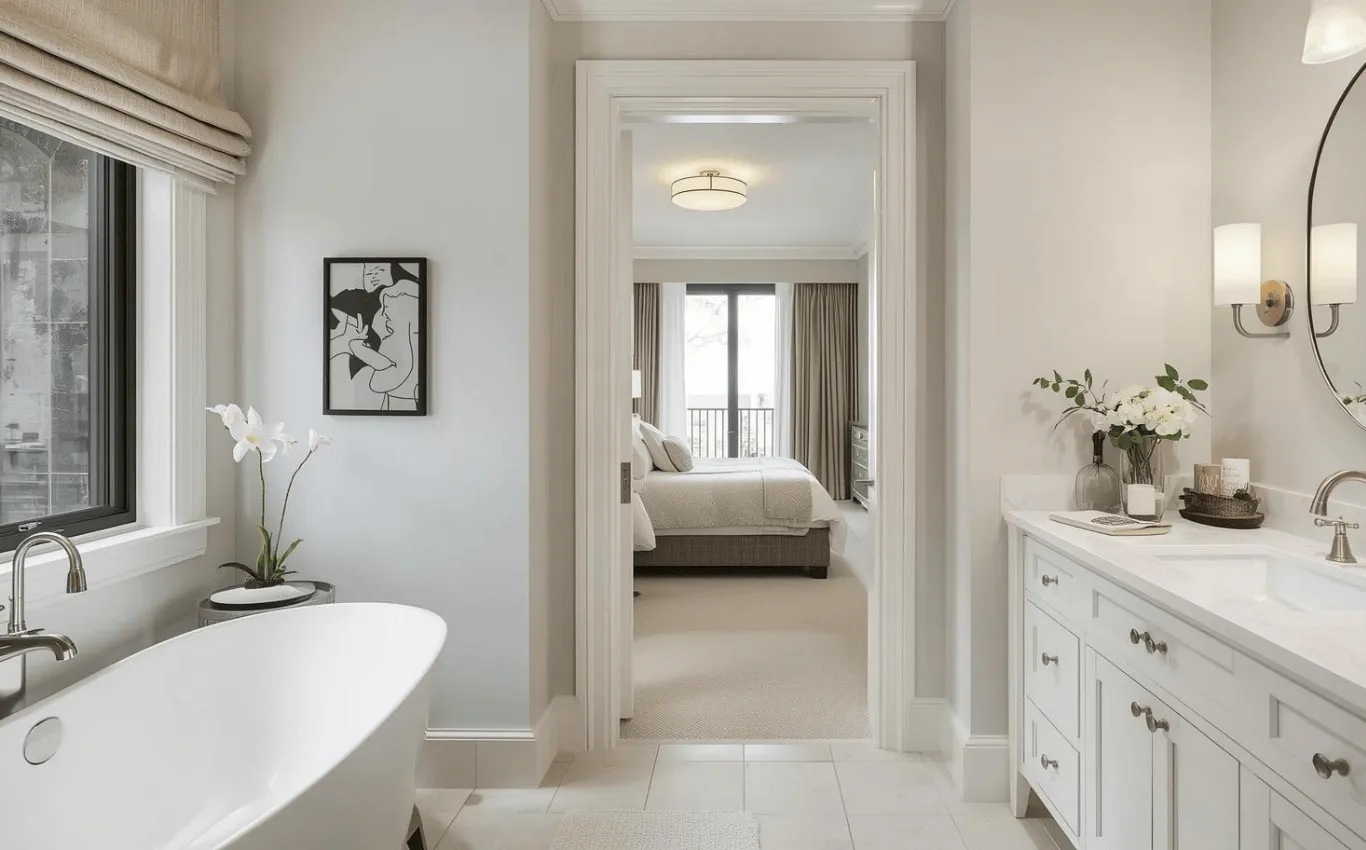
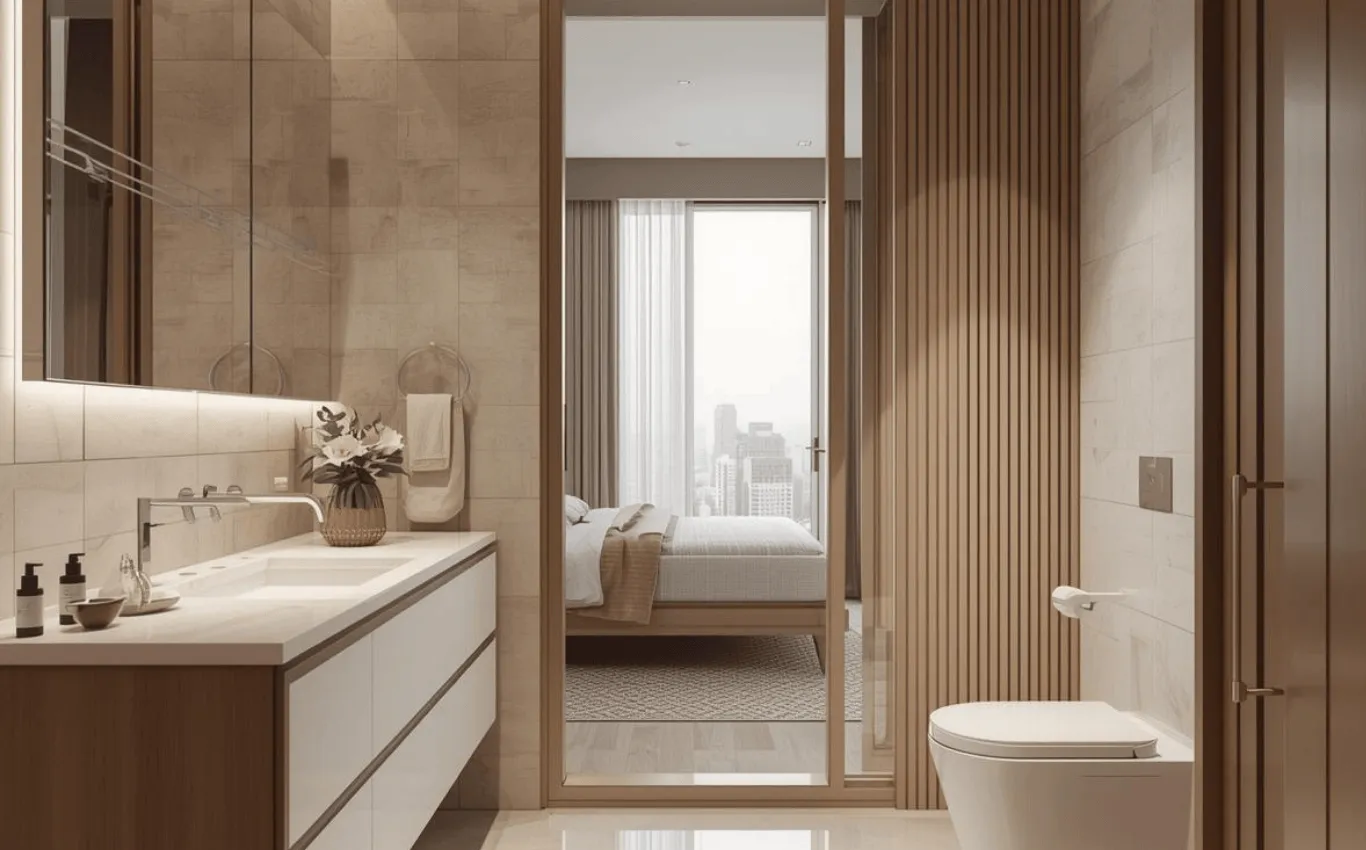
When guests use a bathroom, visual simplicity and easy access matter. In a private en suite, layout can prioritize discretion. Toilet placement, shower enclosure design, and sightlines become more important because the space is seen from the bedroom.
Privacy and flow should guide the planning.
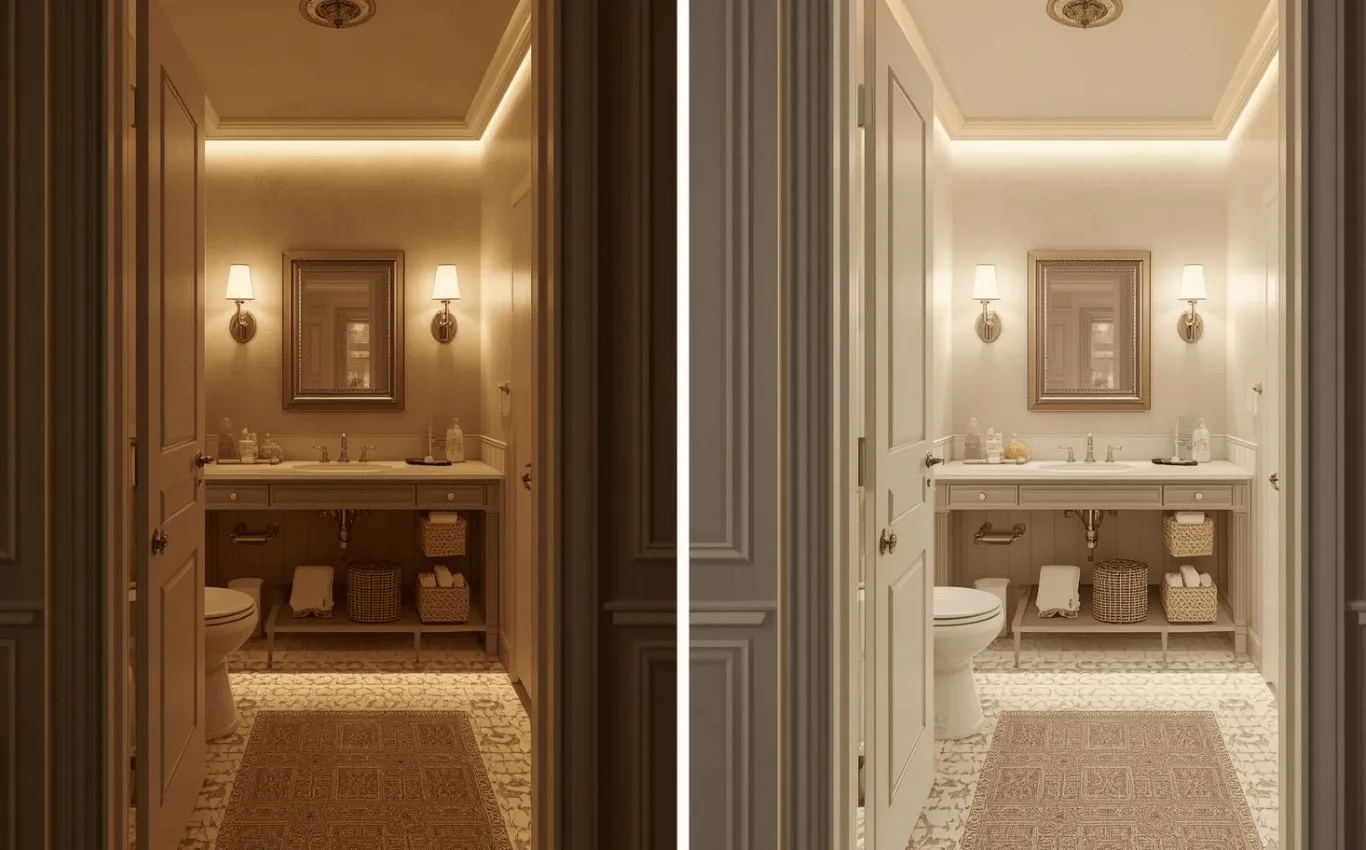
Lighting is one of the most overlooked distinctions between main bathrooms and bedroom bathrooms.
Main bathrooms often serve busy mornings. Bedroom bathrooms serve transitions, early mornings and late nights. The lighting should reflect that duality.
Layered lighting works best:
Harsh lighting that works in a shared bath can feel uncomfortable in a private retreat.
High-gloss surfaces combined with bright LEDs can create visual fatigue. Bedroom bathrooms benefit from controlled reflectivity. Matte finishes and warm light temperatures reduce harsh contrasts.
These subtle details contribute to the calm, quiet atmosphere discussed in “The Psychology of Relaxation: How Bathroom Design Affects Your Mind.”
In a main bath, lighting is practical. In a bedroom bath, it becomes atmospheric. Backlit mirrors, soft toe-kick lighting, and concealed fixtures create depth without overwhelming the space.
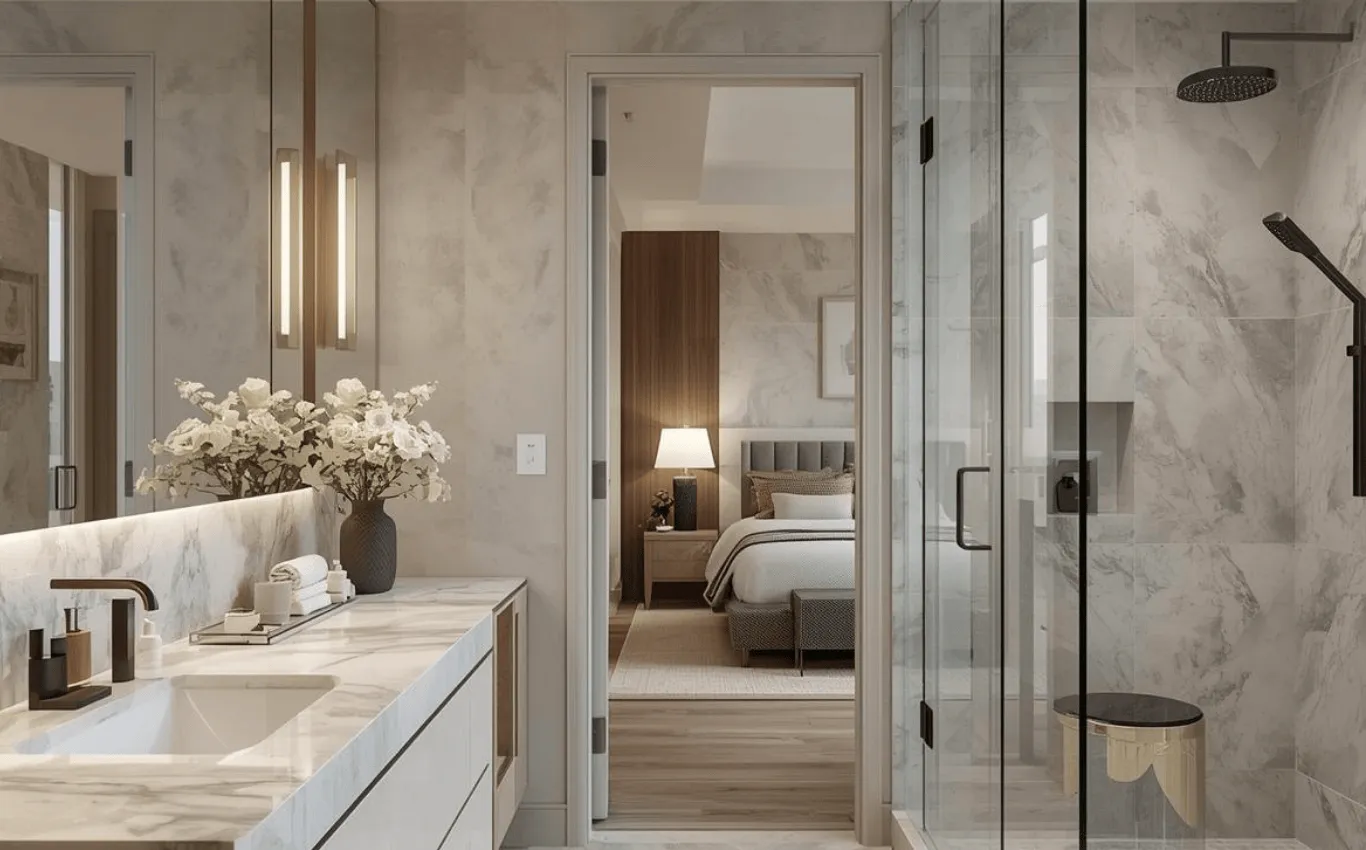
While main bathrooms often lean toward neutral, resale-friendly palettes, bedroom bathrooms can take more creative risks.
Instead of bold, dramatic contrasts, en suite bathrooms benefit from tactile richness. Natural stone with subtle movement, wood tones, or plaster-like finishes create warmth without visual noise.
The bedroom bathroom should feel like an extension of the bedroom. Flooring transitions, color continuity, and material echoes strengthen that connection.
When the two spaces feel integrated, the experience feels intentional rather than attached.
Bedroom bathrooms can prioritize comfort-driven upgrades:
These features are less about impression and more about daily experience.
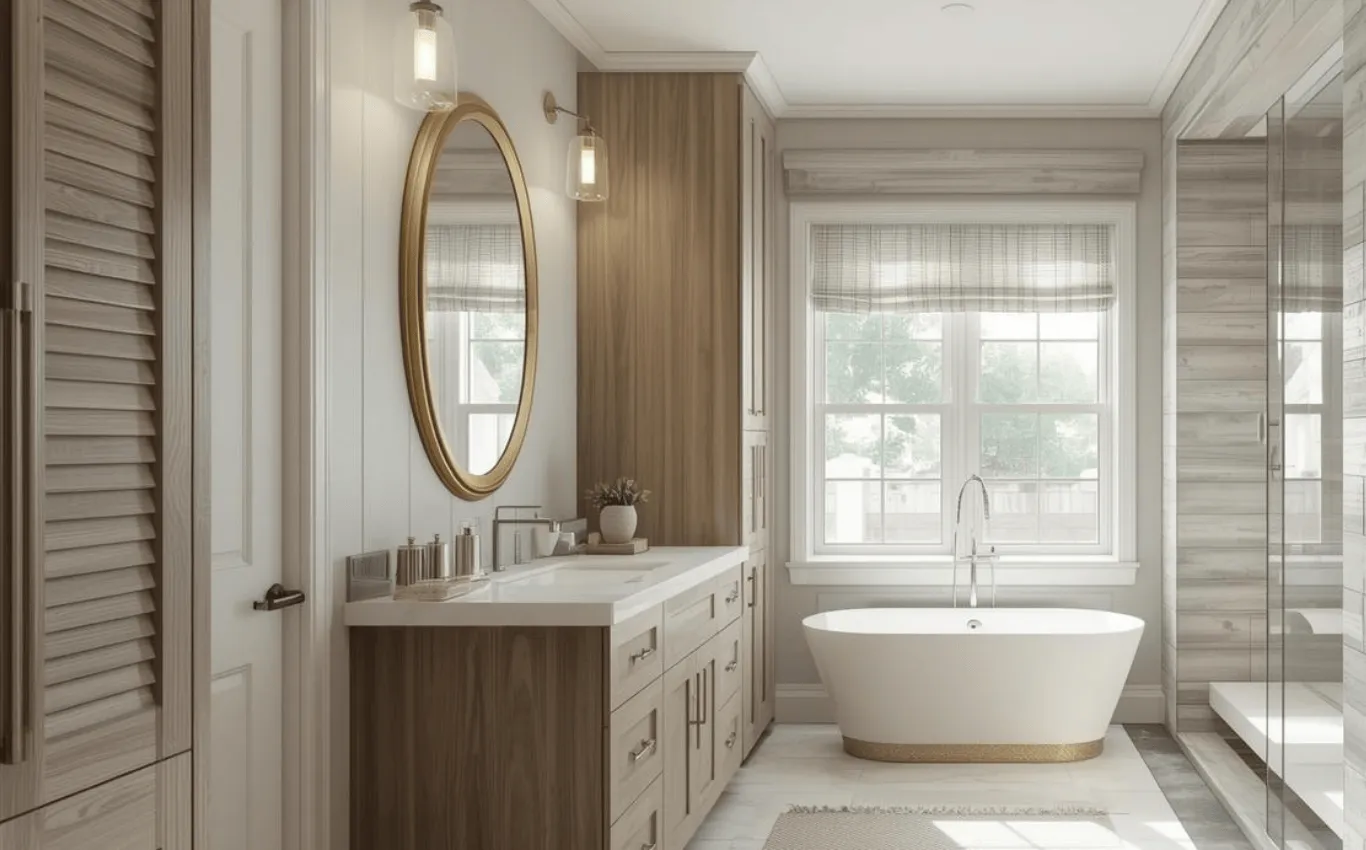
Storage needs vary dramatically between a shared bath and a private en suite.
Open shelving may work in a decorative guest bath. In a bedroom bathroom, concealed storage supports a cleaner visual environment. Personal items remain organized without becoming part of the aesthetic.
Designing around real movement patterns makes a difference. Where do you stand while brushing your teeth? Where does natural light fall during the morning routine? How far is the shower from the vanity?
Functional alignment prevents frustration later.
Main bathrooms sometimes prioritize resale appeal. Bedroom bathrooms prioritize longevity of comfort. This forward-thinking mindset aligns with ideas explored in “Luxury Bathroom Layouts That Feel Open and Organized”
When personal spaces are designed for durability and routine, they remain satisfying for years.
The bedroom bathroom is not simply another bathroom in the house. It is a private extension of the bedroom, shaped by personal routines, lighting preferences, and comfort priorities. While the main bath must balance neutrality and shared use, the en suite can embrace warmth, subtlety, and personalization. When these spaces are designed with intention rather than repetition, the result feels elevated, cohesive, and deeply livable.

Not all bathrooms serve the same purpose. While the main bath focuses on shared use, a bedroom bathroom should feel personal and private. This article explores how thoughtful design can turn an en suite into a true retreat.