.webp)


Not sure whether your kitchen needs a repair or a full remodel? Learn the key signs that can help you make the right investment for your space and lifestyle.



Not every kitchen issue requires a full remodel. In many cases, simple repairs can restore functionality and extend the life of your space. However, some problems go beyond surface-level fixes and may indicate that your kitchen no longer supports your needs.
Over time, wear, outdated finishes, limited storage, and frustrating layouts can affect how comfortable and efficient your kitchen feels. In this article, we'll explore how to recognize the difference between a kitchen that needs a repair and one that would benefit from a complete remodel.
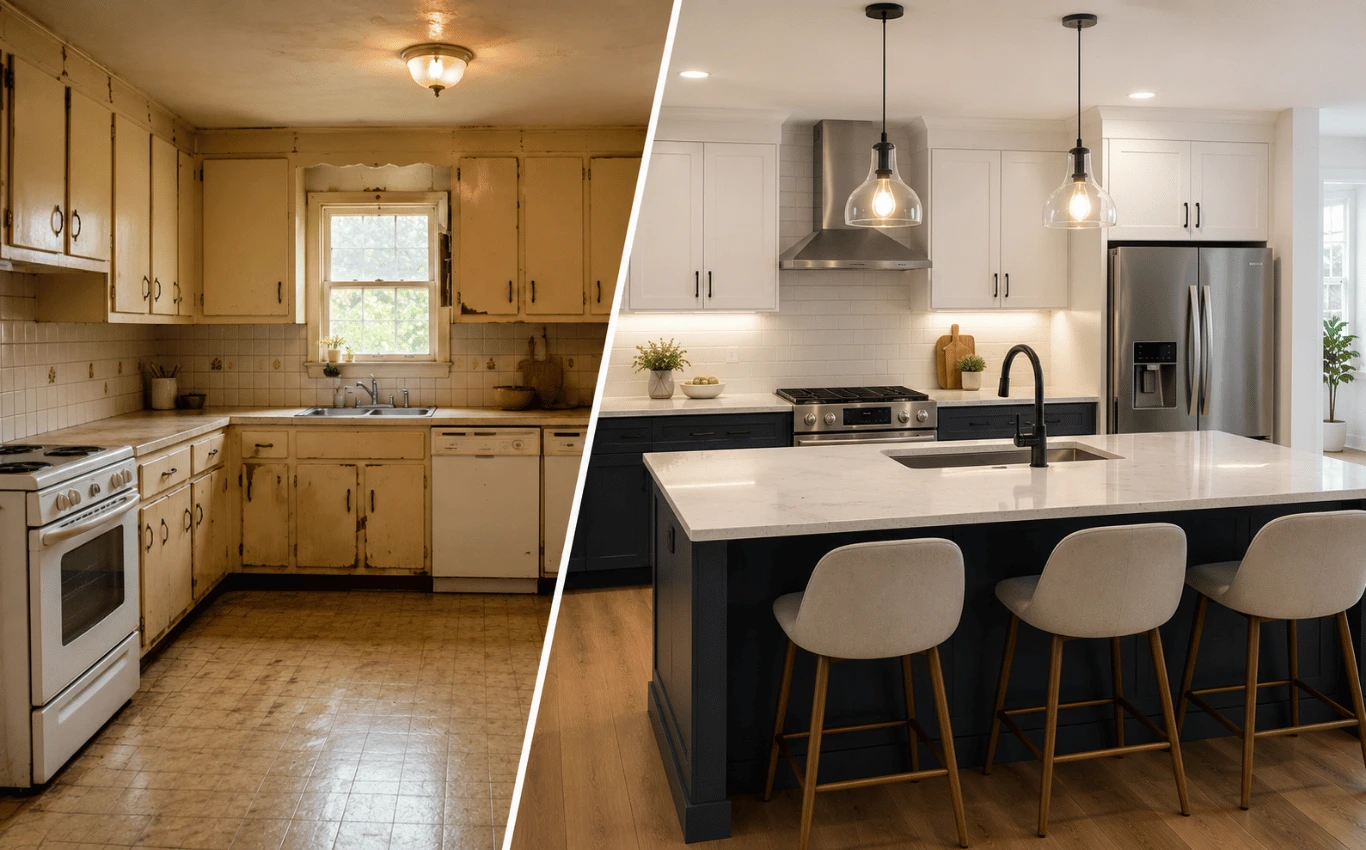

Not every flaw is a sign that your kitchen has reached the end of its life. Many kitchens remain structurally sound and functional even when certain elements begin showing signs of age. In these situations, strategic repairs can often provide excellent results without the cost of a full renovation.
Over time, kitchens naturally experience wear and tear. Small scratches, minor cabinet damage, aging hardware, and surface imperfections can make a kitchen appear older than it actually is. While these issues may affect appearance, they often do not impact the functionality of the space.
When the overall layout works well and the major components remain in good condition, repairing or refinishing these elements can dramatically improve the look of the kitchen without requiring a complete redesign.
Many homeowners assume that one damaged feature means the entire kitchen must be replaced. In reality, individual elements such as cabinet doors, countertops, lighting fixtures, or hardware can often be updated independently.
Making targeted improvements allows homeowners to refresh the appearance of their kitchen while preserving the parts that still function well. This approach can be especially valuable when the kitchen layout continues to meet the household's needs.
One of the strongest indicators that repair may be the better option is when the kitchen still feels comfortable to use. If movement feels natural, storage is adequate, and daily routines remain efficient, the underlying design may still be serving its purpose.
This idea connects with "Why Kitchen Design Changes the Way You Cook (And How It Affects Your Comfort)" where thoughtful layouts continue to support comfort and functionality long after the kitchen is built.
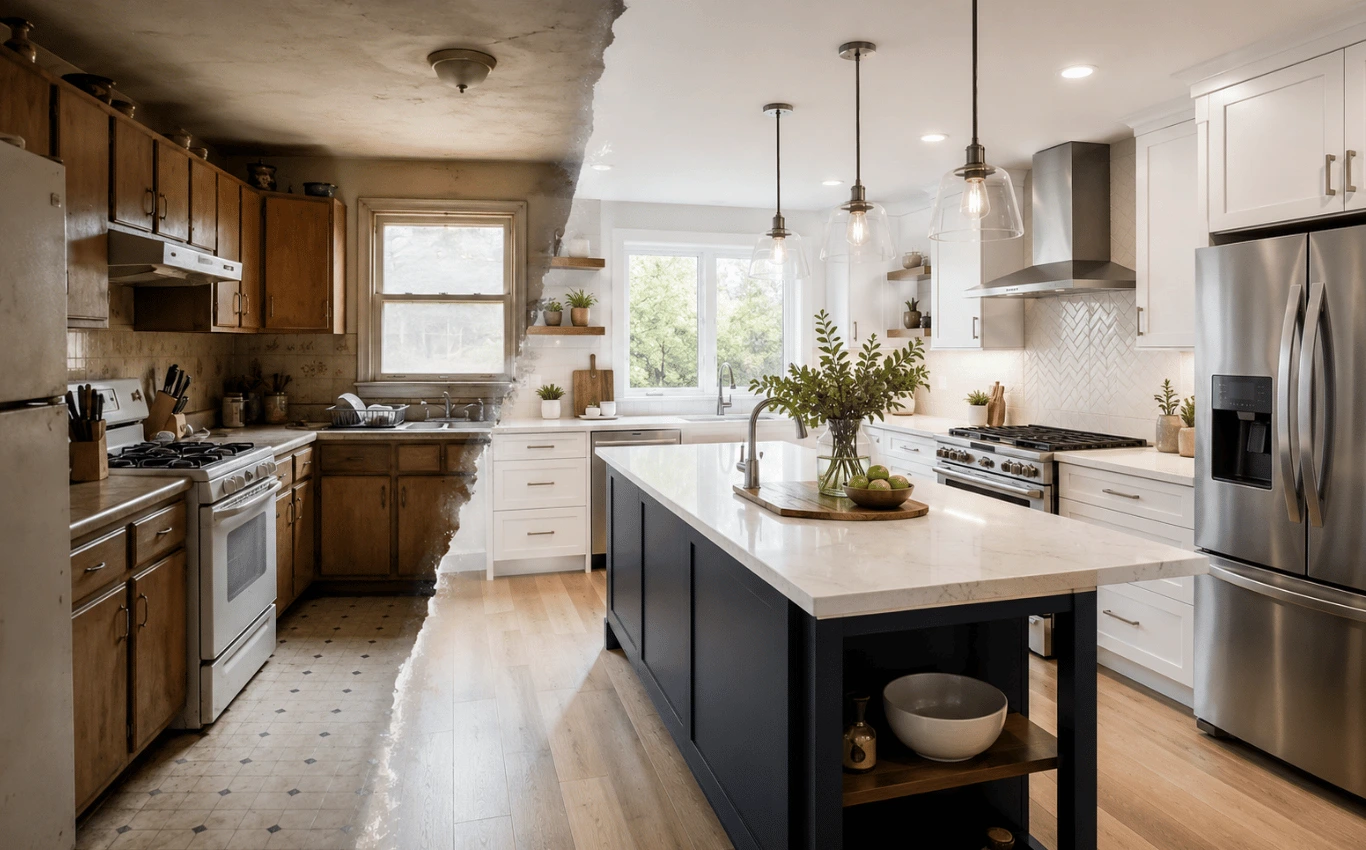
While repairs can solve many problems, there comes a point when the kitchen itself no longer supports the way you live. When multiple issues begin affecting functionality, comfort, and efficiency, remodeling often becomes the smarter long-term investment.
One of the clearest signs that remodeling may be necessary is a layout that no longer works. A kitchen can look beautiful but still be frustrating to use if the workflow is inefficient.
Common issues include:
When the structure of the kitchen is the problem, repairs alone cannot solve it.
Modern households often require more storage than kitchens built years ago were designed to provide. If countertops constantly feel cluttered and cabinets are overcrowded, the issue may be rooted in the kitchen's design rather than organization habits.
A remodel allows homeowners to rethink storage entirely and create solutions tailored to how they actually use the space.
Sometimes the issue goes beyond aesthetics. Older kitchens may lack modern conveniences, efficient layouts, updated lighting strategies, and functional storage systems. When several of these limitations exist simultaneously, remodeling can dramatically improve daily life rather than simply updating appearances.
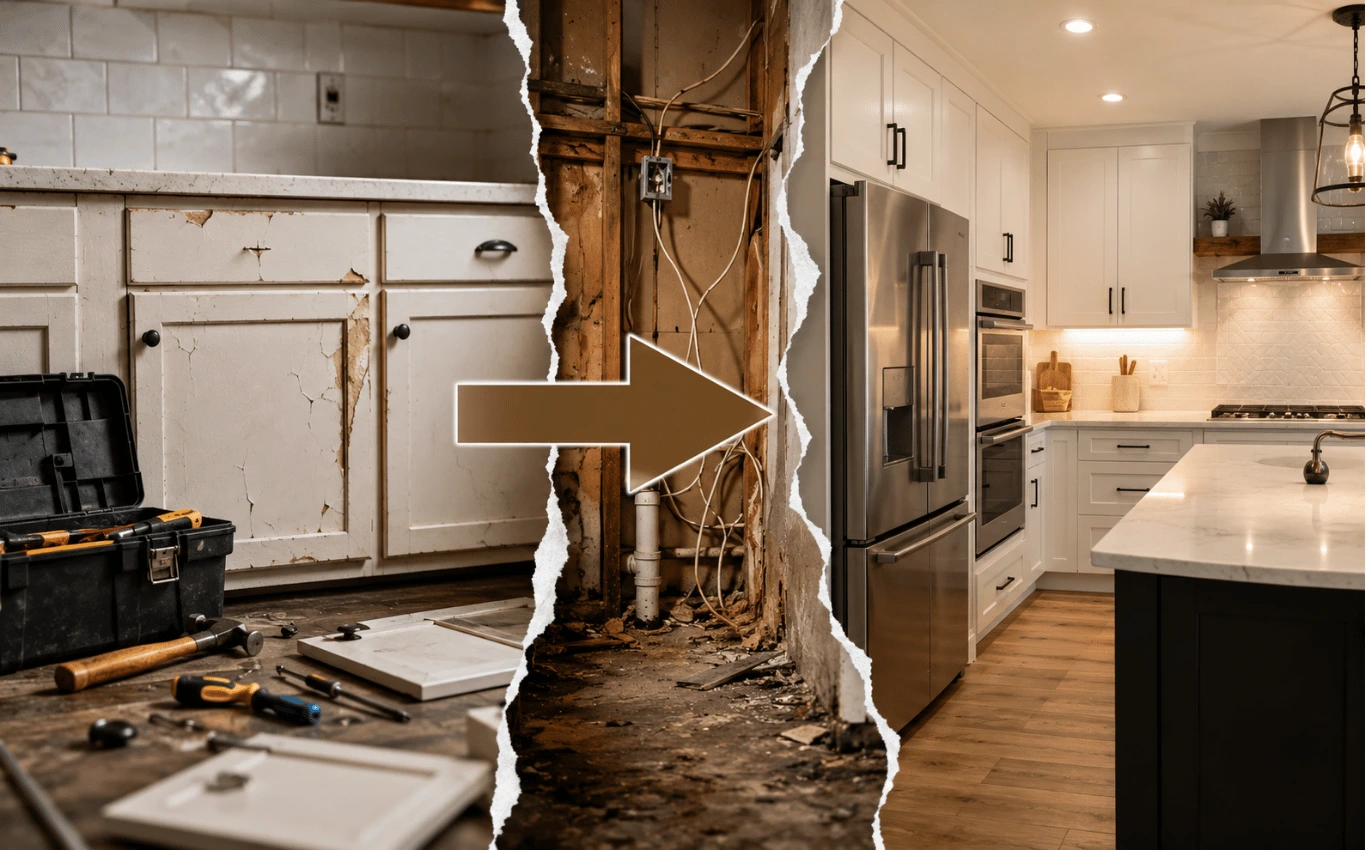
One of the most overlooked factors in the repair-versus-remodel decision is the long-term cost of repeated fixes. While individual repairs may seem less expensive, ongoing maintenance can eventually exceed the value of a more comprehensive solution.
Some kitchens develop recurring issues that never seem fully resolved. Homeowners may repeatedly replace hardware, repair cabinetry, patch surfaces, or address aging components year after year.
While each repair may appear affordable on its own, the cumulative cost can become significant over time without delivering meaningful improvement to the overall space.
Many homeowners choose repairs because they seem like the quickest solution. However, temporary fixes often postpone larger issues rather than solve them.
A kitchen that struggles with poor layout, insufficient storage, or aging infrastructure may continue creating frustration regardless of how many cosmetic repairs are made.
A well-planned remodel addresses root causes rather than symptoms. Instead of fixing one issue at a time, homeowners can create a kitchen that better supports their lifestyle for years to come.
This concept aligns with " How to Make a Small Kitchen Look and Feel More Spacious," which emphasizes the importance of making thoughtful long-term design decisions rather than relying on short-term fixes.
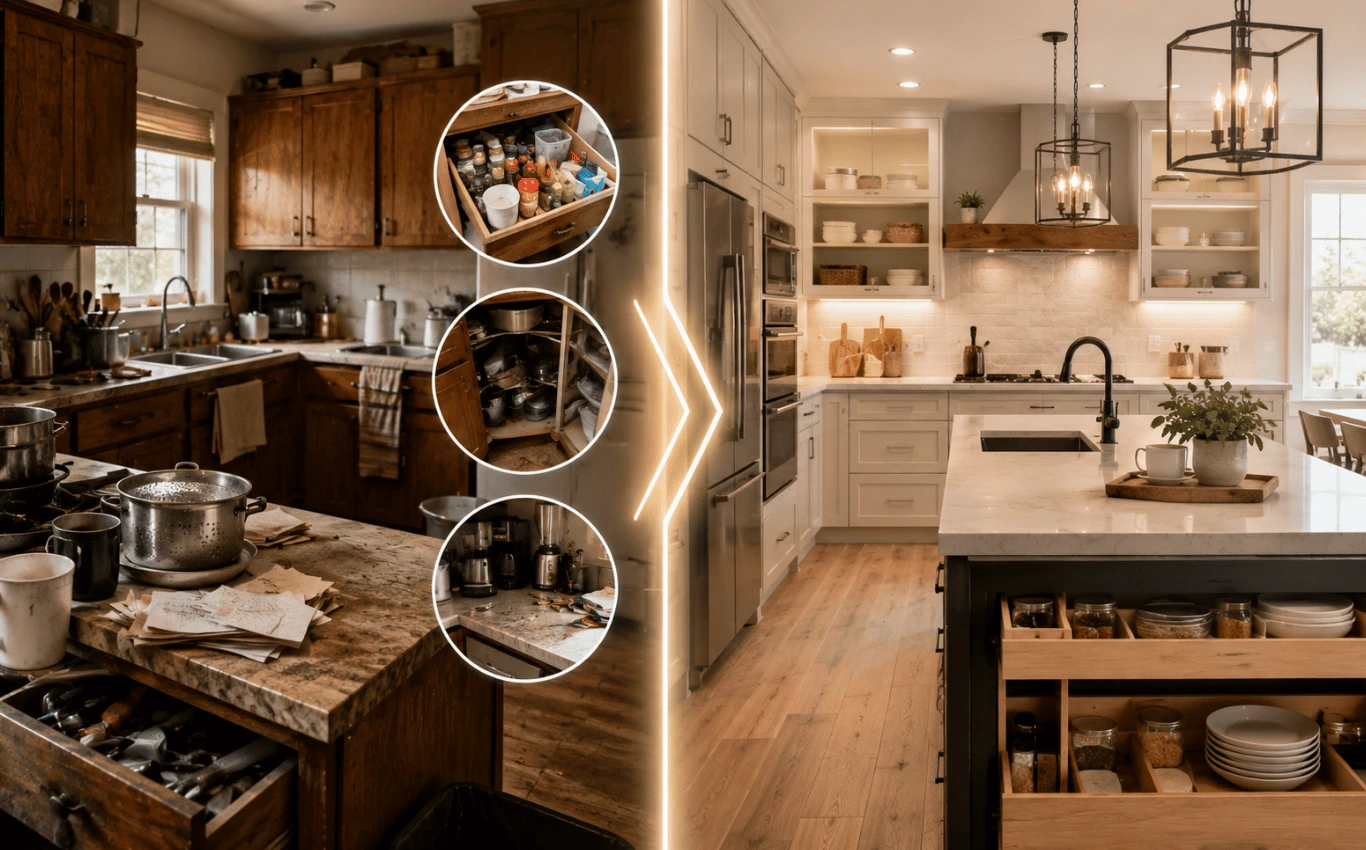
The biggest benefit of remodeling isn't simply a newer appearance. It's the opportunity to create a kitchen that functions better every single day.
A remodel allows homeowners to rethink how they move through the kitchen. Improved circulation, better workspace distribution, and more efficient appliance placement can transform daily routines.
Tasks that once felt frustrating become easier and more intuitive.
Today's kitchen designs prioritize storage in ways older kitchens often cannot. Custom cabinetry, concealed storage solutions, and thoughtful organization systems help reduce clutter while improving accessibility.
The result is a cleaner, more comfortable environment that supports everyday living.
Families evolve, routines change, and lifestyles shift over time. A remodel allows the kitchen to adapt to current needs rather than remaining tied to outdated assumptions about how the space should function.
Whether the goal is entertaining, cooking more frequently, working from home, or creating a family gathering space, remodeling offers opportunities that repairs simply cannot provide.
Deciding between kitchen repair and kitchen remodeling ultimately comes down to understanding the source of the problem. If the kitchen remains functional and the issues are primarily cosmetic, repairs may be all that's needed. However, when layout limitations, storage challenges, and daily frustrations begin affecting how the space functions, remodeling often becomes the better long-term solution.
The goal isn't simply to fix what's broken. It's to create a kitchen that supports the way you live today and continues to serve you well for years to come.

Not every kitchen problem requires a full remodel. This article explores how to tell when a simple repair is enough and when a complete kitchen renovation can improve functionality, comfort, and long-term value.