.webp)


Learn how to tell if your bathroom needs a simple refresh or a full remodel based on layout, storage, function, and long-term needs.



Not every bathroom that feels outdated needs to be completely rebuilt. Sometimes, changing the lighting, vanity, hardware, paint, or a few finishes can make the space feel dramatically different. In other situations, those surface-level improvements only disguise deeper problems with the layout, storage, plumbing, ventilation, or overall functionality.
The challenge is knowing where your bathroom falls between those two situations. For Long Island homeowners, understanding what is actually causing frustration with the space can help determine whether a targeted refresh makes sense or whether investing in professional Bathroom Design Services and a more complete remodel will deliver better long-term results.

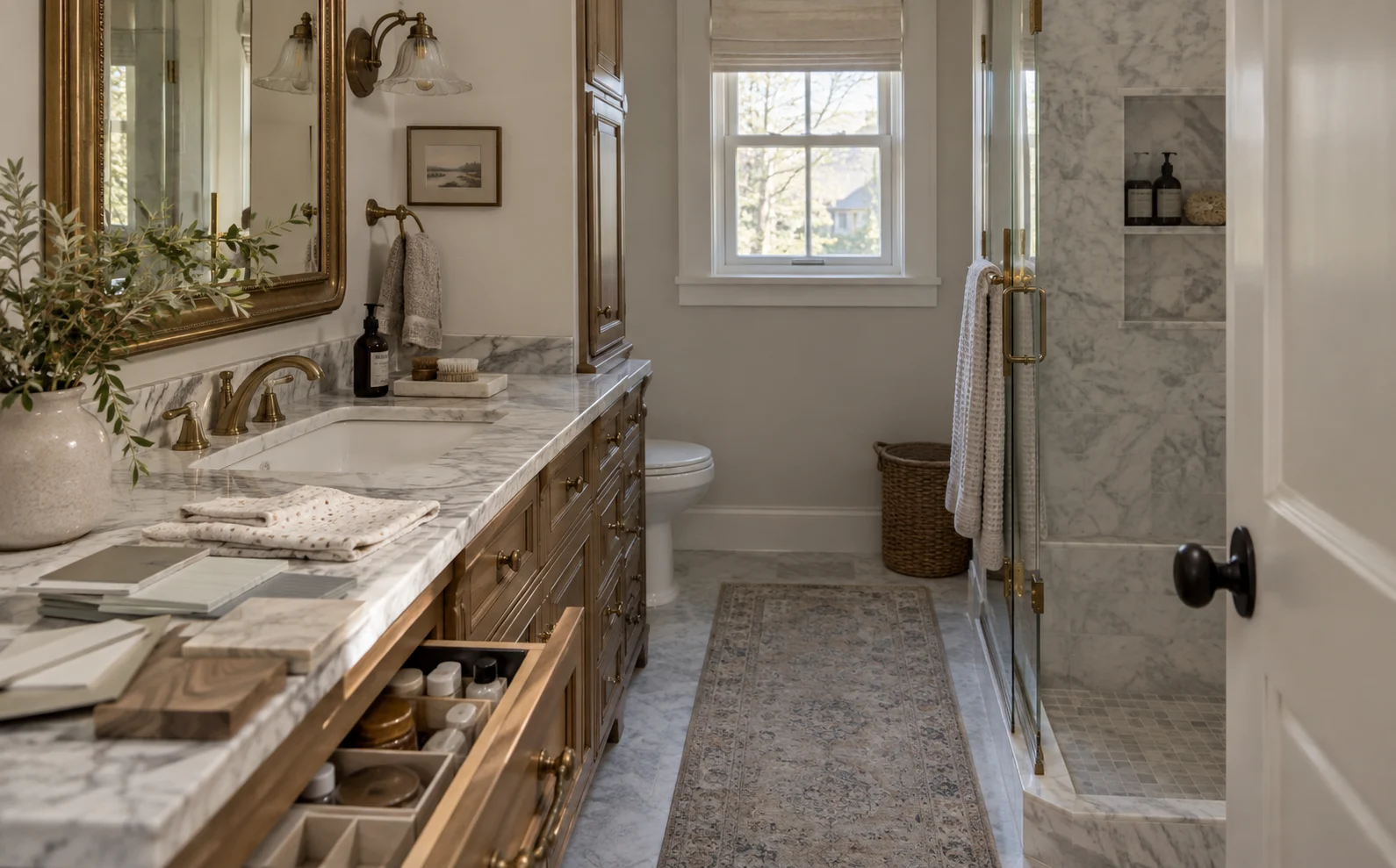
Before deciding how much work the bathroom needs, identify what is making you want to change it in the first place. A bathroom can feel dated because of finishes that are relatively easy to replace, or it can feel wrong because the underlying design no longer works for your lifestyle.
Understanding that difference is one of the best ways to avoid spending money on improvements that do not solve the real problem.
If you are generally happy with the bathroom's layout and functionality, a refresh may be enough to make the room feel new again.
An outdated mirror, older light fixtures, tired hardware, aging paint colors, or a vanity that no longer matches the rest of the home can have a significant effect on how the bathroom feels. Updating these elements can introduce a more contemporary look without changing the basic structure of the room.
The important distinction is that the bathroom already works well. You are improving its appearance rather than trying to change how you use it.
Pay attention to the inconveniences you experience repeatedly.
Maybe two people cannot comfortably use the vanity at the same time. Perhaps the bathroom lacks enough storage, the shower feels cramped, the door interrupts circulation, or important fixtures seem to be positioned in the wrong places.
These are not simply decorating problems.
If the frustration comes from how the bathroom functions rather than how it looks, replacing finishes may make the room prettier without making it significantly better. A remodel gives you an opportunity to reconsider the layout itself.
A bathroom that worked perfectly ten years ago may no longer fit the way you live today.
Storage needs change. Families change. Morning routines evolve. Homeowners may want a larger shower, better lighting, more accessible storage, additional outlets, or a vanity designed around two people rather than one.
This is why the decision should not be based only on the age of the bathroom. It should also consider whether the room continues to support your everyday routine.
The ideas explored in Choosing the Right Vanity: How It Shapes Your Bathroom's Function, Flow, and Feel show how even one major bathroom feature can influence storage, circulation, and the overall experience of the room.
.webp)
Beautiful new finishes can transform a bathroom visually, but they cannot correct every problem. Before investing in cosmetic updates, it is important to consider what is happening behind and beneath the surfaces you see every day.
Older bathrooms may have limitations that only become apparent when homeowners begin thinking seriously about improvements.
An occasional repair does not automatically justify a remodel. Bathrooms contain plumbing, fixtures, hardware, seals, ventilation, and other components that naturally require maintenance over time.
The situation changes when problems keep returning.
Repeated leaks, deteriorating grout, damaged cabinetry, persistent moisture, unreliable fixtures, or surfaces that constantly need attention may indicate that continuing to repair individual symptoms is becoming inefficient.
At that point, homeowners should consider whether addressing the bathroom as a complete system would make more sense than continuing with isolated fixes.
Bathrooms regularly produce large amounts of moisture, making ventilation an important part of the room's long-term performance.
If a bathroom frequently stays humid, mirrors remain fogged for extended periods, finishes deteriorate prematurely, or moisture repeatedly becomes a concern, simply repainting or replacing visible surfaces may not address the underlying issue.
A larger renovation provides an opportunity to evaluate ventilation alongside the rest of the bathroom rather than treating moisture-related symptoms individually.
New tile can transform the appearance of a bathroom, but it cannot make a narrow shower larger, improve awkward circulation, create missing storage, or reposition fixtures that interfere with one another.
This is one of the clearest signs that a remodel may provide more value.
If you repeatedly find yourself wishing the shower were somewhere else, the vanity were larger, or the room were organized differently, the problem is probably not the finishes. The bathroom may need to be redesigned around how the available space can work better.
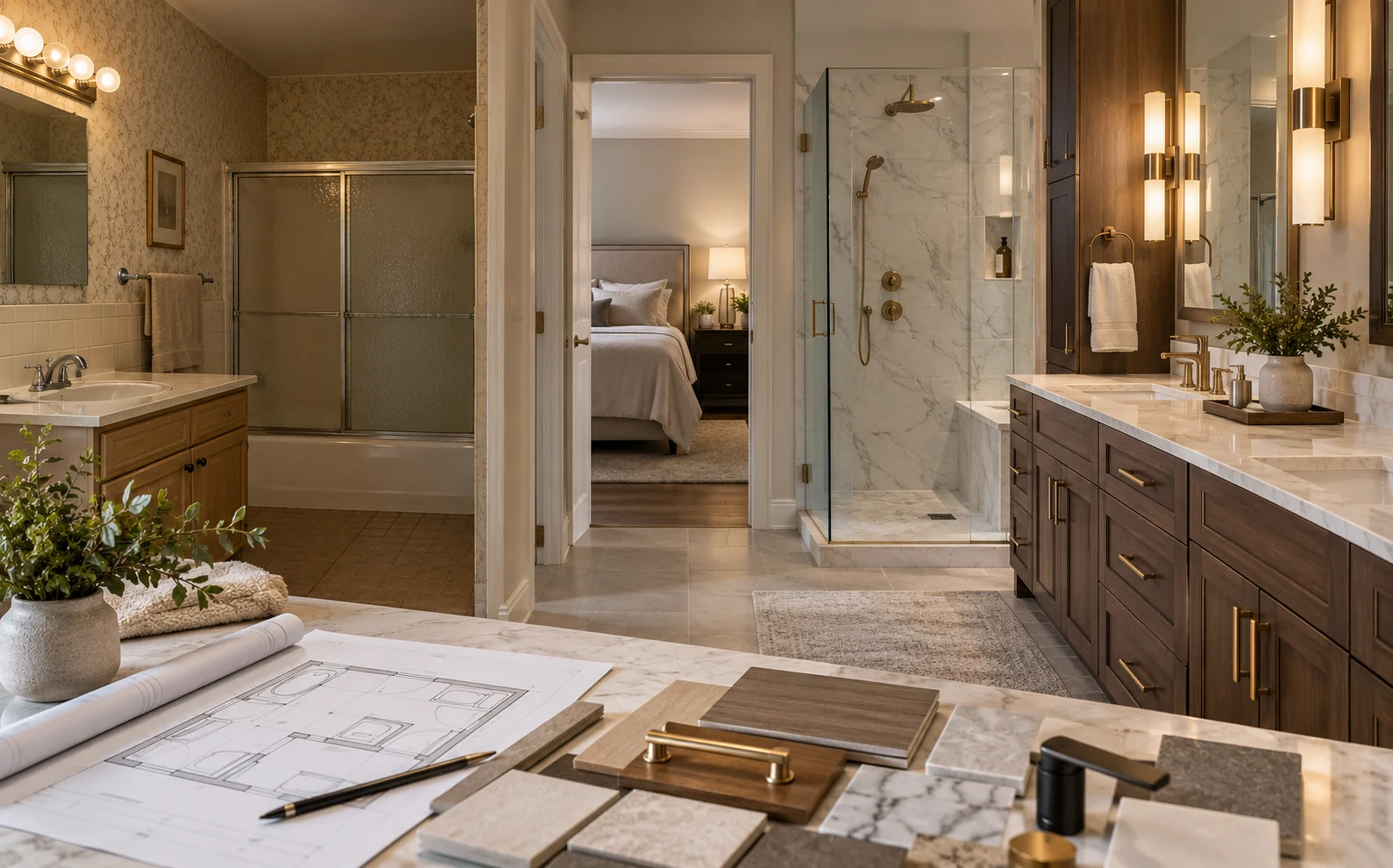
Choosing between a refresh and a remodel does not have to be an all-or-nothing decision based on what is newest. Some bathrooms already have a strong foundation and only need selective improvements. Others have accumulated enough compromises that preserving the existing design can restrict what the new bathroom could become.
The key is deciding which elements are genuinely worth keeping.
A successful refresh begins by identifying the parts of the bathroom that do not need to change.
Perhaps the layout works beautifully, the shower is appropriately sized, the vanity provides enough storage, and the plumbing locations make sense. If the primary issue is simply that the room looks dated, preserving those successful elements can make a targeted update a smart choice.
You do not need to remove something simply because it is not new.
Good renovation decisions often come from knowing what to leave alone.
The opposite can also happen. Homeowners sometimes preserve an entire outdated bathroom because one or two elements still look good.
Keeping a vanity, tub, or section of tile may initially seem economical, but every other design decision then has to work around it. That can restrict the layout, materials, colors, storage, or overall direction of the new space.
Before deciding what stays, consider whether preserving it genuinely improves the project or simply creates another limitation.
Bathrooms do not exist independently from the rest of the house.
If surrounding spaces have been renovated while the bathroom remains significantly outdated, the contrast can become increasingly noticeable. A minor refresh may improve the room without creating the level of continuity homeowners are looking for.
A more comprehensive remodel provides greater control over materials, cabinetry, lighting, proportions, and architectural details, allowing the bathroom to feel intentionally connected to the rest of the home.
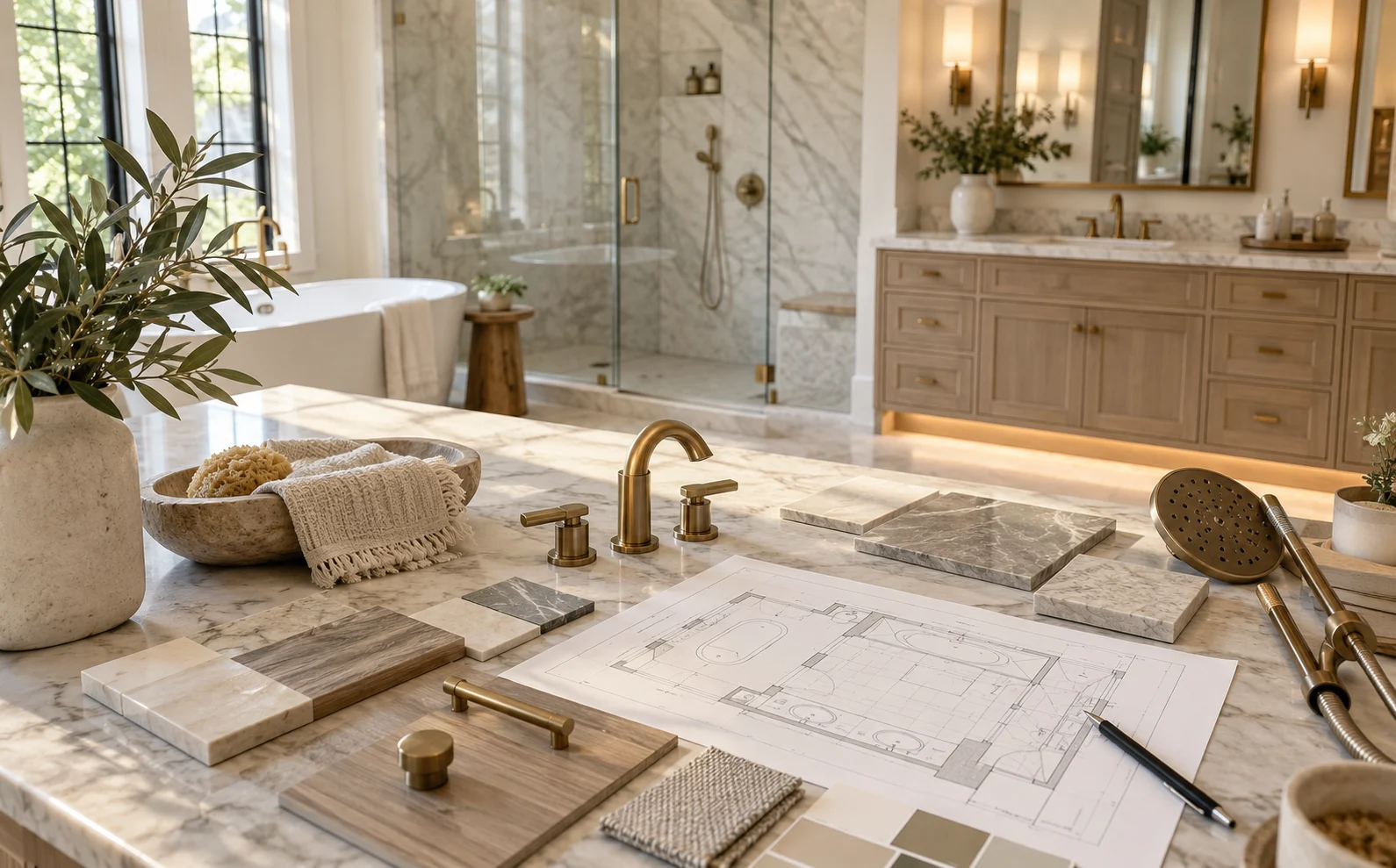
The best decision is not necessarily the least expensive option or the largest renovation. It is the level of work that solves the problems you actually have without paying to replace things that already work well.
That requires looking beyond how the bathroom will appear immediately after the project and thinking about how it will function for years afterward.
A refresh can make sense when you like the existing layout, plumbing works reliably, storage is adequate, ventilation performs well, and the bathroom primarily feels visually outdated.
Changes might focus on lighting, mirrors, hardware, paint, selected fixtures, or other finishes.
In this situation, targeted improvements can provide a noticeable transformation without unnecessarily changing a bathroom that already functions well.
A full remodel becomes more compelling when multiple issues exist at the same time.
An awkward layout combined with insufficient storage, poor lighting, an uncomfortable shower, aging fixtures, and outdated materials creates a very different situation from simply disliking the vanity color.
Trying to solve each issue separately can result in a series of disconnected improvements. Redesigning the room as a whole allows those problems to be considered together.
It also creates the opportunity to think beyond basic functionality. As explored in Why Your Bathroom Still Feels Stressful (Even After a Remodel), successful bathroom design considers how layout, organization, lighting, and visual balance affect the way the room actually feels to use.
A remodel is a long-term investment, so the decision should consider more than today's frustrations.
Think about how your household may use the room in the coming years. Better storage, easier circulation, comfortable shower access, practical lighting, durable materials, and a layout that can adapt to changing routines may provide more value than simply following current trends.
The goal should be to create a bathroom you will not immediately want to change again.
The difference between a bathroom that needs a refresh and one that needs a full remodel often comes down to what is actually wrong with the space.
If the layout works, storage is sufficient, and the room performs well, carefully selected cosmetic updates may be all it needs. But when poor circulation, inadequate storage, recurring problems, outdated systems, and an inefficient layout begin to overlap, a complete remodel can offer a more meaningful solution.
Rather than asking how much of the bathroom you can replace, ask what needs to change for the space to work better. That answer can help determine whether a thoughtful refresh or a completely redesigned bathroom is the smarter investment.
Learn how to decide whether your bathroom needs a simple refresh or a full remodel by evaluating its layout, storage, condition, and everyday functionality.