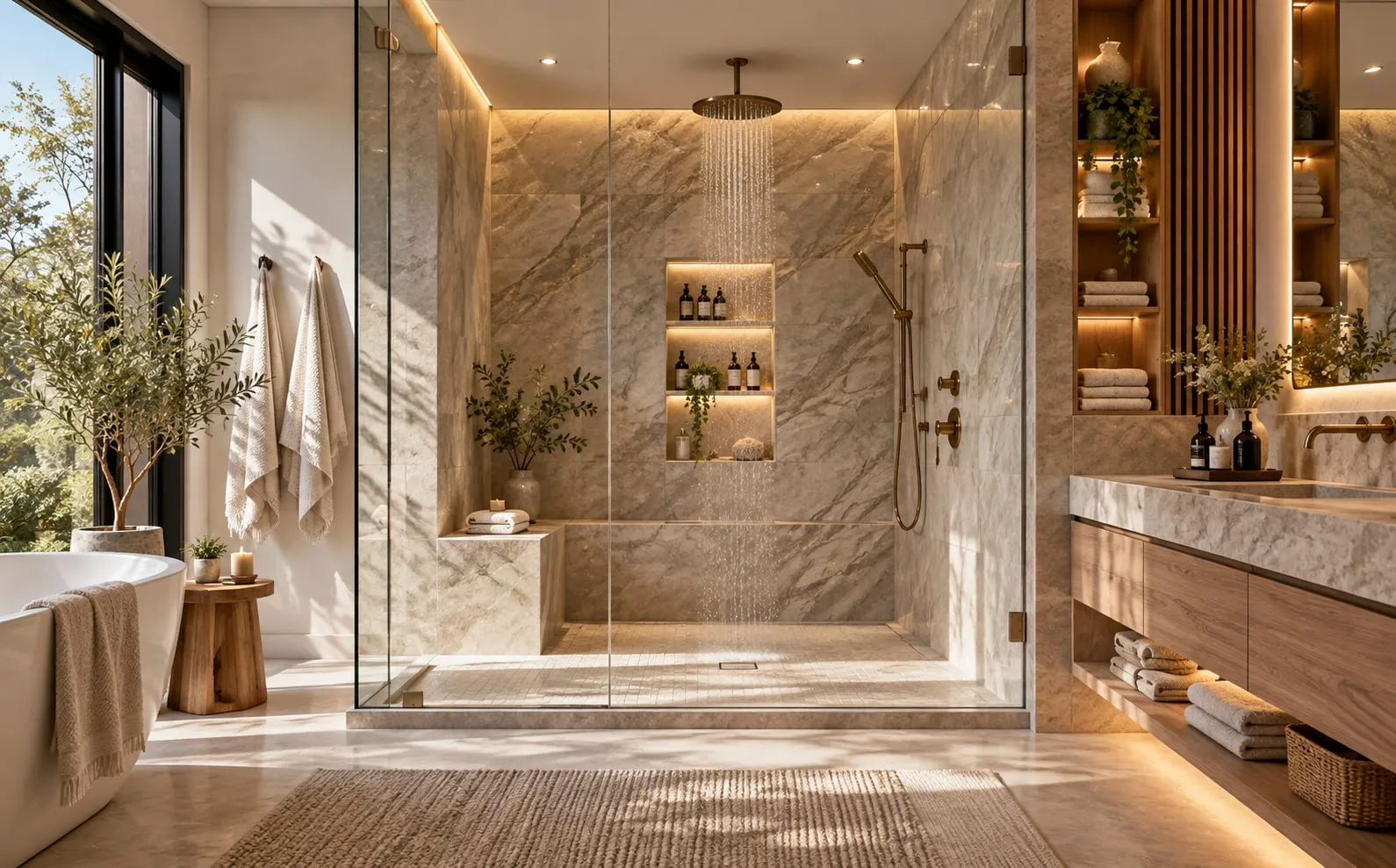
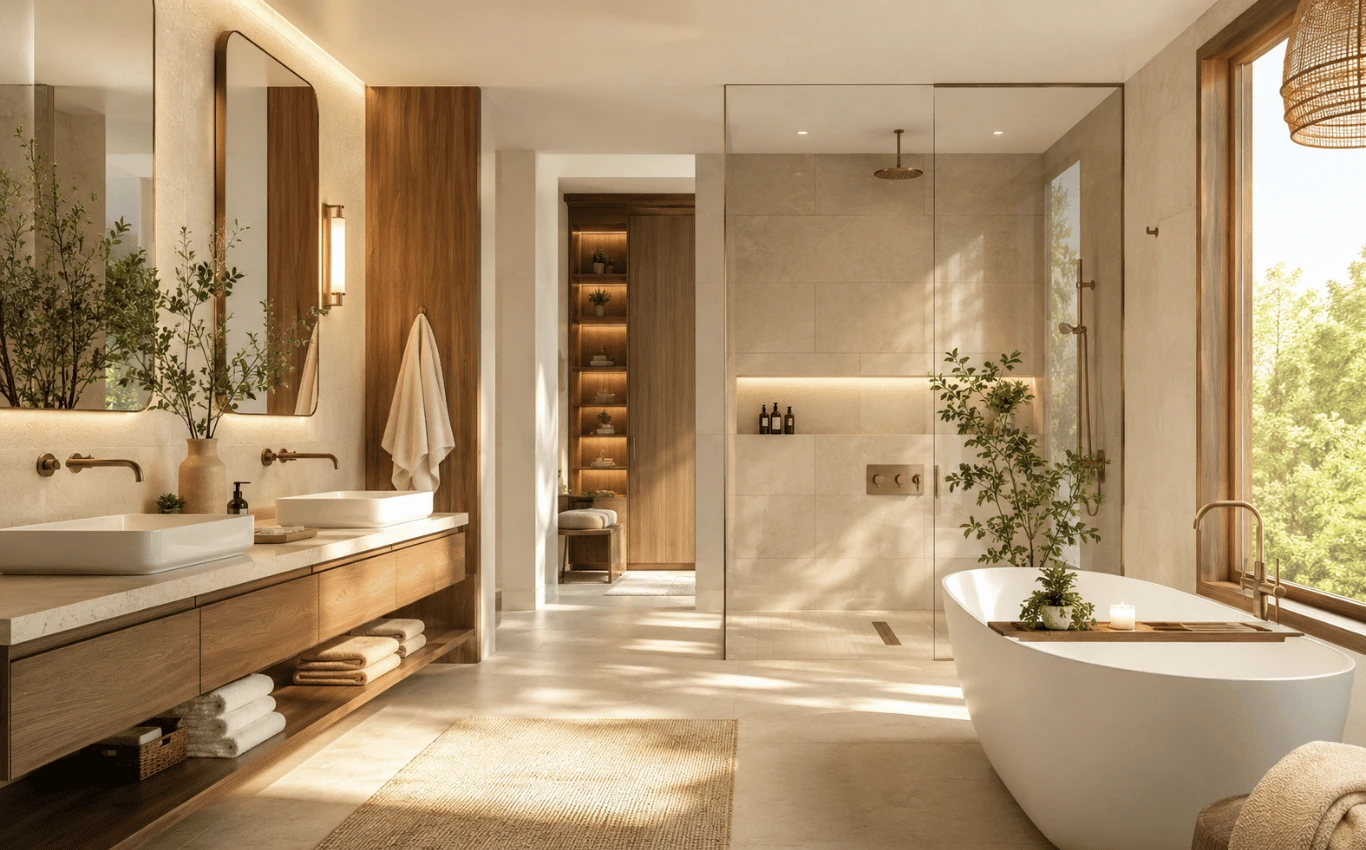
.webp)


Compare floating and freestanding bathroom vanities to discover which offers better storage, style, cleaning, and functionality for your space.



The bathroom vanity plays a major role in storage, functionality, and the overall look of your bathroom. Floating vanities create a modern, spacious feel, while freestanding designs offer a more grounded, furniture-inspired appearance. For Long Island homeowners, choosing the right style means balancing aesthetics, storage, maintenance, and everyday comfort to create a bathroom that truly fits their needs.

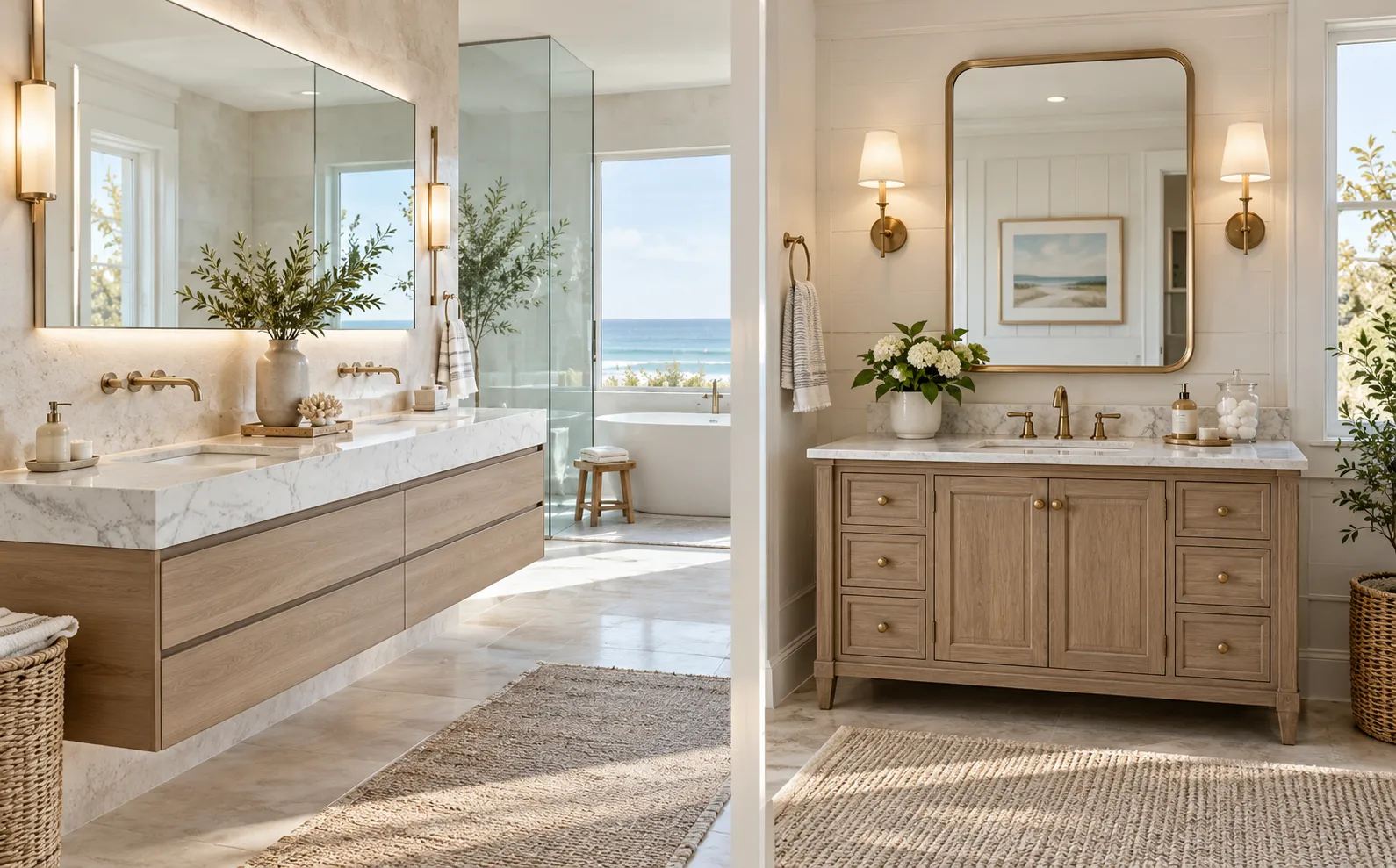
Discover the key differences between floating and freestanding bathroom vanities, including their impact on storage, style, cleaning, and installation, to find the best fit for your space and lifestyle.
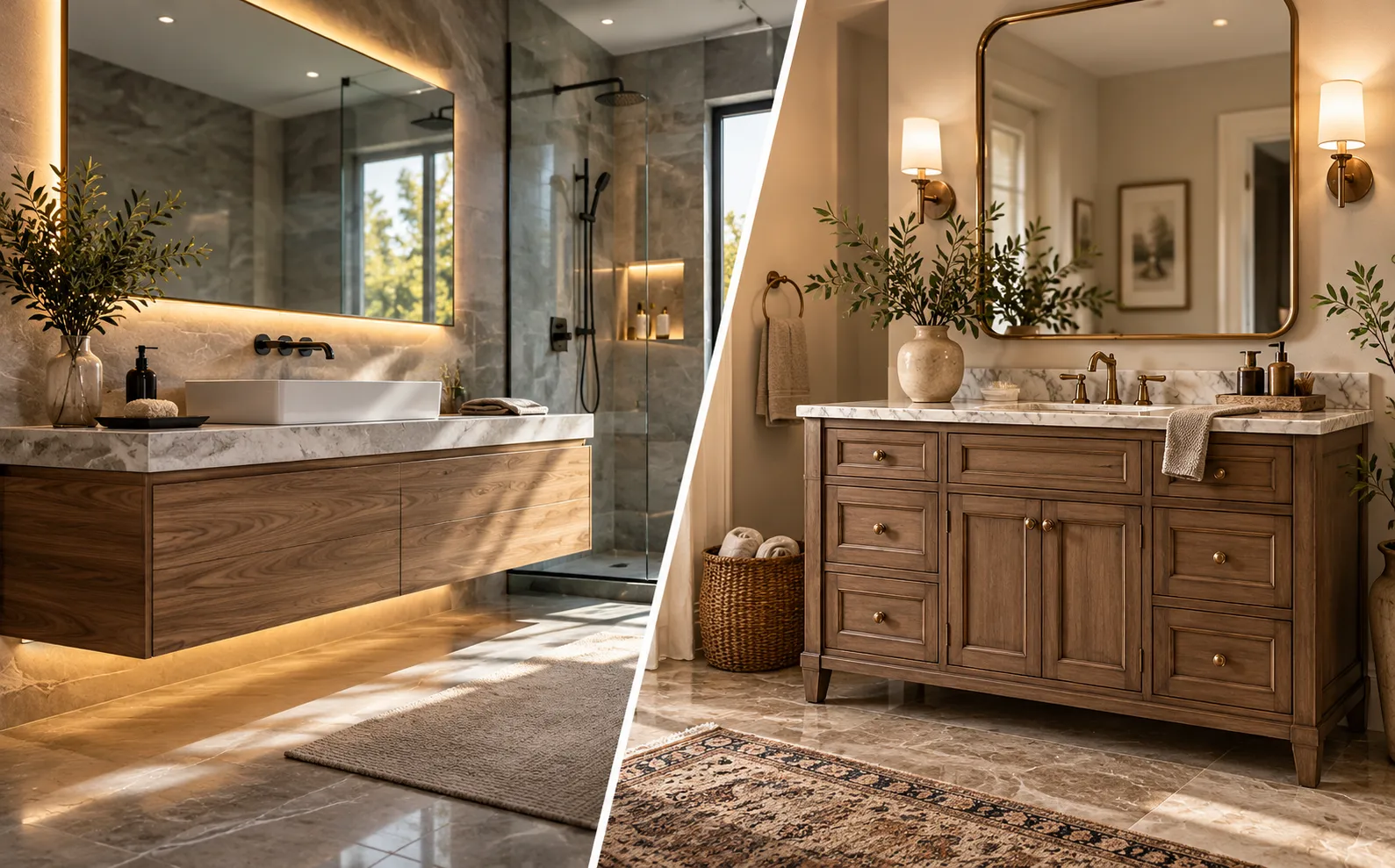
Although both vanity styles serve the same basic purpose, their construction and visual impact are quite different. A floating vanity is mounted directly to the wall, leaving visible floor space underneath, while a freestanding vanity is supported from below by legs, a base, or a cabinet structure.
The difference affects more than aesthetics. It influences how the bathroom feels, how the floor is used, and how the vanity connects with the surrounding design.
Floating vanities create an open area between the cabinet and the floor, allowing more flooring to remain visible.
This uninterrupted floor surface can make a smaller bathroom appear more spacious, particularly when paired with large-format tile, frameless glass, and carefully positioned lighting.
Floating designs also create opportunities for subtle under-cabinet lighting, adding depth and making the vanity appear lighter.
However, the visual benefit depends on the entire bathroom layout. A floating vanity cannot compensate for poor circulation or oversized fixtures elsewhere in the room.
Freestanding vanities often resemble furniture, giving the bathroom a more substantial and grounded appearance.
Depending on their design, they can complement traditional, transitional, or contemporary interiors. Details such as cabinet doors, drawer fronts, wood finishes, legs, and hardware help determine their character.
A freestanding vanity does not necessarily need to look traditional. Clean-lined cabinetry, integrated handles, and simple proportions can make it equally appropriate for a modern bathroom.
The important distinction is that the vanity becomes a stronger visual anchor within the space.
Absolutely. Luxury is not determined by whether the vanity touches the floor.
A floating vanity can create a minimalist, architectural appearance, while a freestanding vanity can introduce warmth, texture, and furniture-like character.
For example, Nesconset | Warm Marble & Wood Bathroom offers relevant inspiration for homeowners considering how warm wood tones and marble finishes can influence the overall bathroom atmosphere.
The right vanity should support the design of the entire room rather than being selected as an isolated feature.
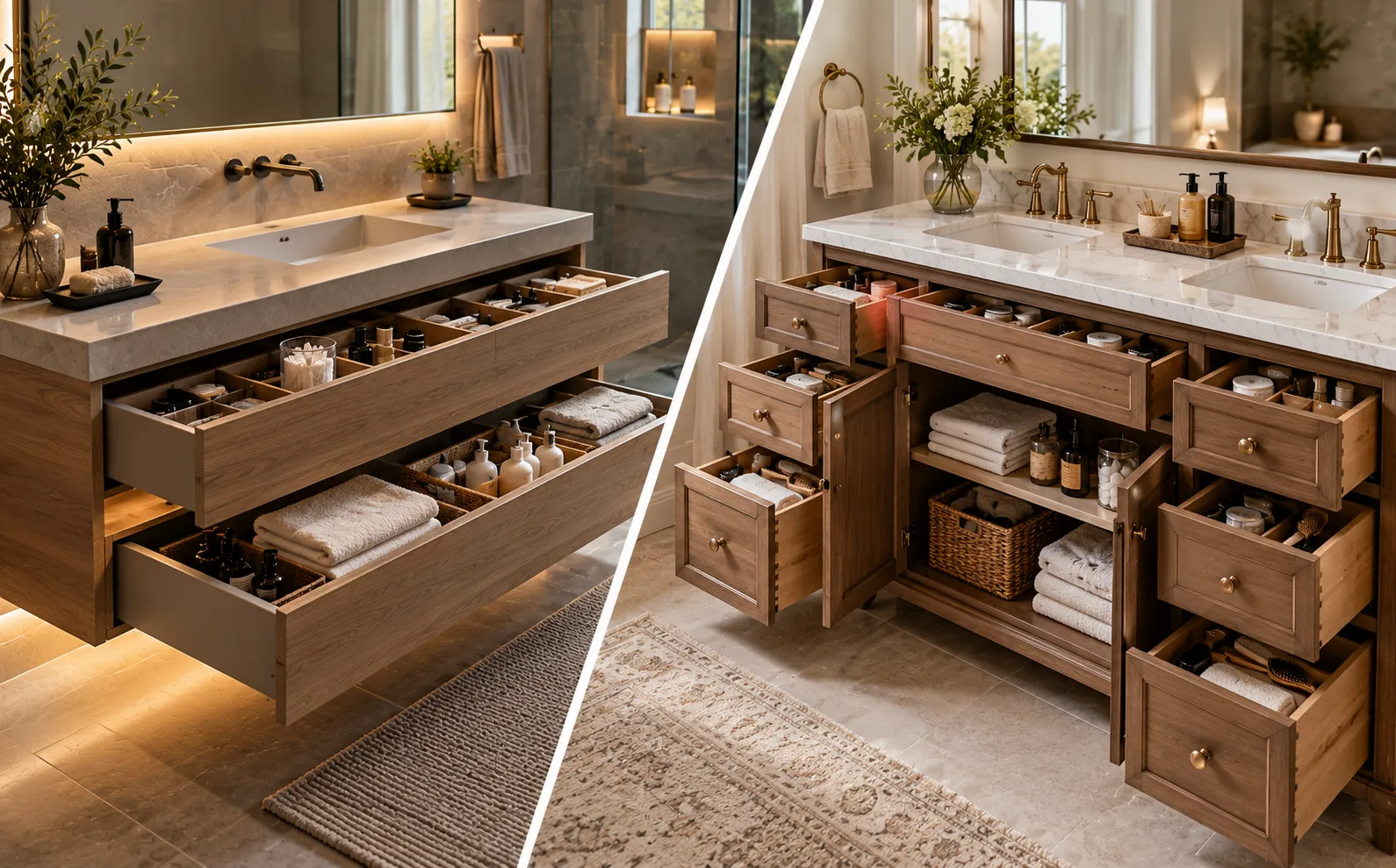
Storage is often one of the biggest concerns when selecting a vanity. Homeowners need space for toiletries, grooming tools, cleaning supplies, towels, and other essentials without making the bathroom feel cluttered.
While freestanding vanities can offer more cabinet volume in some configurations, a well-designed floating vanity can also provide excellent organization.
Freestanding vanities frequently have an advantage when it comes to overall cabinet height.
Because the cabinetry can extend closer to the floor, there may be additional room for drawers, shelves, and larger items.
This can be particularly useful in family bathrooms or shared primary bathrooms where multiple people need dedicated storage.
However, the amount of usable storage depends on the cabinet's internal layout. A large vanity with poorly arranged shelves may be less practical than a smaller vanity with carefully planned drawers.
Floating vanities can be extremely functional when their interiors are designed around the homeowner's needs.
Deep drawers, internal organizers, and customized compartments can help maximize the available space.
The key is understanding what needs to be stored before choosing the cabinet dimensions.
For example, someone who keeps most toiletries in a separate linen cabinet may not need a vanity with maximum storage capacity. Another homeowner who relies entirely on the vanity for bathroom essentials may benefit from a larger cabinet.
As discussed in Choosing the Right Vanity: How It Shapes Your Bathroom's Function, Flow, and Feel, vanity design should support the way the bathroom is actually used.
Regardless of the style, organization should be planned before the cabinetry is finalized.
Useful features may include:
A thoughtfully organized vanity can make everyday routines easier while maintaining the clean, refined appearance homeowners want.
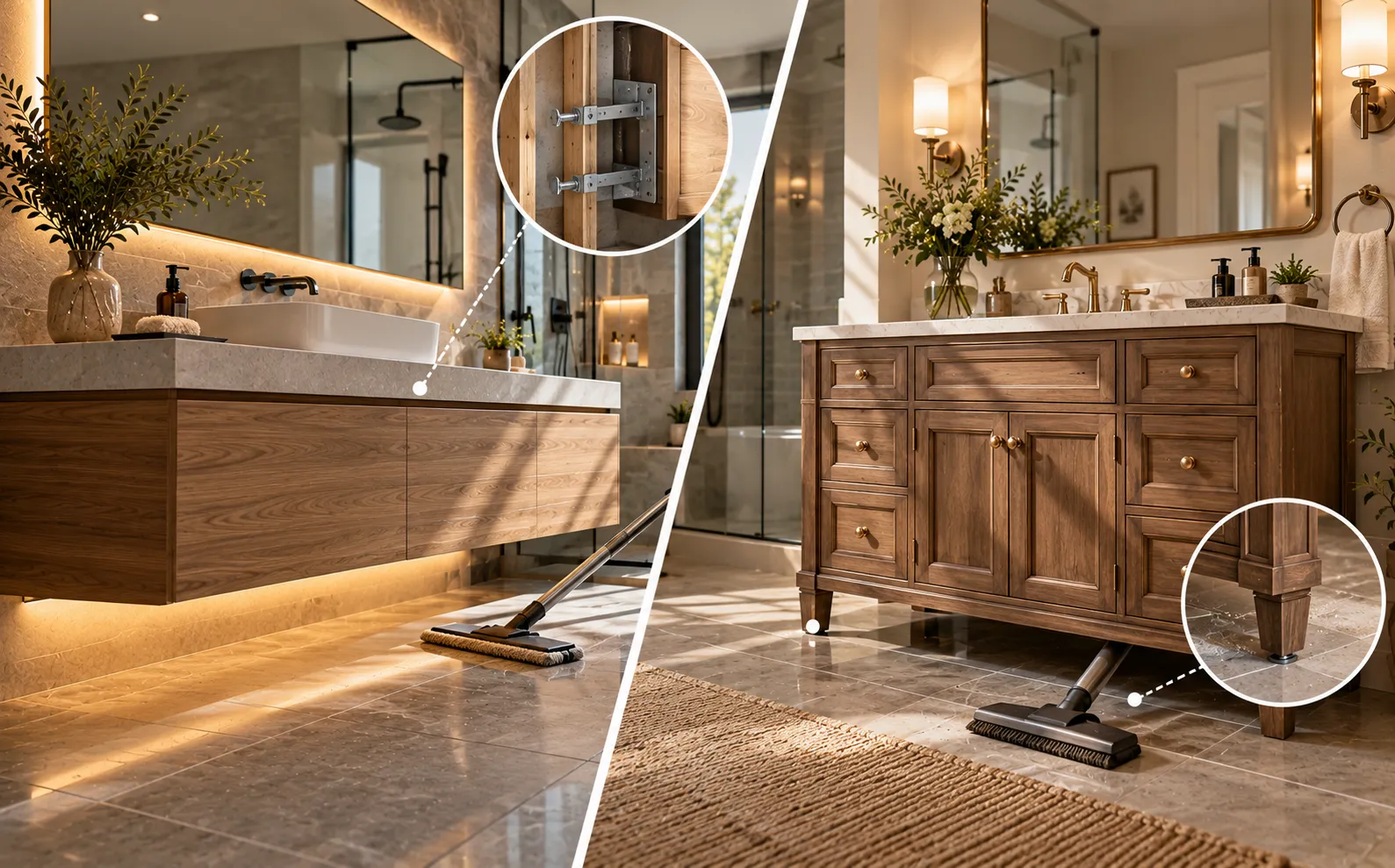
A vanity should not only look beautiful when the renovation is complete. It should also remain practical to maintain for years.
Floating and freestanding vanities have different cleaning and installation requirements, so understanding those differences early can help homeowners avoid unexpected challenges.
Floating vanities make the floor underneath accessible, which can simplify sweeping and mopping. With no cabinet base touching the floor, there are also fewer tight corners where dust and moisture can accumulate.
Freestanding vanities with a continuous base can eliminate the need to clean underneath, although the edges where the cabinetry meets the floor still require attention. Furniture-style vanities with legs may create narrow spaces that are harder to reach.
Neither design is automatically easier to maintain. The best option depends on the cabinet's construction and the amount of clearance available.
Floating vanities generally require more careful structural planning because the wall must support the cabinet, countertop, sink, and expected loads.
Depending on the existing construction, additional wall reinforcement may be necessary. Plumbing locations and mounting heights must also be coordinated before installation.
Freestanding vanities are typically supported by the floor, although they still require appropriate anchoring, plumbing connections, and careful leveling.
This makes early planning especially important when choosing a wall-mounted design.
Durability depends more on construction quality, finishes, and moisture protection than on whether the vanity floats or stands on the floor.
Bathroom cabinetry must tolerate humidity, splashes, cleaning products, and daily use. Moisture-resistant cabinet materials, properly sealed surfaces, and suitable countertop selections can help preserve its appearance.
For additional guidance, explore How to Choose the Right Bathroom Materials for Your Lifestyle, which explains how bathroom finishes affect maintenance, durability, and long-term comfort.
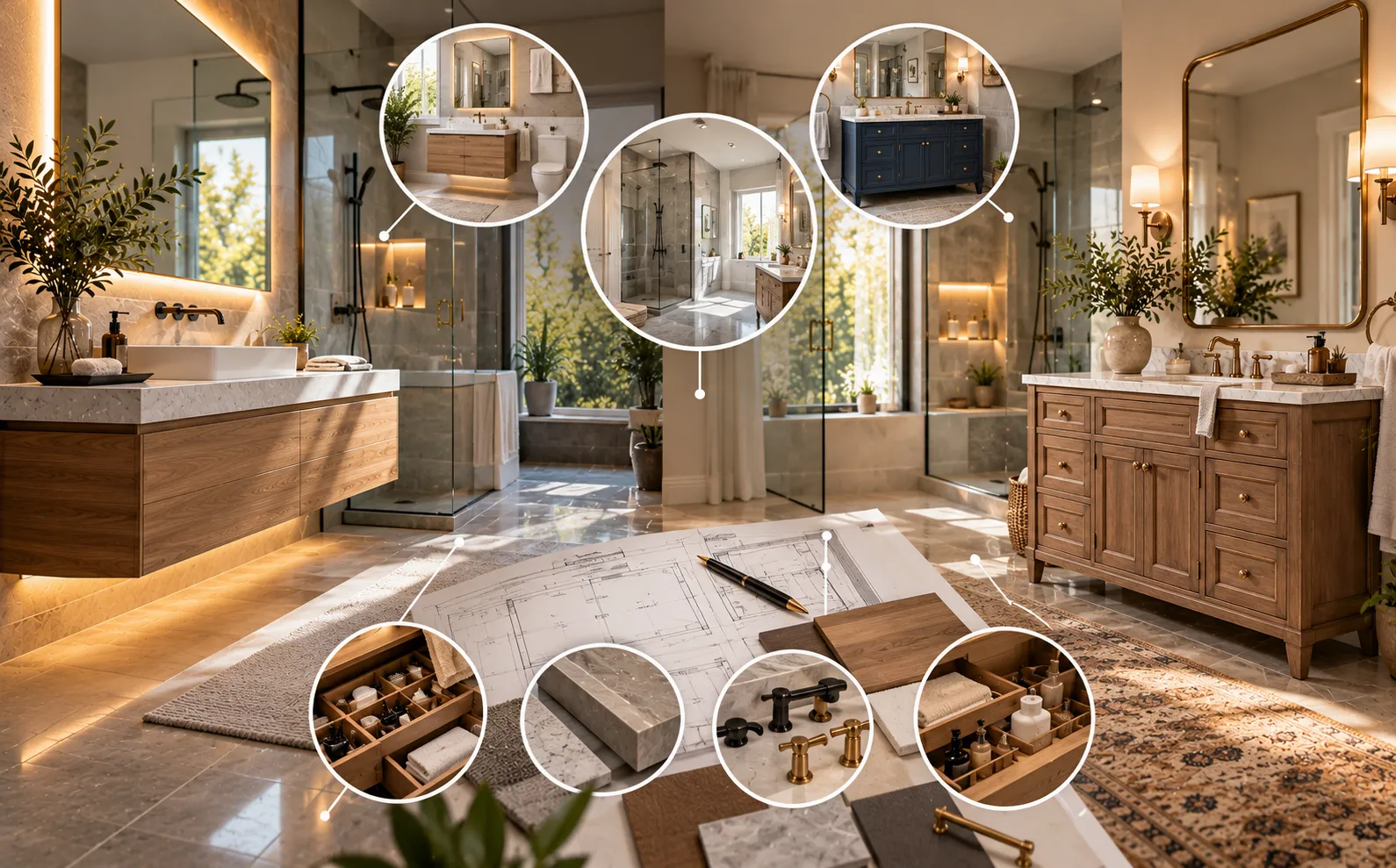
The best vanity is not necessarily the newest style or the one with the most storage. It is the option that makes the bathroom easier to use while supporting the overall design.
Before making a decision, homeowners should consider the room's dimensions, storage requirements, architectural style, and how the vanity will function every day.
Floating vanities are often worth considering in smaller bathrooms because exposing more floor area can create a greater sense of openness.
They can also work particularly well with wall-mounted faucets, large mirrors, and minimalist cabinetry.
However, a compact freestanding vanity may be the better solution when storage is limited. Homeowners should compare the actual usable storage and clearance of each option rather than choosing based on appearance alone.
A floating vanity can reinforce a modern, streamlined interior, while a freestanding design can add visual weight, texture, and character.
Cabinet finishes, countertop materials, hardware, and lighting should all work together to create a consistent atmosphere.
For design inspiration, explore Old Brookville NY | Navy & Porcelain Tile Bathroom, a relevant project for considering how cabinetry and surrounding finishes contribute to a refined bathroom design.
The goal is not to make the vanity compete with every other feature. It should feel naturally integrated into the room.
Before selecting a vanity, think about how the bathroom will be used over the next several years.
Consider whether you need additional drawers, whether multiple people share the space, how comfortable the countertop height will be, and whether the existing plumbing and wall construction support your preferred design.
Also think about how the vanity interacts with the shower, toilet, doors, and walking paths. A beautiful vanity can still become frustrating if it interrupts movement or leaves too little room for everyday routines.
Professional Bathroom Design Services can help bring these decisions together, ensuring the vanity supports both the appearance and functionality of the entire bathroom.
Both floating and freestanding vanities can create a beautiful, functional bathroom. Floating designs are particularly effective when visual openness, modern styling, and accessible floor space are priorities. Freestanding vanities may be preferable when homeowners want a furniture-inspired appearance, additional cabinet height, or a more grounded design.
Ultimately, the right choice depends on your bathroom's layout, storage requirements, installation conditions, and everyday routines.
For Long Island homeowners, a successful vanity design is not simply about following a trend. It is about choosing a solution that feels comfortable, organized, and visually connected to the rest of the space.
Compare floating and freestanding bathroom vanities to discover which best fits your space, storage needs, design preferences, and everyday lifestyle.