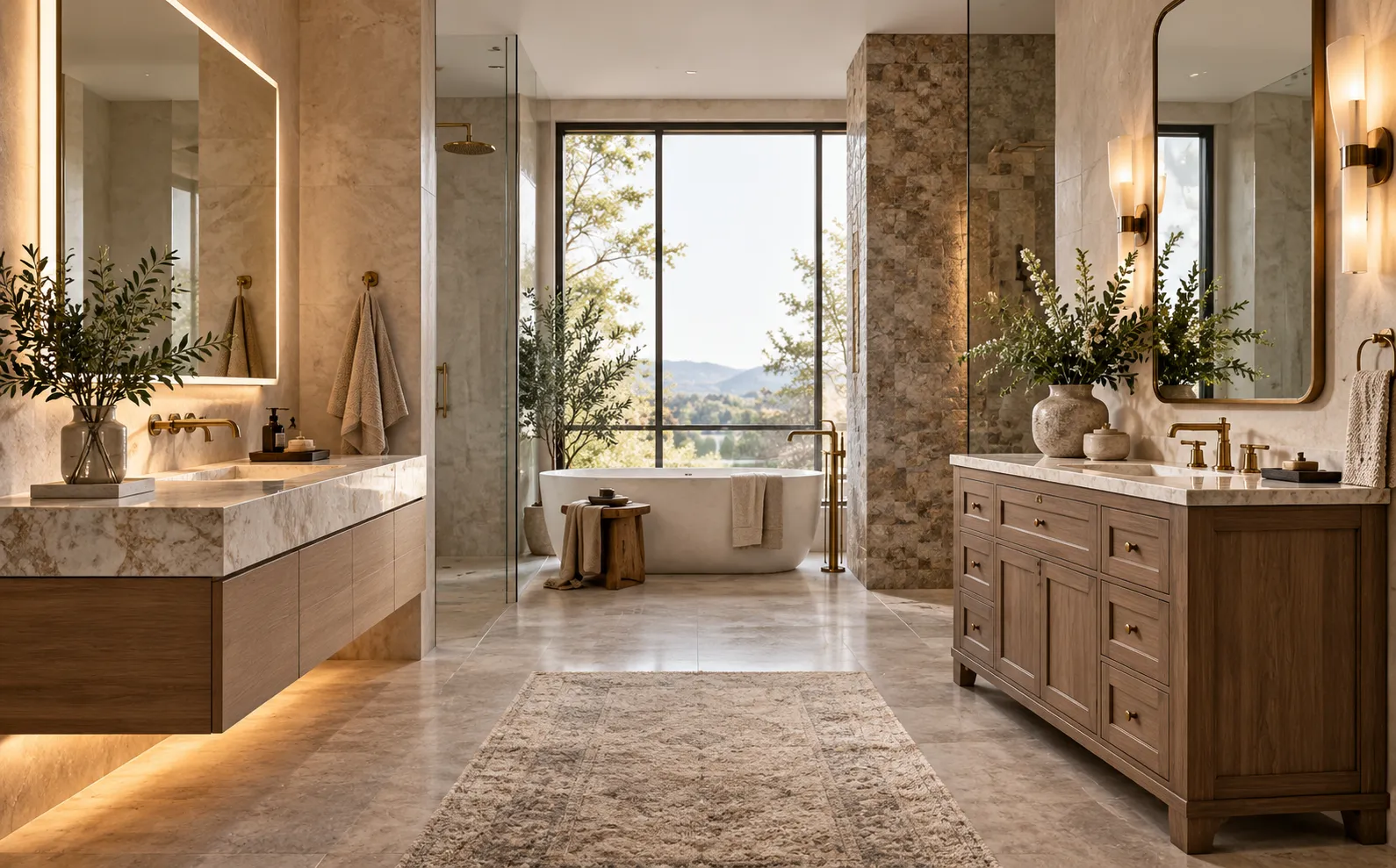
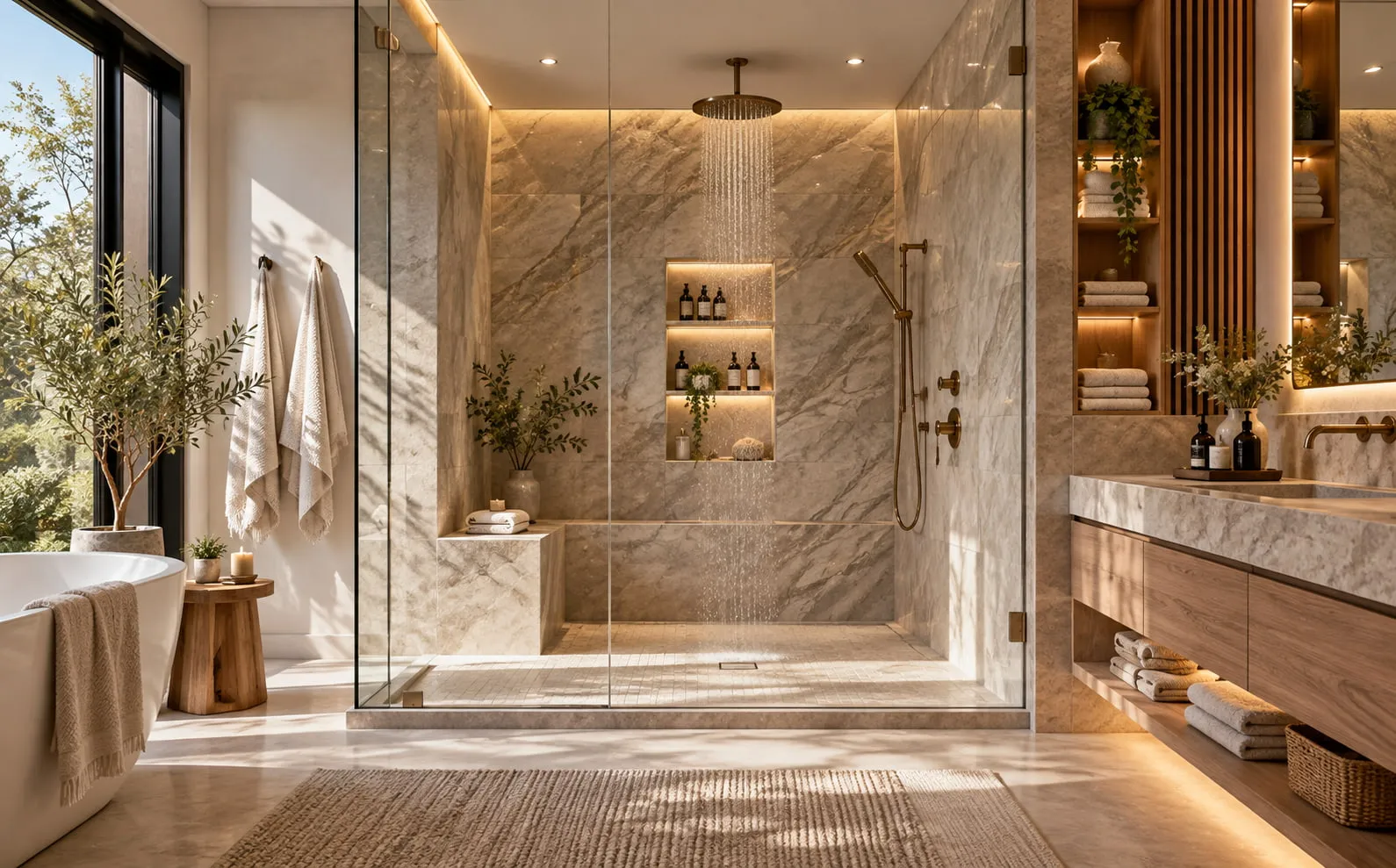
Explore the benefits of large-format bathroom tiles, from seamless shower walls and fewer grout lines to modern finishes, maintenance, and lasting style.



Large-format bathroom tiles are gaining popularity for their seamless appearance, fewer grout lines, and modern appeal. From oversized porcelain tiles to full-height shower slabs, they can create a cleaner, more luxurious bathroom. For Long Island homeowners planning a renovation in 2027, choosing between large-format and traditional tiles means balancing style, maintenance, safety, and everyday functionality.

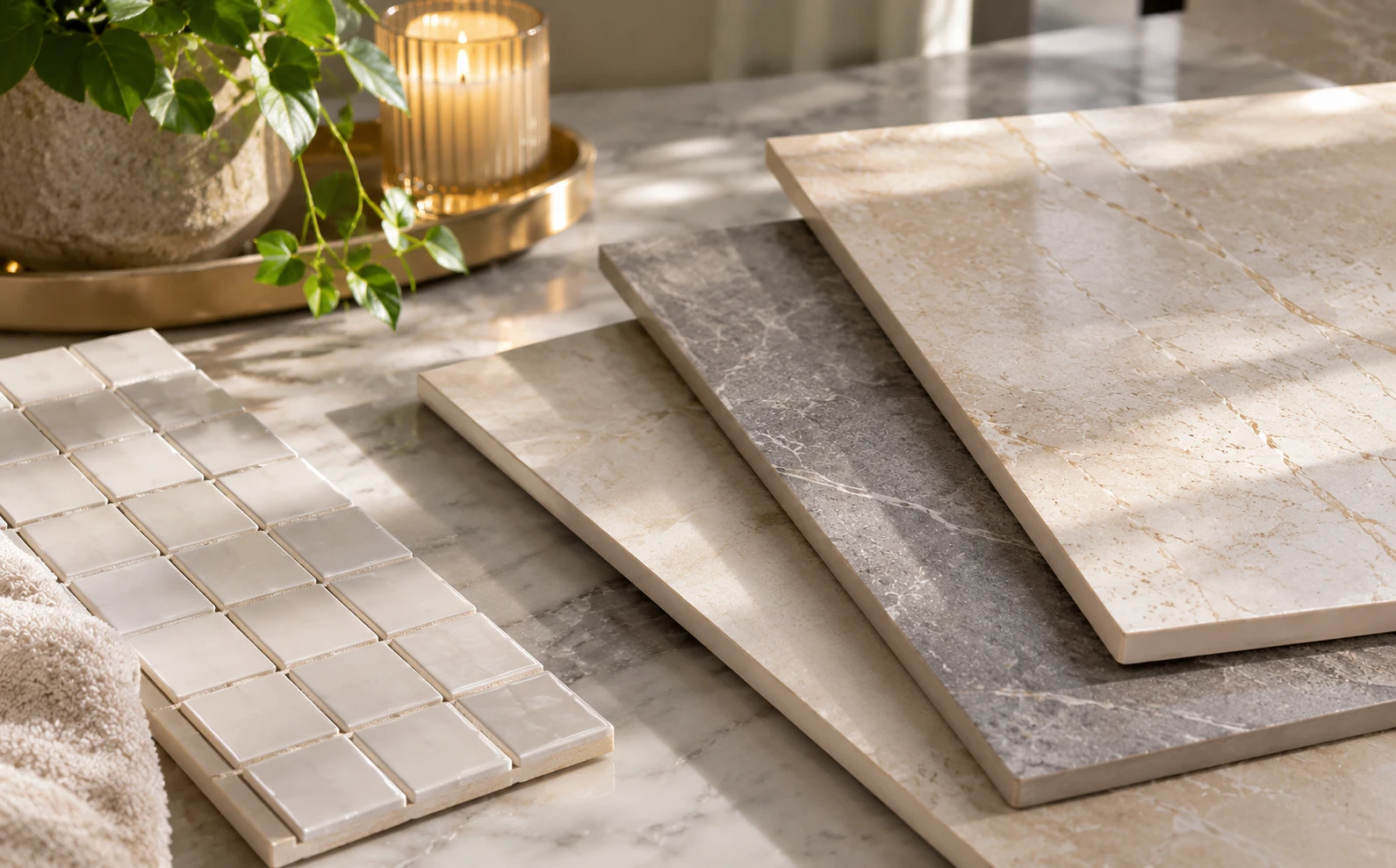
Discover how large-format bathroom tiles compare with traditional options, where they work best, and what to consider before choosing the right tile for your renovation.
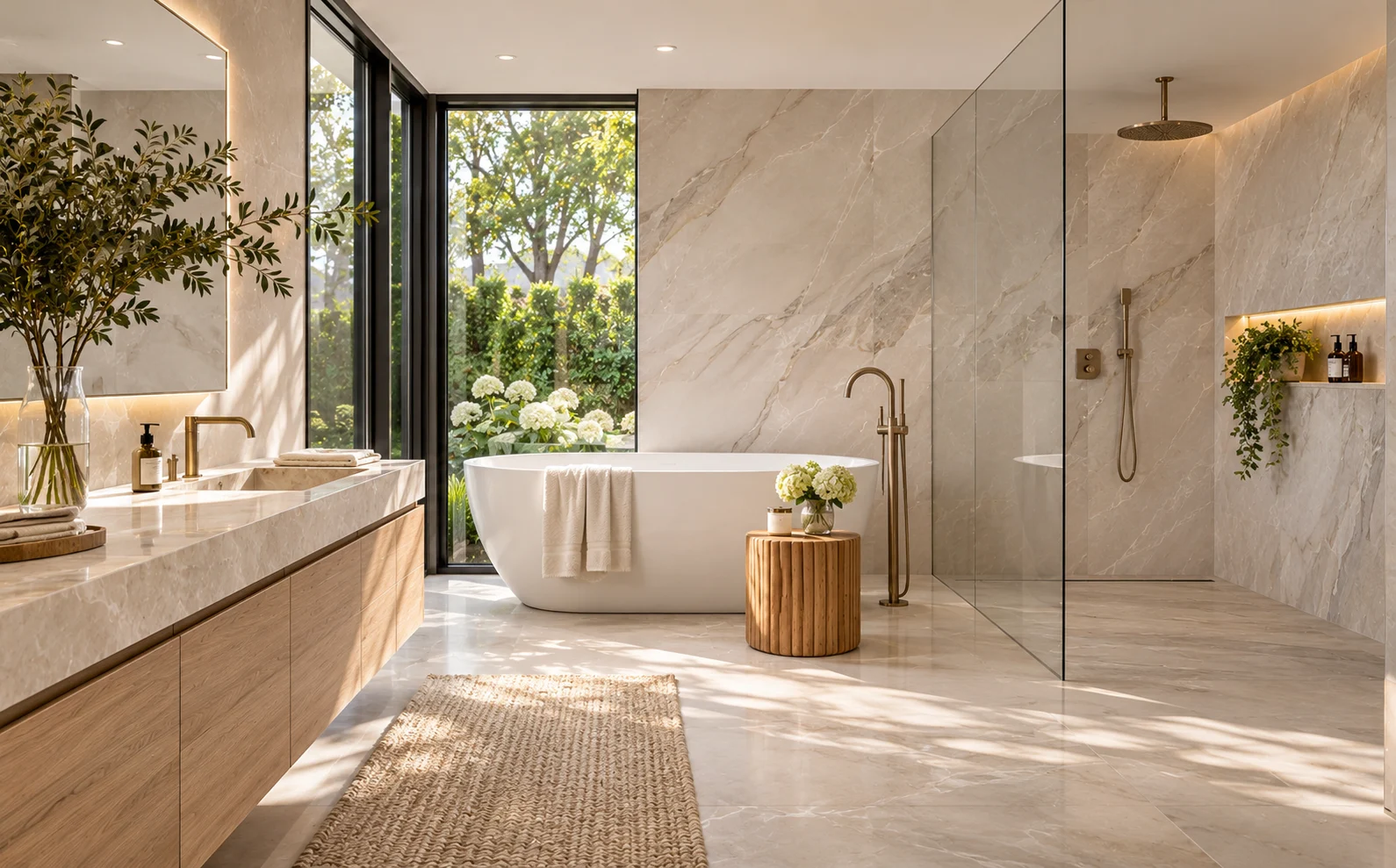
Large-format tiles are gaining attention because they create a cleaner, more continuous appearance with fewer visible grout joints. As bathroom design moves toward calmer interiors and natural-looking materials, oversized porcelain tiles and slabs offer a way to achieve a refined look without excessive decorative details.
However, their appeal extends beyond appearance. The right tile format can influence how spacious, organized, and cohesive a bathroom feels.
Large-format tiles create broad, uninterrupted surfaces that allow stone patterns, textures, and subtle color variations to stand out.
With fewer grout joints breaking up the design, walls and floors can appear more continuous. This can be particularly effective in contemporary bathrooms where simplicity and carefully selected materials define the overall atmosphere.
The result is a sophisticated look that relies on material quality and proportion rather than decorative complexity.
Yes, large-format tiles can make smaller bathrooms feel more open by reducing the number of visible grout lines.
Using similar materials across walls and floors can also create visual continuity, helping the room feel less divided. However, tile size should be selected carefully to avoid awkward cuts or proportions that work against the available space.
The goal is not necessarily to install the largest tile available, but to choose dimensions that complement the bathroom layout.
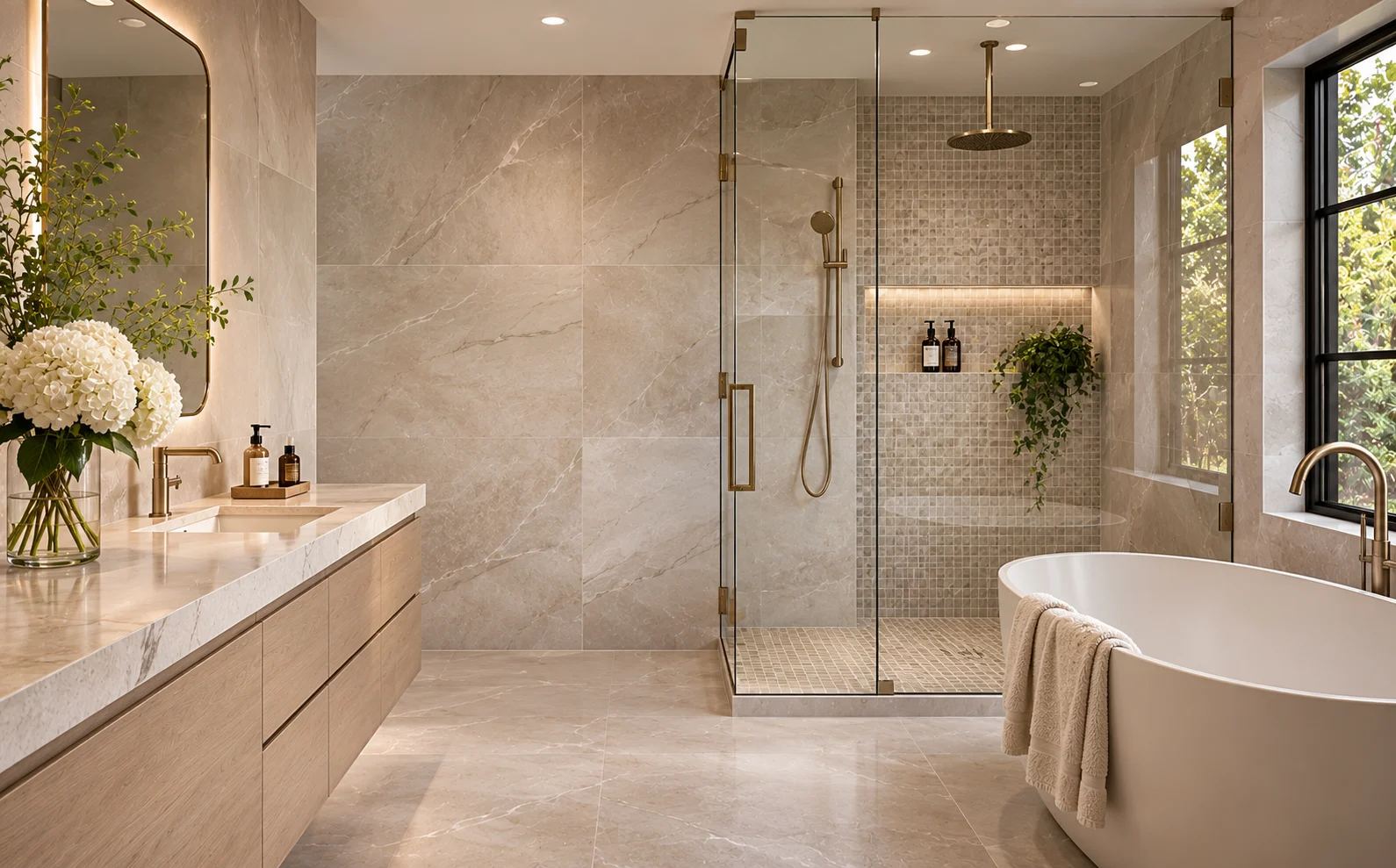
Marble-inspired porcelain, limestone textures, and warm travertine looks allow homeowners to introduce natural character into modern bathrooms.
These finishes can create a softer, more inviting atmosphere while maintaining the streamlined appearance associated with large-format tile.
For inspiration, explore Nesconset | Warm Marble & Wood Bathroom, which demonstrates how warm materials and marble-inspired surfaces can contribute to a refined bathroom design.
Large-format tiles offer several advantages, but traditional tiles remain valuable for their flexibility, decorative possibilities, and suitability for certain surfaces.
Understanding how both options perform in everyday use can help homeowners make a more informed decision.
Larger tiles generally create fewer grout joints, which can reduce the amount of grout that requires routine cleaning.
This can be especially beneficial in shower walls, where soap residue and moisture frequently accumulate.
However, fewer grout lines do not mean maintenance disappears. Tile surfaces, grout, sealants, and waterproofing details still require appropriate care.
Traditional tiles can be particularly useful on shower floors, curved surfaces, and areas with complex slopes.
Smaller tiles can accommodate changes in floor pitch more easily, making them practical around certain shower drains. They can also provide additional grout joints that may contribute to traction, although actual slip resistance depends on the complete flooring system.
Traditional formats also offer more opportunities for decorative patterns, mosaics, and detailed accents.
Large-format tile generally requires careful substrate preparation, handling, layout planning, and installation techniques.
Because larger pieces are less forgiving of uneven surfaces, proper preparation is essential. Oversized slabs may also require specialized equipment and experienced installers.
Installation costs can therefore be higher, depending on the material, dimensions, room configuration, and complexity of the work.
This connects with How to Choose the Right Bathroom Materials for Your Lifestyle, which explores why material selection should consider durability, maintenance, and everyday practicality rather than appearance alone.
Large-format tiles can work beautifully across several bathroom surfaces, but not every location benefits from the same tile dimensions.
The most successful designs use tile size strategically, balancing visual continuity with drainage, safety, installation requirements, and architectural details.
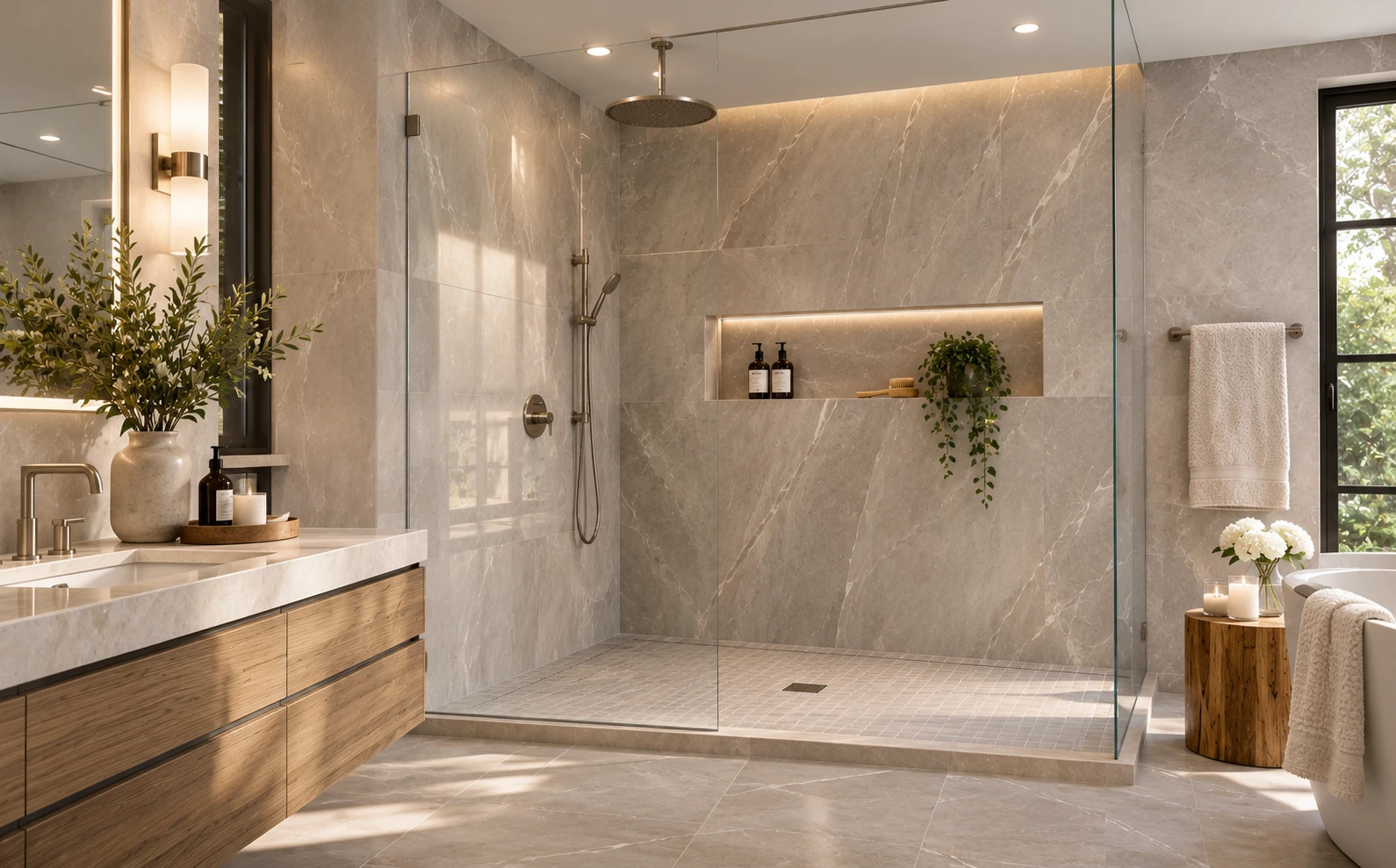
Shower walls are one of the most effective places to use large-format tile.
Fewer grout joints can create a cleaner appearance, while continuous stone patterns help the enclosure feel more refined. Large porcelain panels can also create the impression of a seamless surface.
However, shower walls still require proper waterproofing, suitable installation materials, and carefully planned joints. The tile itself is not a substitute for a complete waterproofing system.
Large-format floor tiles can make a bathroom feel more unified, particularly when coordinated with the wall finishes.
They work especially well in open floor areas where the tile pattern can remain relatively uninterrupted.
However, the selected tile must be suitable for bathroom floors, with appropriate slip resistance. Shower floors require additional consideration because drainage slopes can make certain oversized formats impractical.
For design inspiration, explore Old Brookville NY | Navy & Porcelain Tile Bathroom, which provides a relevant example of how porcelain finishes contribute to a coordinated bathroom interior.
Absolutely. Combining different tile formats can create a more balanced and interesting bathroom.
Large-format tiles might establish a calm foundation on the main walls, while smaller tiles introduce texture inside a shower niche, on a shower floor, or across a selected accent area.
The key is maintaining consistency in color, material character, and overall design. Too many competing patterns can make the bathroom feel visually busy.
Choosing bathroom tile should involve more than following the latest design direction. Tile is a long-term investment, and replacing it often requires significant renovation work.
For homeowners planning a bathroom in 2027, the best approach is to balance appearance with durability, maintenance, installation requirements, and how the space will be used.
Porcelain is a popular option because it offers a wide range of finishes and generally provides strong resistance to moisture and everyday wear when appropriately specified.
Natural stone offers unique patterns and material character, but its maintenance requirements vary depending on the stone type and finish.
Neither material is automatically better for every bathroom. The decision should consider the desired appearance, installation location, cleaning expectations, and long-term upkeep.
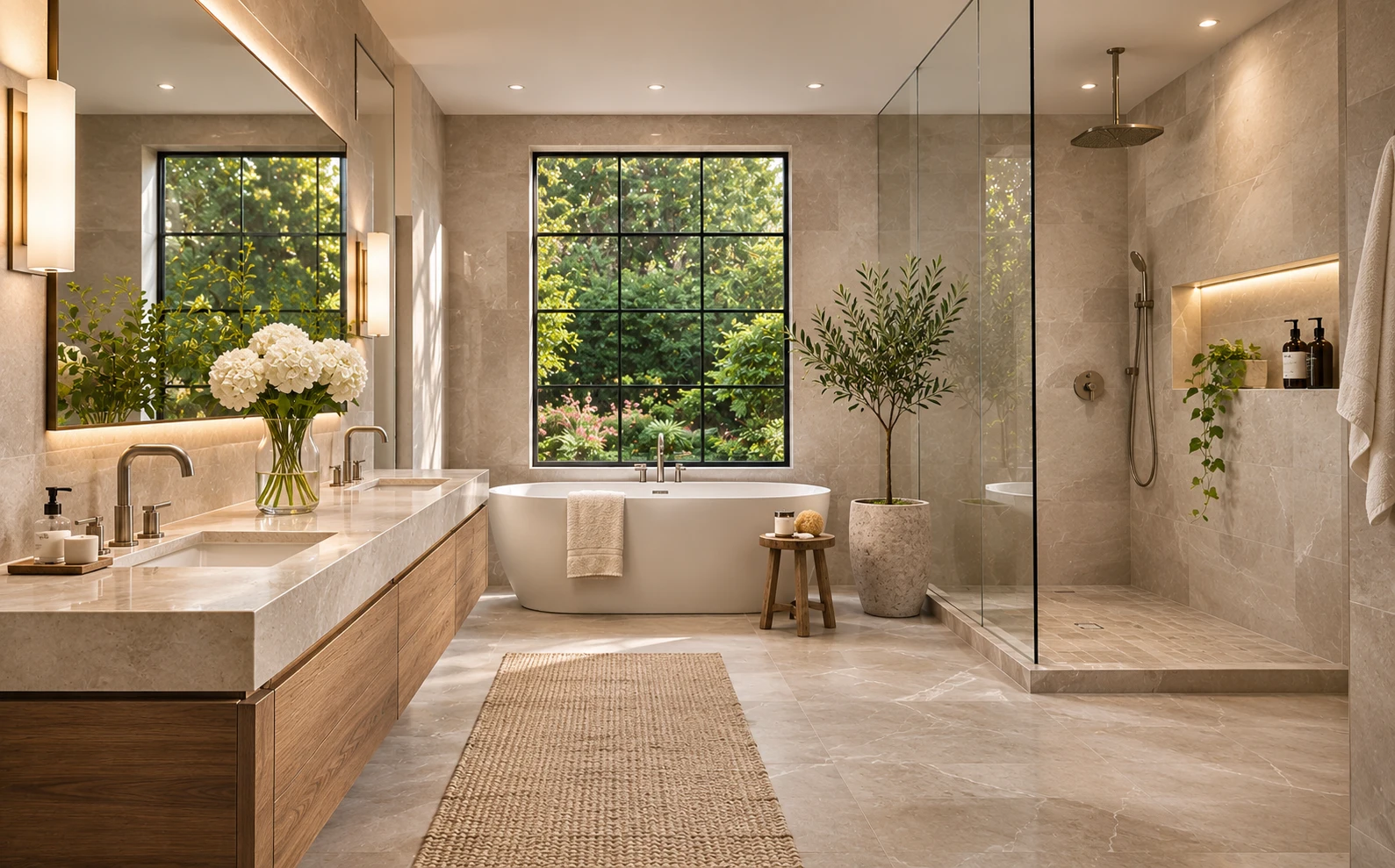
Large-format tile can create a timeless bathroom when the design uses balanced proportions, coordinated materials, and a restrained color palette.
However, oversized tile alone does not guarantee lasting appeal.
Highly dramatic patterns or poorly coordinated finishes may feel dated regardless of tile size. Neutral stone looks, subtle textures, and carefully considered transitions can help create a design that remains visually appealing over time.
This relates to Modern Bathroom Design Ideas Long Island Homeowners Love in 2026, where the strongest design choices combine contemporary aesthetics with everyday functionality.
Start by evaluating the bathroom's dimensions, natural light, layout, and intended use.
Consider whether large-format tiles will require excessive cutting, whether the selected surface is appropriate for wet areas, and how the material will coordinate with the vanity, shower, lighting, and surrounding finishes.
Professional Bathroom Design Services can help bring these elements together, ensuring the tile selection supports both the visual character and practical needs of the bathroom.
Large-format tiles are likely to remain an important direction in bathroom design through 2027, particularly for homeowners seeking cleaner surfaces, fewer grout lines, and a more seamless appearance. However, traditional tiles are not becoming obsolete. Their flexibility, decorative potential, and suitability for certain wet areas make them equally valuable.
For Long Island homeowners, the best bathroom design does not depend on choosing the largest tile available. It comes from selecting the right materials, proportions, and finishes for the space. A truly timeless bathroom balances modern style with everyday comfort and long-term practicality.
Explore how large-format bathroom tiles are shaping 2027 design trends, from seamless surfaces and fewer grout lines to modern finishes, maintenance, and lasting elegance.


Design insights, inspiration, and expert advice for extraordinary kitchens and baths.