


There’s a reason hotel bathrooms feel instantly calming, luxurious, and easy to use. Nothing feels crowded, nothing feels awkward, and everything seems to be exactly where you expect it to be. That sense of effortlessness is not accidental. Five-star hotels rely on a proven formula that balances layout, lighting, materials, and sensory comfort in a way most residential bathrooms never fully achieve.
The good news is that this same formula can be applied to private homes when bathrooms are designed with intention rather than trends. By focusing on flow, proportions, and experience, a residential bathroom can deliver the same sense of quiet luxury you feel when stepping into a high-end hotel suite.

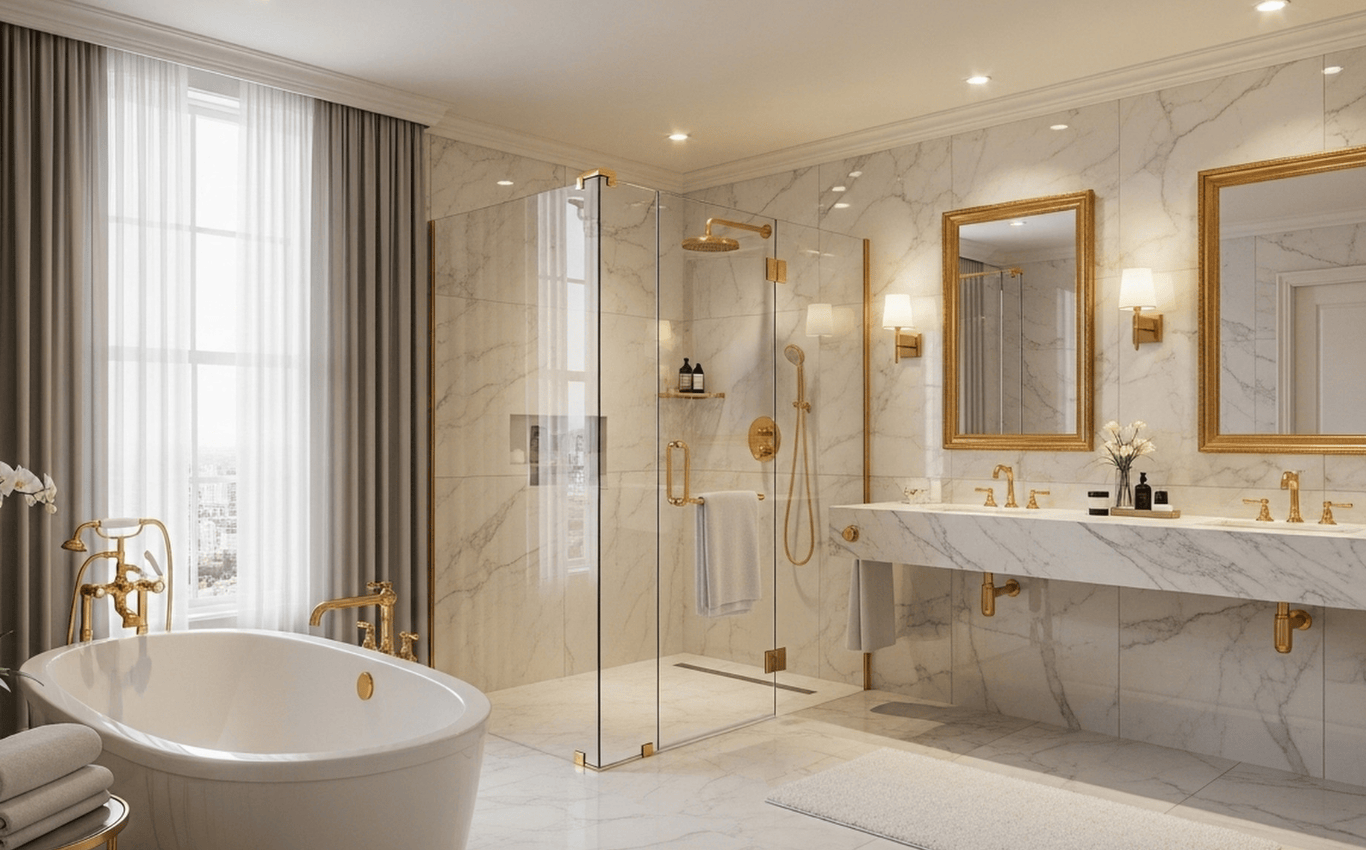
Before materials or finishes are ever considered, luxury hotels prioritize layout. A well-planned bathroom allows movement to feel natural and uninterrupted, creating a sense of calm from the moment you enter the space.
Hotel bathrooms are divided into clear zones, vanity, shower, tub, and toilet areas each have their own breathing room. This separation reduces visual noise and makes the space feel larger and more composed. Residential bathrooms designed this way instantly feel more intentional and refined.
In a five-star bathroom, you never bump into fixtures or feel forced to maneuver around obstacles. Pathways are deliberate and uncluttered. This same approach is used in projects like the Cold Spring Harbor, NY bathroom, where layout planning ensures effortless daily use.
Luxury bathrooms balance openness with privacy. Toilets and showers are subtly shielded without closing off the space. This layered planning is a hallmark of professional Bathroom Design and one of the biggest differences between builder bathrooms and designer bathrooms.
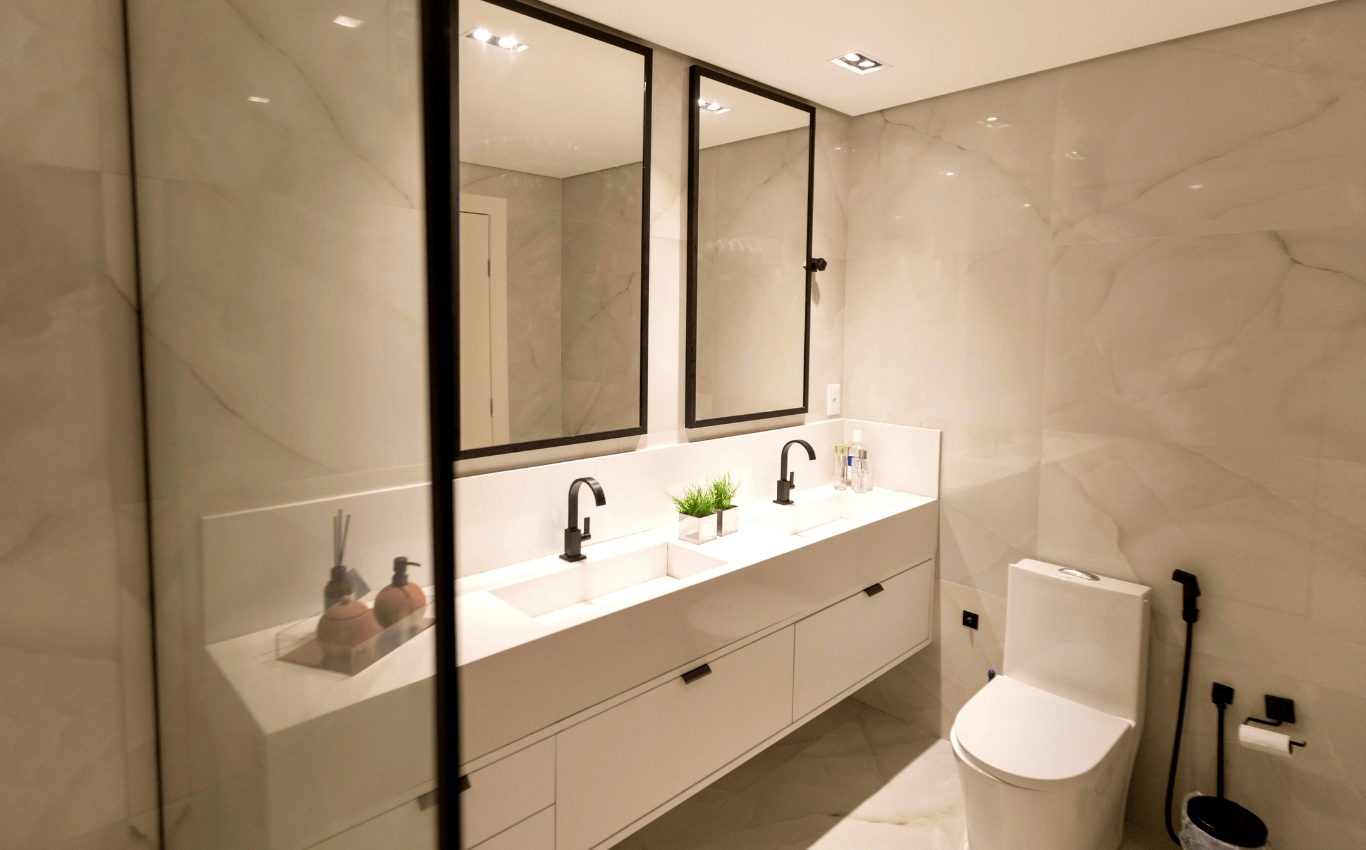
Lighting is one of the most overlooked elements in residential bathrooms, yet it plays a massive role in how a space feels. Hotels treat lighting as a design feature, not an afterthought.
Five-star bathrooms combine ambient lighting, task lighting, and accent lighting. This creates depth and flexibility, allowing the bathroom to feel energizing in the morning and relaxing at night. Layered lighting instantly elevates the space.
Hotels avoid harsh overhead lighting at the vanity. Instead, they use vertical or side lighting to evenly illuminate the face. This approach reduces shadows and makes daily routines more comfortable and enjoyable.
One of the simplest hotel-inspired upgrades is the use of dimmers. Being able to soften lighting transforms a bathroom from functional to spa-like. Many custom projects, including the Nesconset, NY bathroom, rely on this strategy to enhance the experience without adding visual clutter.

Hotels choose materials that feel rich, durable, and timeless. The goal is to create a sense of luxury that lasts, not one that feels tied to a specific design trend.
Rather than bold patterns, hotels favor stone and tile with natural variation and soft veining. These materials add depth without overwhelming the space and age far better than highly graphic designs.
Brushed metals, honed stone, and soft textures dominate hotel bathrooms. These finishes reduce glare, hide wear, and create a calmer atmosphere. This approach is clearly visible in the Point Lookout bathroom project, where material choices enhance the sense of understated luxury.
Hotels limit the number of materials used in a space. This restraint creates cohesion and visual calm. A tightly edited palette always feels more luxurious than a mix of competing finishes.
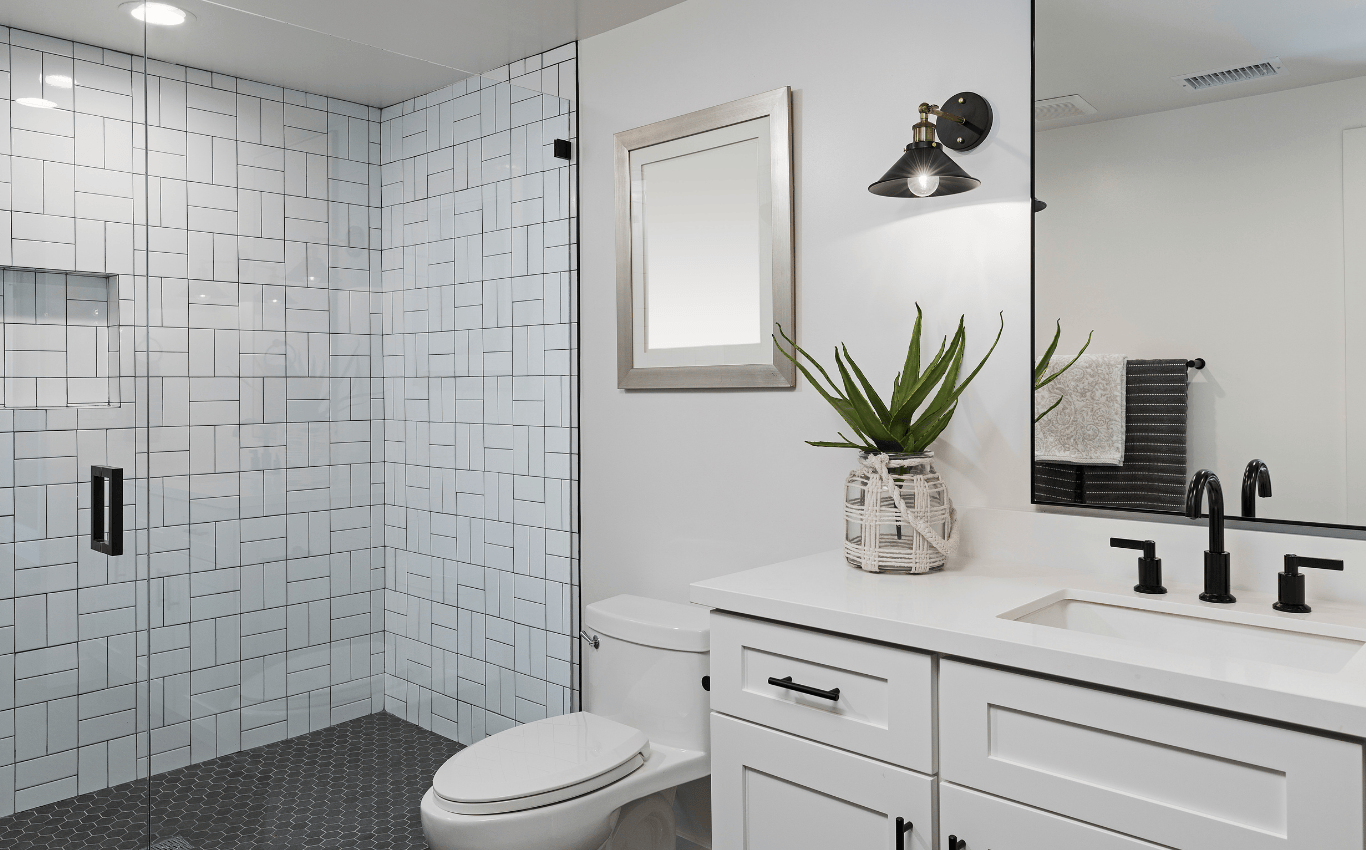
One reason hotel bathrooms feel so serene is that nothing is left out unnecessarily. Storage is integrated seamlessly, allowing surfaces to remain clean and open.
Hotels design storage for daily essentials, towels, and personal items without making it obvious. Drawers, recessed niches, and concealed cabinets keep the bathroom visually quiet.
Five-star bathrooms provide enough storage that countertops remain largely empty. This design choice alone dramatically changes how a bathroom feels and functions.
Hotel bathrooms are designed to stay clean easily. Wall-mounted vanities, integrated storage, and simple lines reduce dust and grime buildup. This same thinking is applied in residential projects like the Point Lookout, NY bathroom, where long-term usability is just as important as appearance.
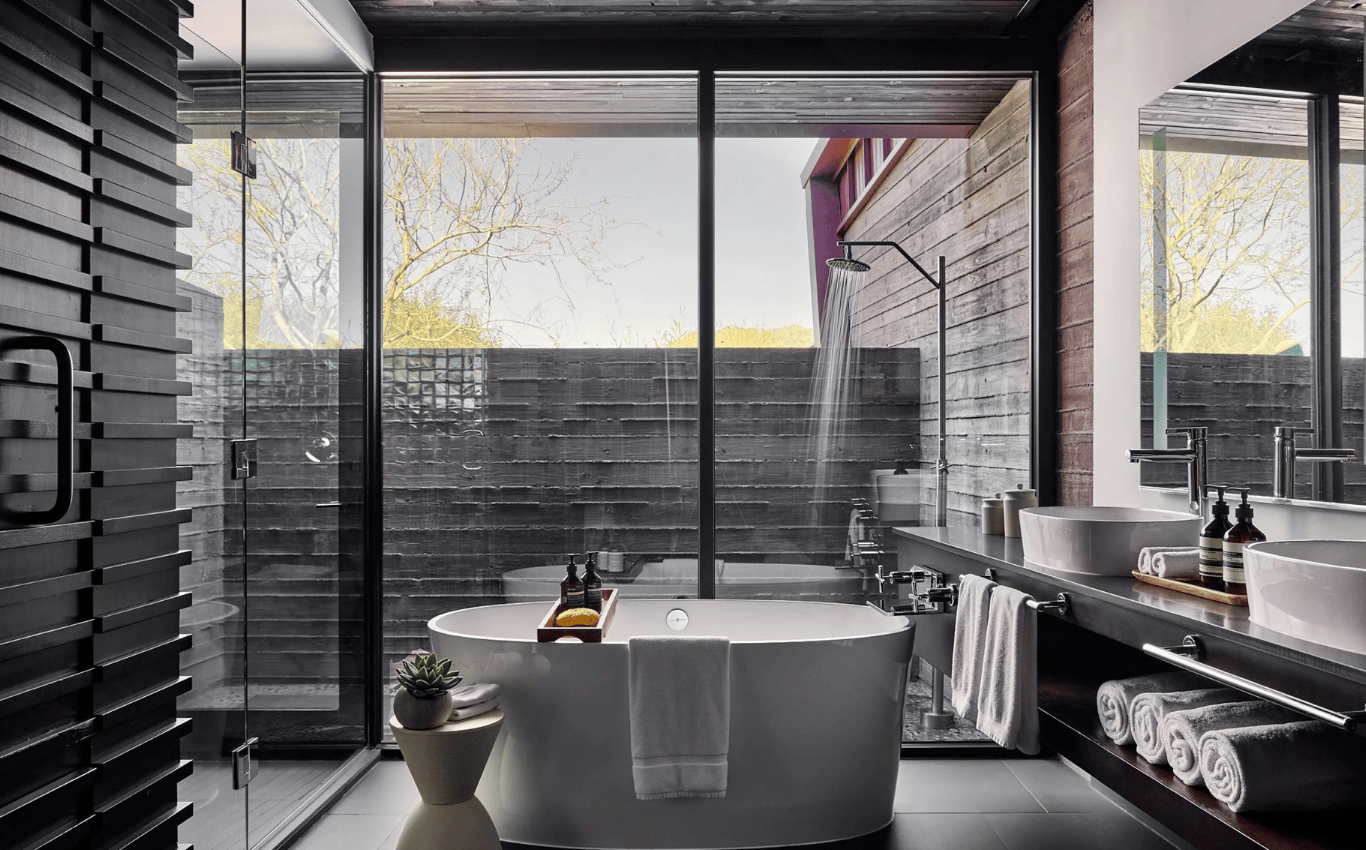
What truly separates hotel bathrooms from ordinary ones is how they make you feel. Luxury is a sensory experience, not just a visual one.
Hotels often incorporate sound-dampening strategies, from solid doors to quiet ventilation systems. A bathroom that feels acoustically calm immediately feels more private and relaxing.
Heated floors, towel warmers, and properly sized showers contribute to the spa-like experience. These features are subtle but deeply impactful.
Many hotel-inspired bathrooms are designed to reduce stress through simplicity and balance. This concept is explored further in the related blog post, The Psychology of Relaxation: How Bathroom Design Affects Your Mind, which aligns closely with the principles used in high-end residential bathroom design.
Five-star bathrooms don’t rely on bold statements or trendy features. They feel effortless because every decision is intentional, from layout and lighting to materials and storage. When these principles are applied to residential spaces, bathrooms become more than functional rooms, they become daily retreats. True luxury is not about excess, it’s about ease, comfort, and longevity.

Ready to Bring the Hotel Bathroom Experience Home?
Get In Touch.png)
.png)
%20(1040%20x%20592%20px)%20(5).png)